
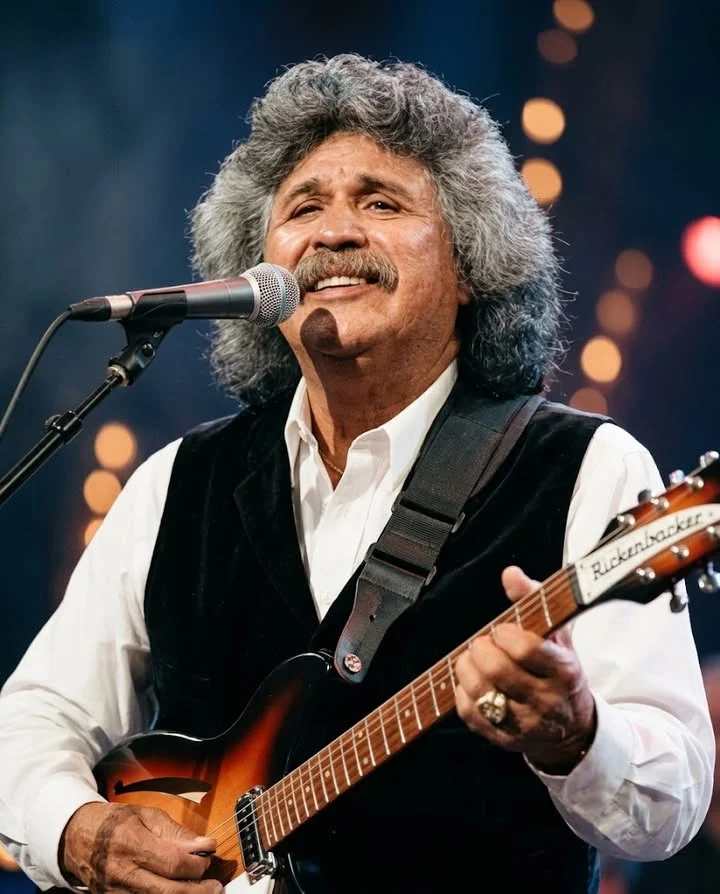
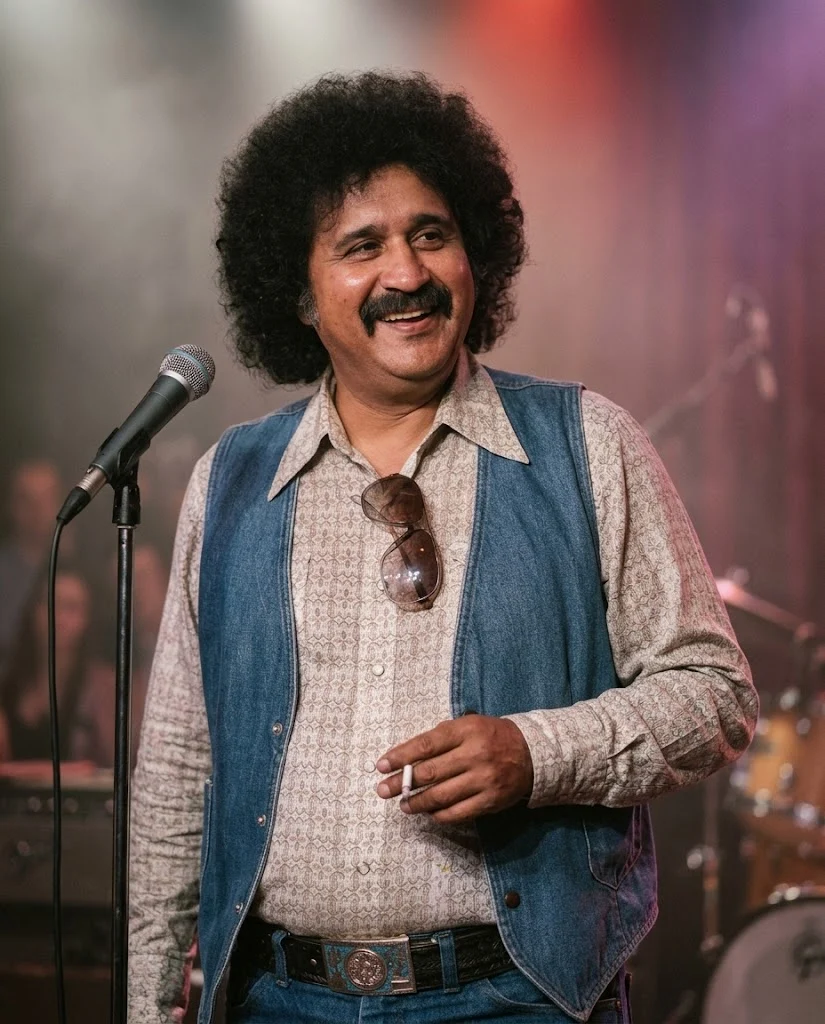
Before the next teardrop falls, I’ll be right there…
Those tender words echoed across radios in 1974, a voice so raw it felt like a confession. But the man behind the mic, Freddy Fender, carried a heavier story. He was born Baldemar Garza Huerta in the blistering heat of San Benito, Texas. Before the Grammy and the Hollywood star, he knew the sting of cotton fields and the cold steel of prison bars. He walked through a thousand invisible borders the industry drew around him. But he never stopped singing from the soul of a survivor.
Freddy didn’t start with a polished Nashville contract. He started in the dirt, his hands calloused from migrant work under a punishing sun. Inside, a rhythm grew—a blend of Mexican conjunto and lonely country radio. The 1950s music machine wanted neat boxes: a traditional country singer or a Mexican artist. Baldemar refused. He carved his own lane, borrowing his stage name from his guitar’s headstock. Yet he never left his true self behind.
Then the lights went out. A marijuana arrest in 1960 sent him to Angola State Prison, a brutal hell that broke many gifted voices. When he emerged years later, he had nothing but a dream. He played smoky dives, washed cars, fixed engines—surviving, not for applause, but to keep the music alive inside. Until 1974. A producer asked him to overdub vocals on a forgotten track. The song was “Before the Next Teardrop Falls.” Freddy stepped to the mic and bled his truth. He sang first in English, then in Spanish, a risk that shattered every rule. The song soared to number one on both country and pop charts. It wasn’t just a hit. It was a bridge—between languages, between pain and hope, between a lost man and a people who saw their own scars in his voice.
Freddy Fender passed away in 2006. The stages darkened, the applause faded. But in dim kitchens and on dusty interstate roads, his voice still waits. It remains alive, ready to remind us that from the deepest heartbreak, we can rise—again and again.