
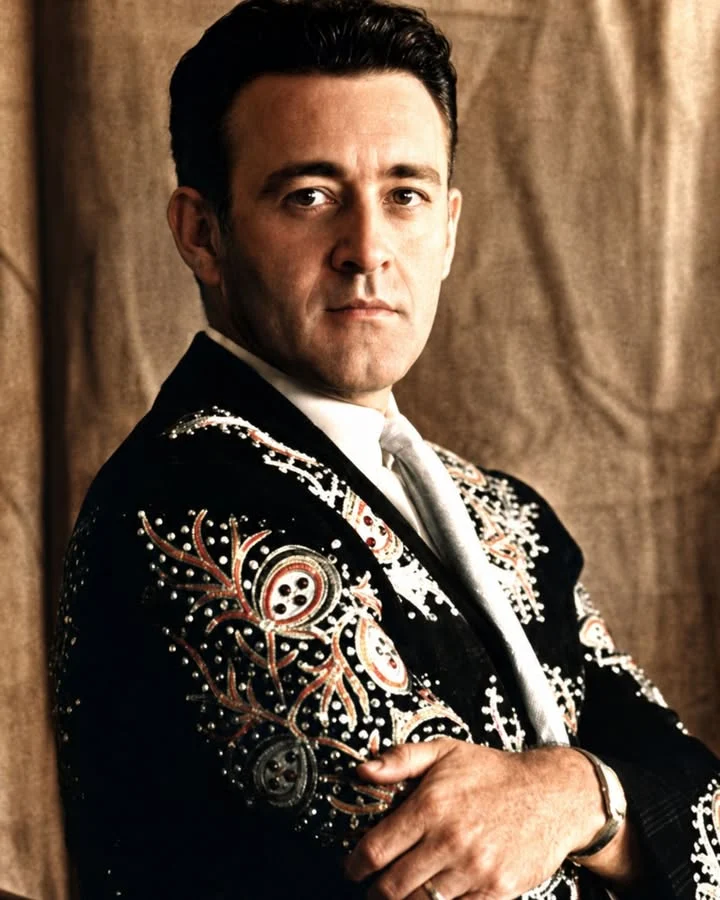
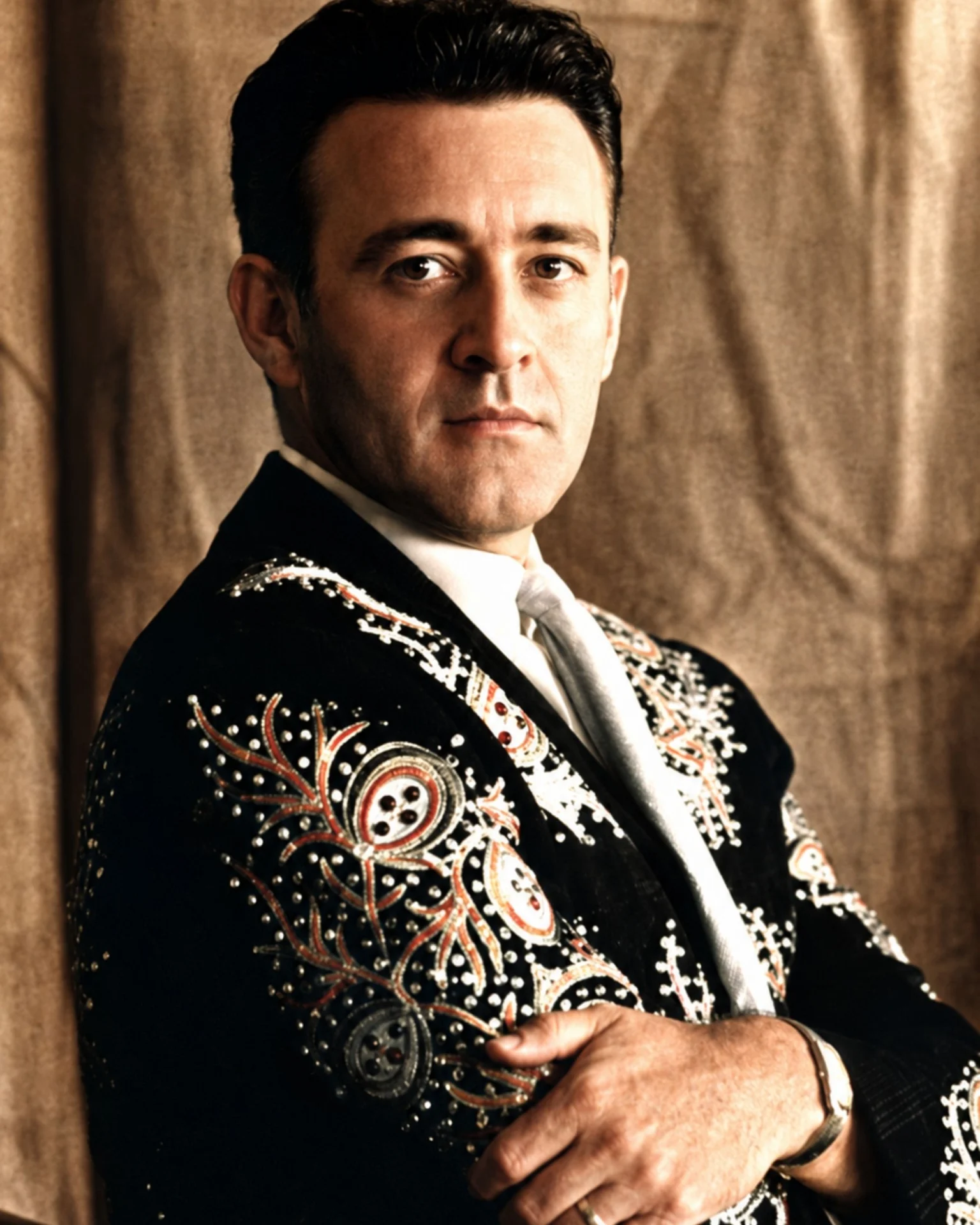
Before Merle Haggard became a legend, he was a young bass player in Wynn Stewart’s band. Before the Bakersfield sound had a name, Stewart was already forging its raw, electric edge. This is the story of a man who shaped country music’s West Coast revolution from the shadows.
“Wynn Stewart never became as famous as Buck Owens or Merle Haggard, but both men emerged from a musical world he helped define.”
Born in Missouri and raised partly in California, Stewart began recording in the mid-1950s. His sound was a sharp departure from Nashville’s polished style—built on steel guitar, bright electric rhythm, and hard country phrasing. It was a sound that felt cleaner, tougher, and more barroom-ready than much of what Nashville was producing at the time.
In 1959, Stewart landed a regular gig at the Nashville Nevada Club in Las Vegas. Among the young musicians who joined his band was Merle Haggard, recently released from San Quentin and struggling to rebuild his life through music. Haggard wasn’t yet the poet of working men and drifters; he was a player looking for steady work, carrying talent and uncertainty into the next room.
Playing bass behind Stewart gave Haggard more than a job—it placed him beside a singer whose style was already pointing toward the sound he would later help define. That quiet power in Stewart’s story is often overlooked: he was standing at the beginning of someone else’s legend before the world knew what it was watching.
Stewart’s influence also reached Buck Owens. In 1960, Owens recorded Stewart’s song “Above and Beyond,” taking it to No. 3 on the country chart. That record became part of the same West Coast conversation—leaner, brighter, and built around a different kind of energy than Nashville’s mainstream. This was before Bakersfield became a brand or a movement, before Owens and Haggard became its defining faces.
Stewart wasn’t just an influence hiding behind bigger names. He had his own hits: “Wishful Thinking” reached the Top 5 in 1960, and in 1967, “It’s Such a Pretty World Today” spent two weeks at No. 1. But by then, Owens and Haggard were already major stars, and the Bakersfield sound was being recognized as a distinct force. Stewart had helped build the ground; others built the monuments.
“History often remembers the artist who takes a sound to its biggest audience, not always the one who helped make that sound possible before anyone knew how to sell it.”
That timing explains why Stewart’s name faded behind theirs. He influenced the scene before it had a clean identity, gave Haggard work before Haggard had hits, supplied Owens with material, and recorded the same lean, electric country that would soon define a movement. He was overshadowed not because he lacked importance, but because his importance began early—before the label, before the mythology, before the market knew what to call the sound.
Wynn Stewart may not be the face of Bakersfield country, but he helped create the room where that movement could learn its shape. Before country history arranged itself neatly, Stewart was there, playing in clubs and studios, shaping a sound that would become legendary. His legacy is not just a footnote; it’s the foundation of an era.