
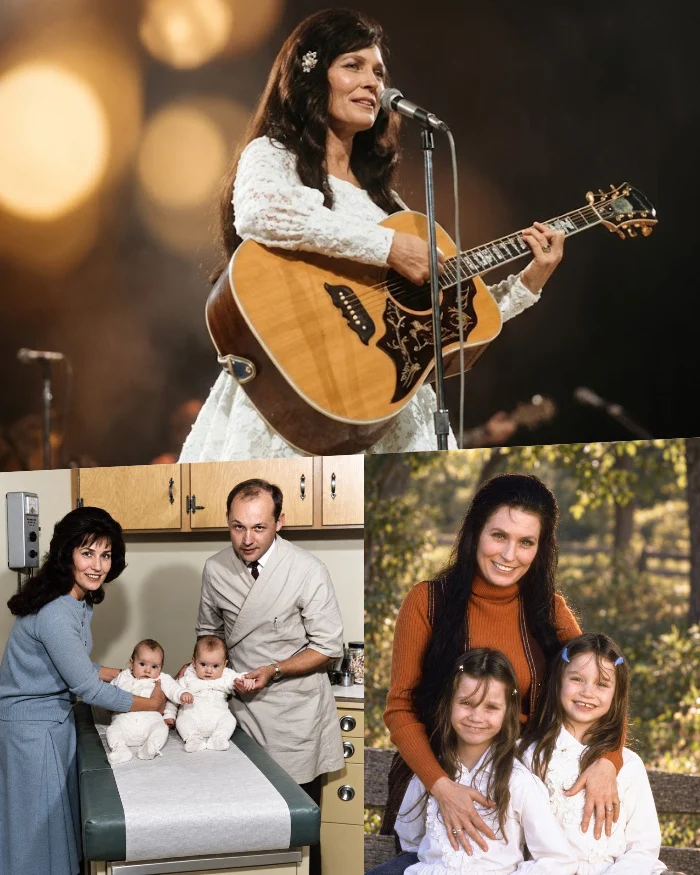
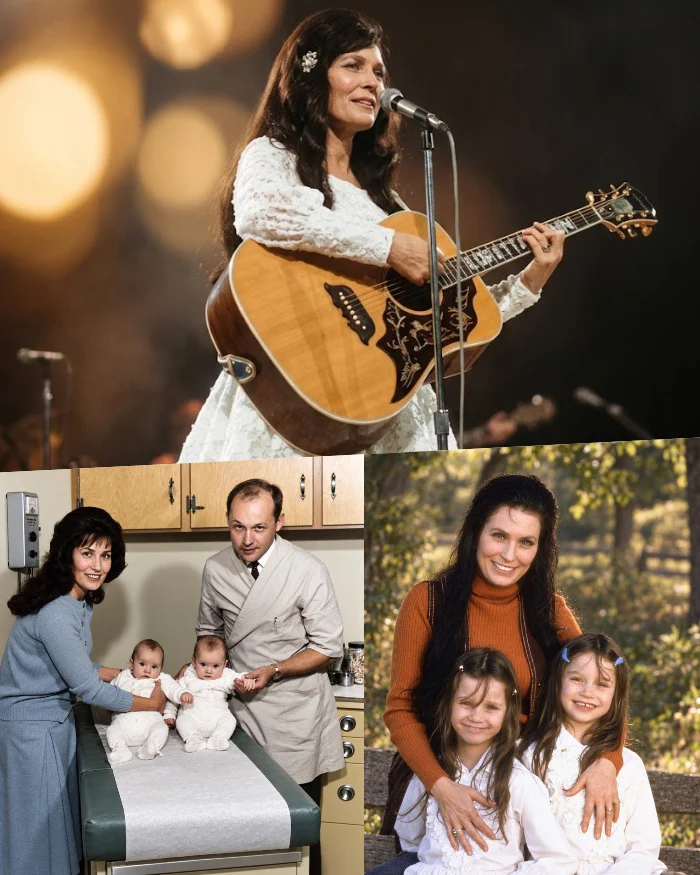
The summer of 1964 found Loretta Lynn balancing more than just a heavy acoustic guitar on stage. She balanced a twin pregnancy, a cramped sedan, and the weight of a family that depended on every paycheck to keep food on the table.
Stopping the tour meant no paycheck for a household that already included four young children.
With no savings to fall back on, the thirty-two-year-old singer kept herself booked across the South and Midwest. She traveled thousands of miles in a crowded automobile between roadside taverns and county fairs. Sleep came in brief stretches against rolled-up coats on a vinyl bench seat.
As her body expanded, Loretta altered wide cotton dresses by hand. Onstage, she held the large wooden guitar high against her stomach. The instrument served dual purpose: shielding her pregnancy from concert promoters and bracing her aching back under hot stage lights.
Unaware she was carrying identical twins, she sang through exhaustion night after night. The relentless motion halted only in late summer.
On August 6, 1964, Loretta checked into Humphreys County Hospital in Waverly, Tennessee. She delivered two healthy daughters: Peggy Jean and Patsy Eileen. The second twin received her name in honor of Patsy Cline, Loretta’s close friend who had died in a plane crash seventeen months earlier.
The double delivery instantly made Loretta a mother of six. Yet the hospital stay brought no rest. Mounting medical costs required an immediate return to work. Within weeks, she was back on the road.
To survive the logistical strain, her husband Doolittle modified an older touring bus with makeshift cribs and fold-down bunks. Loretta washed bottles in filling station sinks and hung damp laundry from interior luggage racks. She sang through vocal fatigue while the vehicle rolled toward the next evening soundcheck.
Whenever touring made bringing newborn infants impossible, the emotional cost mounted. After midnight shows, Loretta stopped at roadside payphones. She spent hard-earned quarters just to hear updates on feedings and fevers. She missed early childhood milestones hundreds of miles away in Tennessee.
The sacrifices of that season laid the groundwork for one of the most celebrated paths in American music history. Within two years, records like You Ain’t Woman Enough and Don’t Come Home A-Drinkin’ transformed Loretta into a household name.
Those identical twin girls grew up surrounded by highway asphalt. They later formed their own musical duo, The Lynns, and joined their mother on stage as adult performers.
The global acclaim and historic honors that followed never erased the memory of that humid summer run in 1964. Loretta Lynn’s rise was not built on industry polish or easy fortune. It was built on the quiet grit of a mother who carried a family on her shoulders one dusty highway at a time.