
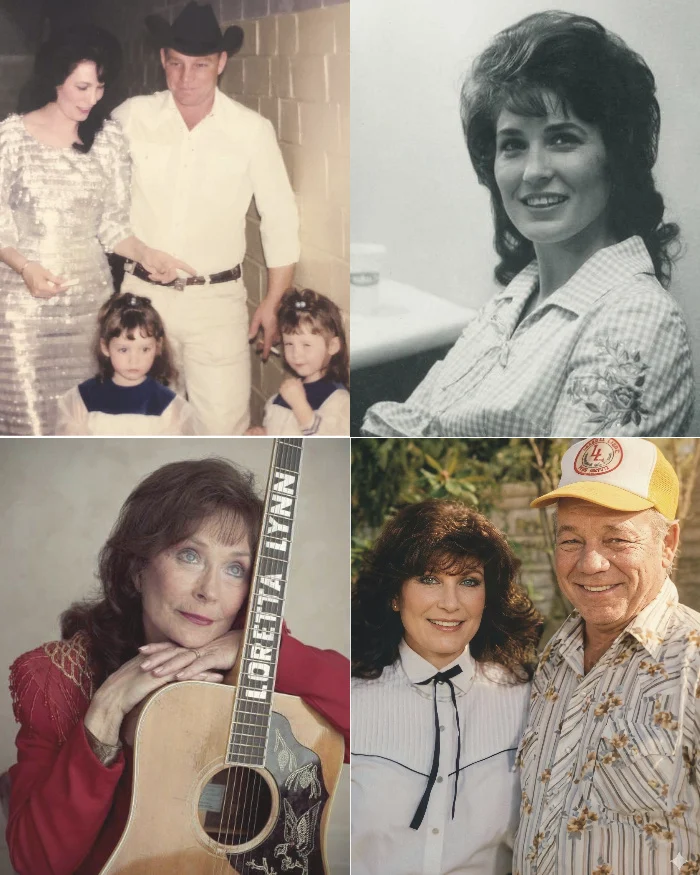
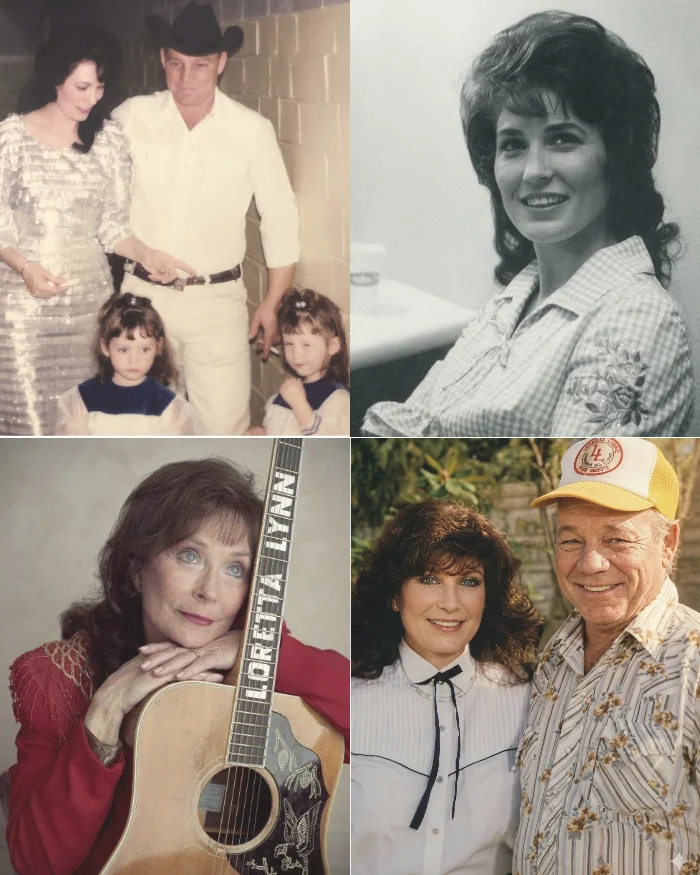
Loretta Lynn did not arrive in country music chasing a childhood dream and she did not seek the stage to discover herself. She walked into the spotlight because a $17 Harmony guitar ordered from a Sears Roebuck catalog and a husband named Oliver Doolittle Lynn demanded that she turn her voice into money.
Long before she became a pillar of the Grand Ole Opry she was a teenage mother living in a secluded logging community after moving from Butcher Holler Kentucky to Custer Washington. She scrubbed clothes on a washboard, cooked for logging crews, and raised four children before she was out of her teens. She sang in a cramped kitchen mostly to quiet her babies and to break the suffocating silence around her.
Doolittle heard those Appalachian lullabies and made a choice that changed country music. He bought the guitar, told her to learn it, and booked her first public performance at the Delta Grange Hall in Washington state. He handed the instrument to a shy young mother and pushed her under the lights.
She gripped the guitar like a life preserver and trembled in front of the crowd because she feared the audience less than she feared her husband’s temper
That rough beginning turned into a punishing run through the Pacific Northwest tavern circuit. By the late 1950s she fronted Loretta and the Trailblazers, a local band Doolittle helped assemble that eventually included her brother Jay Lee Webb. The group became the house band at Bill’s Tavern in Blaine Washington.
The rooms were full of exhausted loggers and mill workers looking for weekend escape. Lynn played six nights a week and often worked for hours before going home to pack lunches for her children before school. Under dim lights she covered Kitty Wells and Patsy Cline while studying the men and women in the booths and absorbing the hard living that would later fill her own lyric sheets.
Doolittle became her most aggressive manager. He drove her to regional radio stations including KARI in Blaine and demanded that DJs spin her early recordings. He intimidated people in bars who refused to listen to his wife sing and stripped away any romantic illusion about the music business.
The same man who brought volatility and mental exhaustion into her home also looked at a timid isolated Appalachian girl and demanded that the world listen to her
She learned to sing louder than clinking beer bottles and loud arguments because she needed to prove his rough faith right. But somewhere along that forced march the dynamic changed. The stage where Doolittle had pushed her to stand became the one place where she was entirely in control.
The logging town crowds began to stop drinking and start listening. She began writing her own material and crafted I’m a Honky Tonk Girl while leaning against the plumbing in her bathroom between tavern gigs. She realized she was not merely entertaining loggers. She was naming the exact realities of working class women sitting in those booths.
Loretta Lynn walked up to the microphone to survive her marriage and stayed there to speak for millions of women trying to survive their own. The Pacific Northwest bar circuit was meant to pay the bills but it gave country music one of its most fearless voices.