
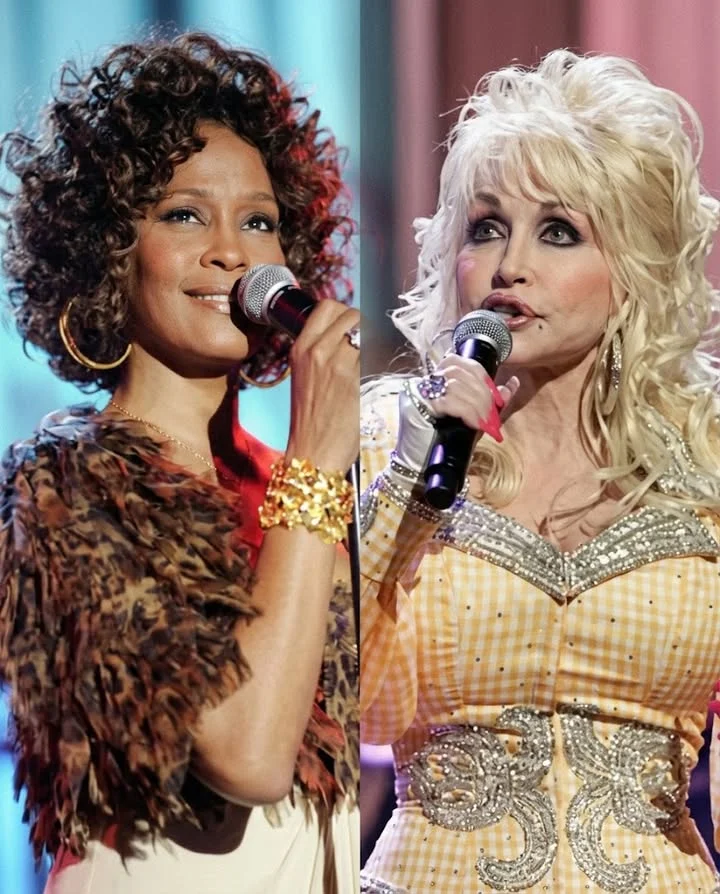
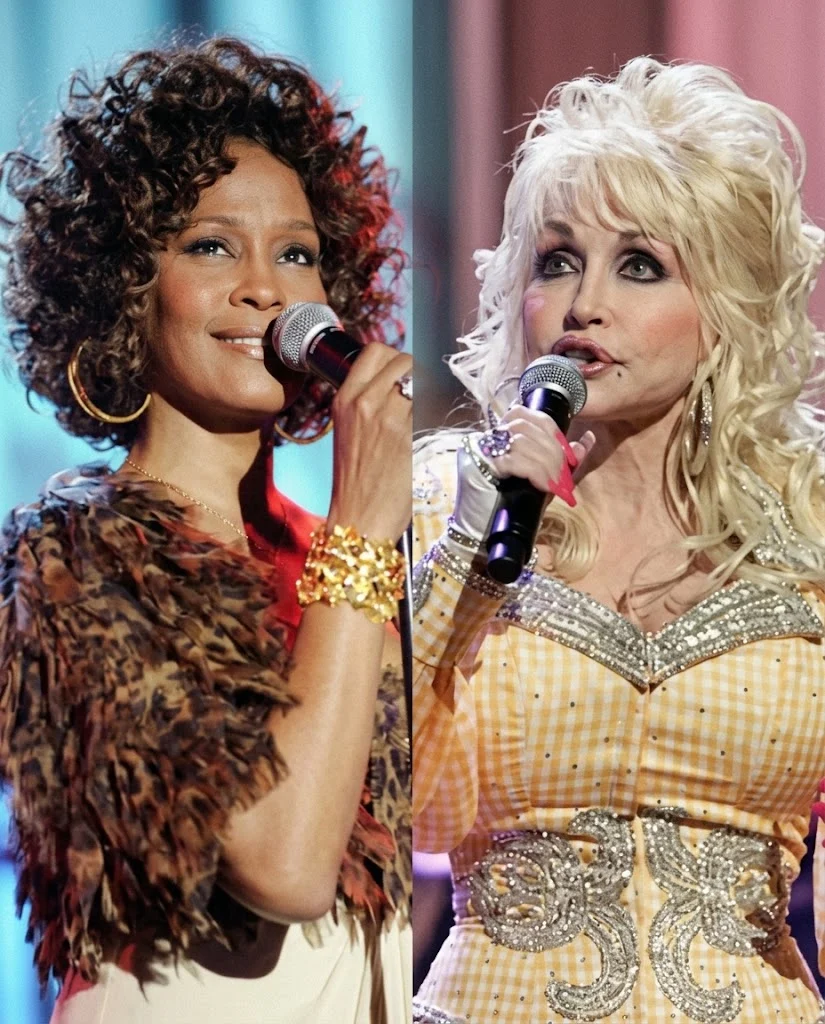
Her voice stopped Dolly Parton in her tracks. Parton was driving through Los Angeles when the radio carried a familiar a cappella opening and a vocal drop so powerful that she had to pull over and listen.
The sheer power of the vocal performance made her heart race.
It was 1992. A soundtrack release had turned a country song into a global phenomenon, holding the top of the Billboard Hot 100 for 14 weeks and sending millions in publishing royalties to the songwriter who never expected such a gift.
It became one of the best-selling singles in history.
Parton wrote the song, but Houston gave it a life that shattered chart records.
The story began much earlier, in 1973, when Parton wrote I Will Always Love You as a professional goodbye to Porter Wagoner.
The song became a modest Nashville success and later caught the attention of Elvis Presley.
Presley wanted to record it, but his management demanded half of the publishing rights. Parton refused. She cried over the missed chance, yet she kept full ownership, and that decision later made her the sole beneficiary when Hollywood chose the song again.
The path to Houston began on a movie set. Kevin Costner championed the song for The Bodyguard after the first musical choice fell through. When Parton learned the production was using Linda Ronstadt’s 1975 cover as a template, she personally asked the producers to include the final verse that Ronstadt had left out.
Houston entered the studio with producer David Foster and made a bold choice. She opened the track completely unaccompanied. The silence was risky, but her pristine vocal control turned it into one of the most unforgettable entrances in pop history.
Parton often said she saw the success not as her own triumph, but as a blessing Houston had shared with her.
The two women moved in different musical worlds, yet their respect was absolute. When Houston won the Grammy Award for Record of the Year, she publicly thanked Parton for writing the song. Parton repeatedly credited Houston for lifting a simple country farewell into an international masterpiece.
Then came the quiet real estate decision. When the enormous royalty checks arrived in Tennessee, Parton did not treat them as ordinary music industry profit. She bought a large commercial office complex in the 12th South area near Sevier Park in Nashville.
At the time, the neighborhood was not the highly commercialized district it is today.
She chose that neighborhood with intention. It had a rich history in the local Black community. Parton kept the reasoning private for years. She later explained that she wanted the historic wealth created by a brilliant Black vocalist to be physically anchored in a Black community.
The purchase was not about a public plaque. It was a building she never put her name on.
The building stands as a concrete reminder of an extraordinary meeting between two legends. Whitney Houston is gone, but her influence remains in the hometown of country music, preserved by Dolly Parton’s private act of honor.