
The applause vanished in an instant.
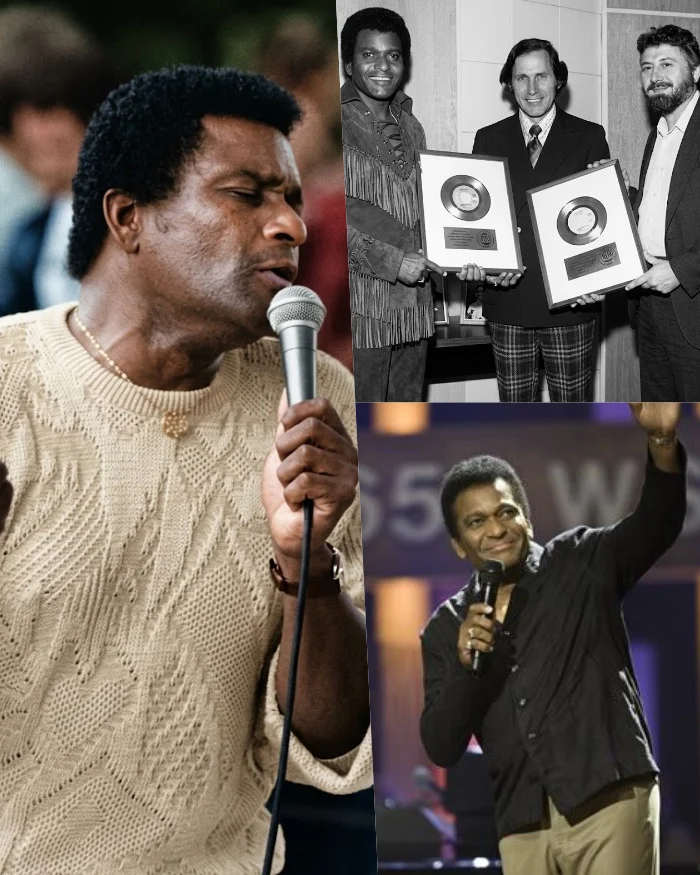
In 1966, Charley Pride walked onto the stage at the Olympia Stadium in Detroit and faced roughly 10,000 fans who had embraced his voice without ever seeing his face.
The silence that followed was heavy, sudden, and full of history.
He did not retreat.
He smiled, joked about his permanent tan, and let his baritone carry the room back to him.
That moment did not appear out of nowhere.
It was the final test of a risky plan born inside RCA Records in 1965.
Jack Clement brought a demo tape to the label and refused to sand down the singer’s traditional country sound.
He handed the reel to Chet Atkins.
Atkins heard a star.
He heard a resonant voice shaped by Hank Williams and Roy Acuff.
He also heard a danger that could have closed studio doors for him and for Pride.
Signing a Black man to a major country label in a segregated era was not a small decision.
It was a leap across a wall.
Atkins and RCA chose to protect the gamble with a faceless launch.
They released Pride’s early singles, including The Snakes Crawl at Night, without publicity photographs, press kits, or artist bios for influential Southern radio programmers.
The records had to speak first.
For months, Pride listened to his own voice climb the airwaves while remaining unseen.
He was a former baseball player and smelter worker, and he had trusted two white producers with his livelihood and his family’s future.
He hoped talent could cross a bridge before prejudice could cut it down.
It worked.
Programmers spun the songs on heavy rotation.
Listeners heard a classic country voice and assumed it belonged to a white traditionalist.
By 1966, Just Between You and Me earned a Grammy nomination and made Pride a hitmaker in the public eye.
Then the faceless voice had to claim the spotlight.
At the Detroit show, the crowd rose for a radio star and then froze when a Black man stepped into view.
Pride stood in the stunned quiet, sensing the tension, and answered with music.
When his unmistakable baritone rang through the stadium, recognition returned.
The applause came back louder than before.
By removing his face, RCA forced a divided nation to judge Charley Pride on the truth of his music.
Clement went on to produce an extensive catalog for Pride and helped honor the depth of his voice rather than the color of his skin.
Pride never had to change his phrasing, his song choices, or his identity to fit an expected mold.
The gamble became a legacy.
The voice had already broken the barrier before the world saw the man.