
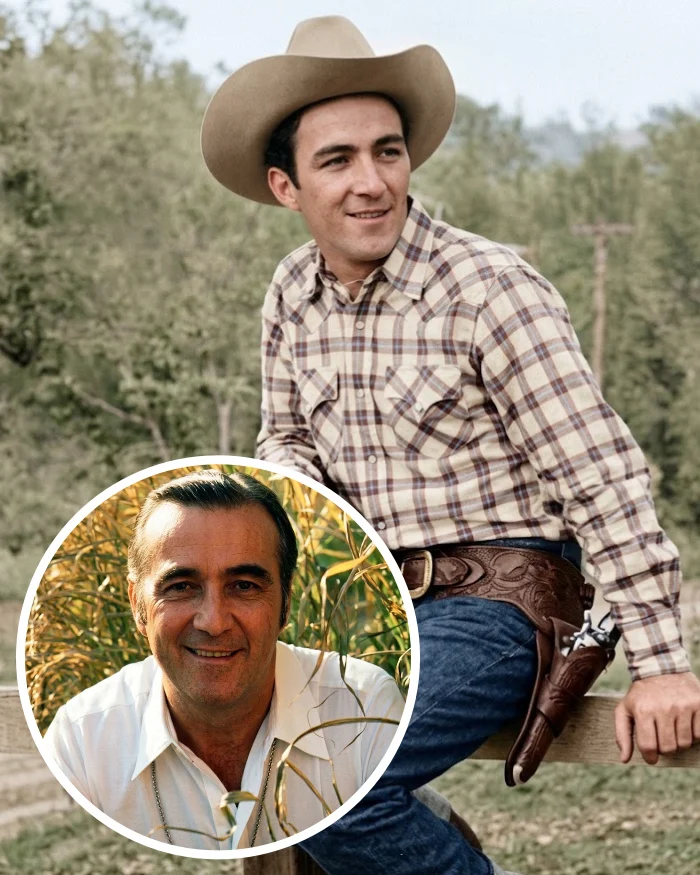
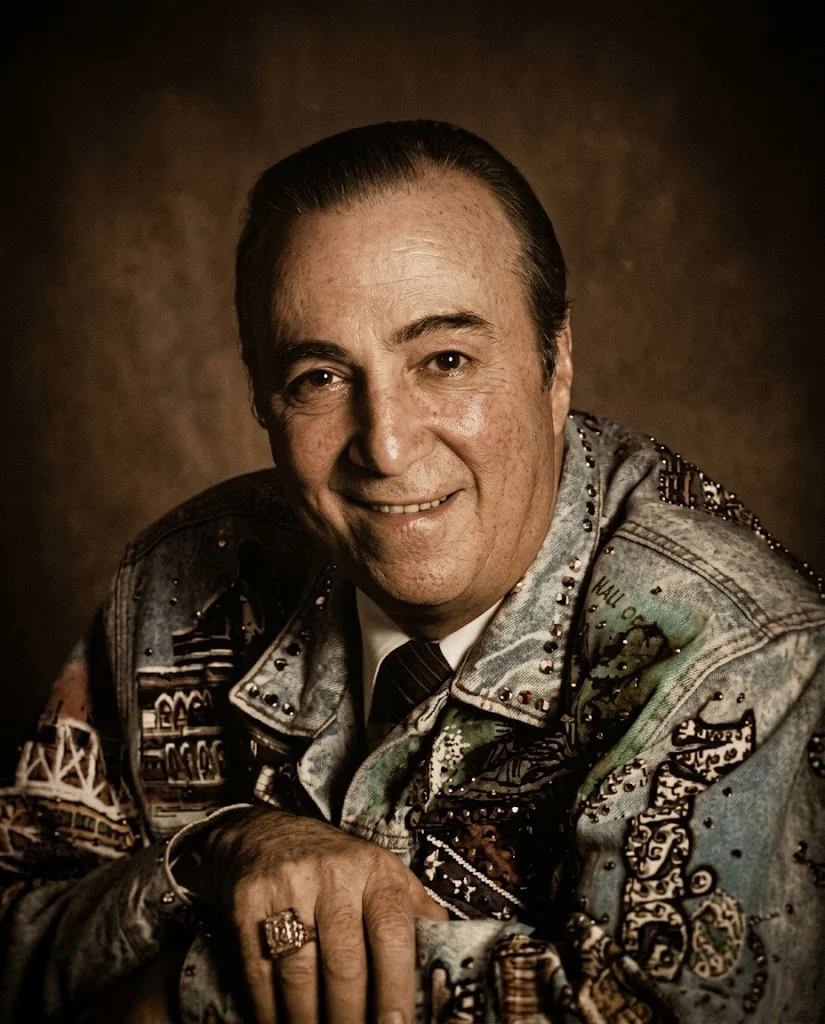
The rhinestones stayed in the closet long after the applause faded. Faron Young once filled arenas with a voice that sounded like confidence itself. By the end, the Nashville home around him had grown so quiet that the glittering Nudie suits seemed to hold their breath.
He earned the nickname “The Singing Sheriff” after the 1956 Western film Hidden Guns and spent decades commanding country music with pure honky-tonk fire. His empire was built on undeniable swagger, sharp suits, and songs that made Music Row listen.
His 1961 recording of Willie Nelson’s “Hello Walls” stayed at the top of the country charts for nine weeks. The victory cemented Young as one of Nashville’s most powerful voices and helped open the door for Nelson’s own legendary career.
Young also helped shape the machinery behind the music. He recognized that artists needed a direct line to fans and co-founded Music City News in 1963. That instinct made him a foundational architect of the business as well as the stage.
He never stepped onto a stage quietly. Wrapped in custom-made rhinestone suits, he controlled packed arenas and defined the look of a classic country superstar. He was loyal, outspoken, and impossible to ignore.
Then the industry changed. As the 1980s closed and the 1990s brought a pop-leaning commercial wave, mainstream radio stopped playing the veteran who had helped build the genre. The airwaves went silent, and the city that once celebrated him began moving on.
The silence was soon joined by a physical battle. Severe emphysema stripped away his breath, the very weapon that had carried long notes across enormous crowds. A proud entertainer could no longer sustain the performances that had defined his identity, and he withdrew into the quiet of his Nashville home.
Thirty-five years after singing “Hello Walls,” a song about an isolated man talking to the boundaries of an empty room, those lyrics became his daily reality. The heavy suits stayed hung in the closet, outliving the vibrant era that made them shine.
“The loudest thing in the room became his absence.”
Battling profound depression, failing health, and the devastating feeling of being discarded by his own city, Young died by suicide on December 9, 1996. He was 64 years old.
Yet the heaviest irony of his final days was the geography of his isolation. Just a few miles from his quiet living room, a traditional country revival was already brewing in the neon-lit dive bars of Lower Broadway. In smoky rooms like Robert’s Western World, a new generation of alternative country bands plugged in their guitars and played his exact, unapologetic honky-tonk sound to packed, sweaty crowds.
The grassroots movement proved that traditional country was not dead. Young passed away just as the sound he helped create was breaking through again. He never saw the young fans falling in love with his original records, but that underground scene eventually became too loud for Music Row to ignore.
In the fall of 2000, Faron Young was officially inducted into the Country Music Hall of Fame. A bronze plaque in the rotunda secured his permanent place in history. Nashville finally gave him the ultimate institutional respect he had spent his final years searching for, but the heavy rhinestone suits never got to walk the stage to claim it.