
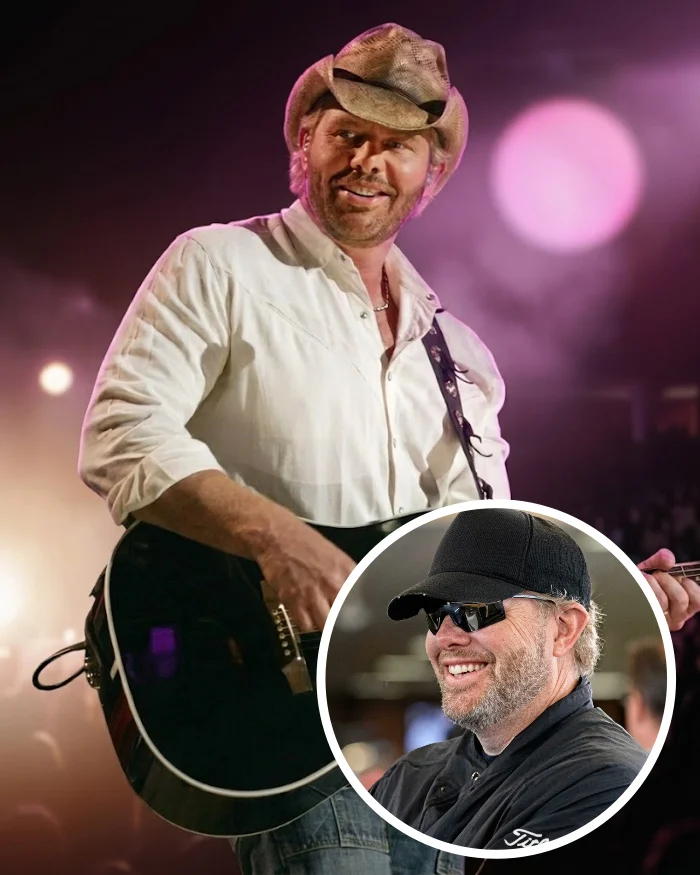
When mortar rounds fell near Kandahar, Toby Keith did not seek a safer stage. He sat with soldiers in a concrete bunker, signing autographs until the all clear sounded. That quiet courage became the heart of a story far larger than fame.
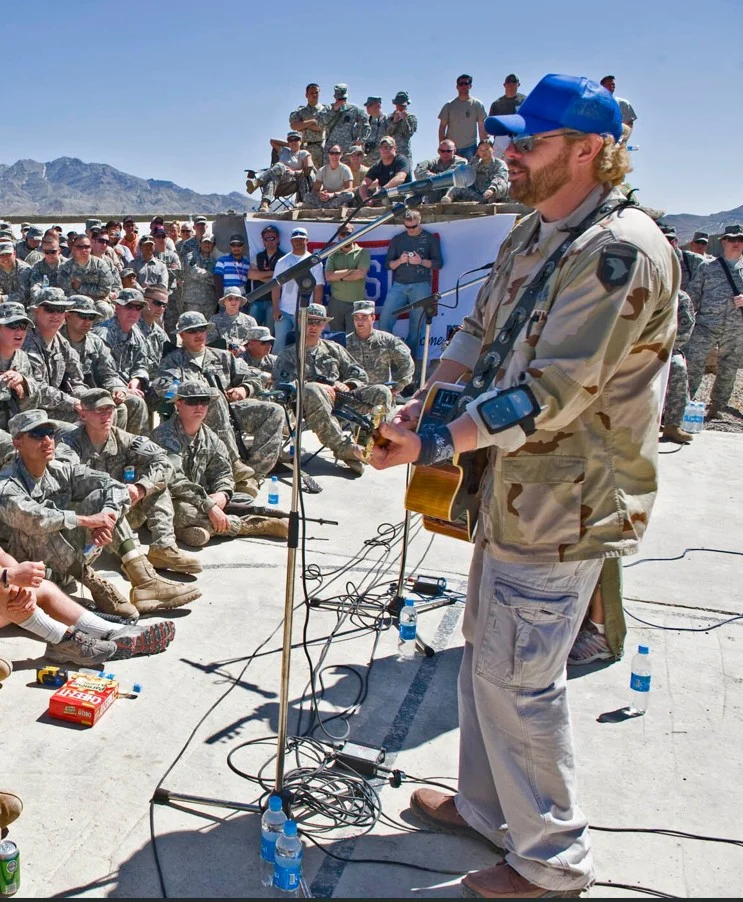
For more than a decade, he carried his music into active war zones. He completed eleven USO tours, beginning in 2002, and performed more than two hundred shows in Iraq, Afghanistan, Kuwait, and Kosovo. He traded safe arenas for forward operating bases, dusty camps, and places where other entertainers refused to go.
He stood before more than 250,000 men and women in uniform. He wore body armor just hours before walking onto makeshift desert stages. He sang American Soldier and Courtesy of the Red, White and Blue, The Angry American, as a direct salute to veterans who had sacrificed their youth.
The television cameras rarely captured what happened after the final chord faded. Keith often stayed for hours in blistering heat or freezing cold. He refused to leave until he had shaken hands and taken photographs with every soldier waiting in line. He shared meals in mess halls, visited wounded troops in medical tents, and played impromptu acoustic songs when generators failed.
For those stationed at remote bases, the visits were more than celebrity appearances. They were tangible proof that someone from home was willing to step into their reality and share their risks.
Courtesy of the Red, White and Blue came from a burst of emotion and urgency. Keith wrote it in about twenty minutes on the back of a fantasy football sheet. He first performed it at the Naval Academy, where a Marine commandant told him it was his duty to share the song with the troops. That advice turned a private tribute into a lasting anthem.
His loyalty to the military grew from a deeply personal bond. His father, Hubert K. Covel Jr., had been an Army corporal in the 1950s. Hubert taught his son to remove his hat, stand tall, and place his hand over his heart for the anthem. He gave young Toby a clear lesson about respect, country, and the weight of service.
In March 2001, Hubert was killed when a charter bus struck his vehicle on Interstate 35. The sudden loss devastated the family. It also sharpened a purpose in Keith, just months before the September 11 attacks changed the nation.
When the country went to war, Keith saw the best way to honor his father. He wanted to serve the young men and women wearing the same uniform his father once wore. Every military performance became a search for his father’s reflection. He carried strict and loving lessons halfway across the world and showed troops that their silent sacrifices were seen and remembered.
He was not chasing applause. He was keeping a promise to his father.
The USO stages are empty now, but thousands of veterans still keep faded photographs. Toby Keith gave a generation of service members a voice. His deepest legacy was making sure they never felt forgotten in the dark.