
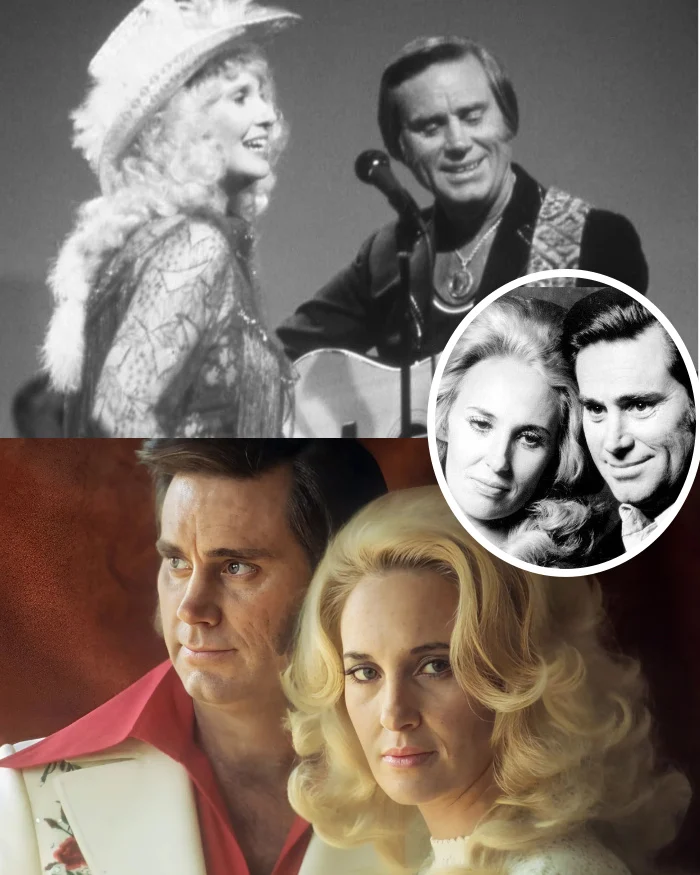

They had just ended the marriage that made their legend. Months later George Jones and Tammy Wynette stood at microphones in Nashville and sang about a pawn shop ring, a wedding dream, and a breakup that felt too close to their own truth.
By late 1975 the divorce was final. Fame, alcoholism, paranoia, and terrifying nights had worn the household down. Wynette once carried her infant daughter into the dark to escape Jones, and she chose to file for divorce. Their Epic Records obligations still stood.
In 1976 producer Billy Sherrill brought them Golden Ring. The song followed a cheap band from a glass display case to a hopeful ceremony, through a failing romance, and back to the same cold window. Bobby Braddock and Rafe Van Hoy wrote the narrative, and it mirrored the wreckage around them.
Sherrill held the room with calm discipline. He did not let the session become a venue for old arguments. He treated Jones and Wynette as elite singers with work to finish, not as a broken couple, and he steered their pain into the microphone.
The voices did not need to act. Jones carried visible strain in his baritone, and Wynette pressed emotion into every line. The record felt like an open wound shaped into harmony.
They were not just recording a country heartbreak song. They were using studio equipment to process the absolute end of their own relationship.
The song climbed to number one on the Billboard Hot Country Singles chart in August 1976. The album became a landmark, proving their commercial power did not depend on marriage. Fans heard the friction on the vinyl and recognized a weight that clever songwriting alone could not fake.
Success carried a heavy cost. The separated pair had to appear on stages night after night and sing the details of their real-life failure to cheering crowds. They kept fierce professionalism while looking at each other under arena lights.
The divorce decree allowed a mother to protect her children and ended their home life. The vocal tracks cut while the wounds were fresh proved stronger than paperwork. Jones and Wynette lost the ability to live under the same roof, but that 1976 session bound their voices permanently.