
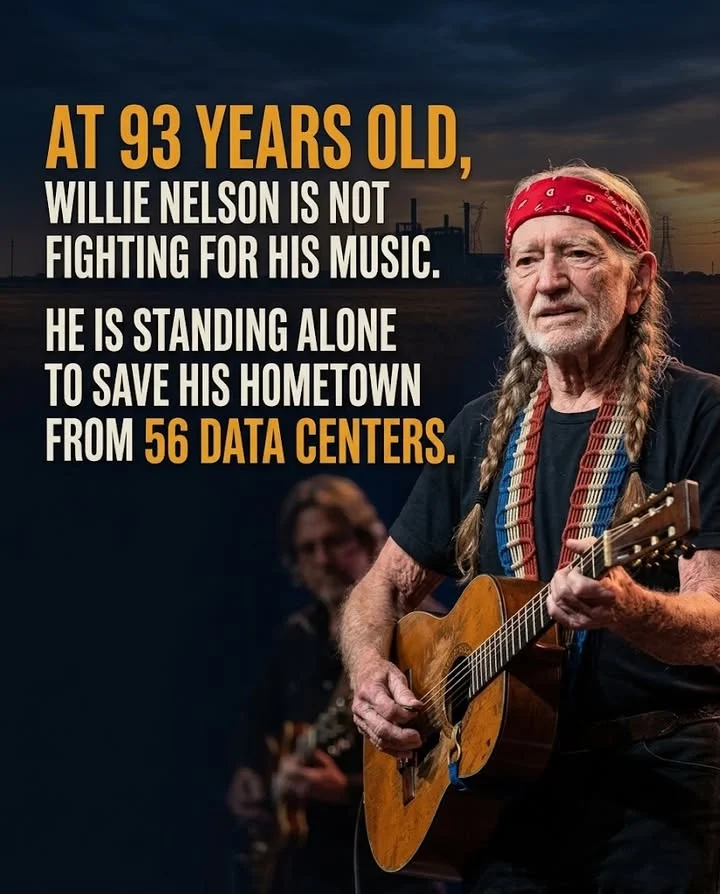
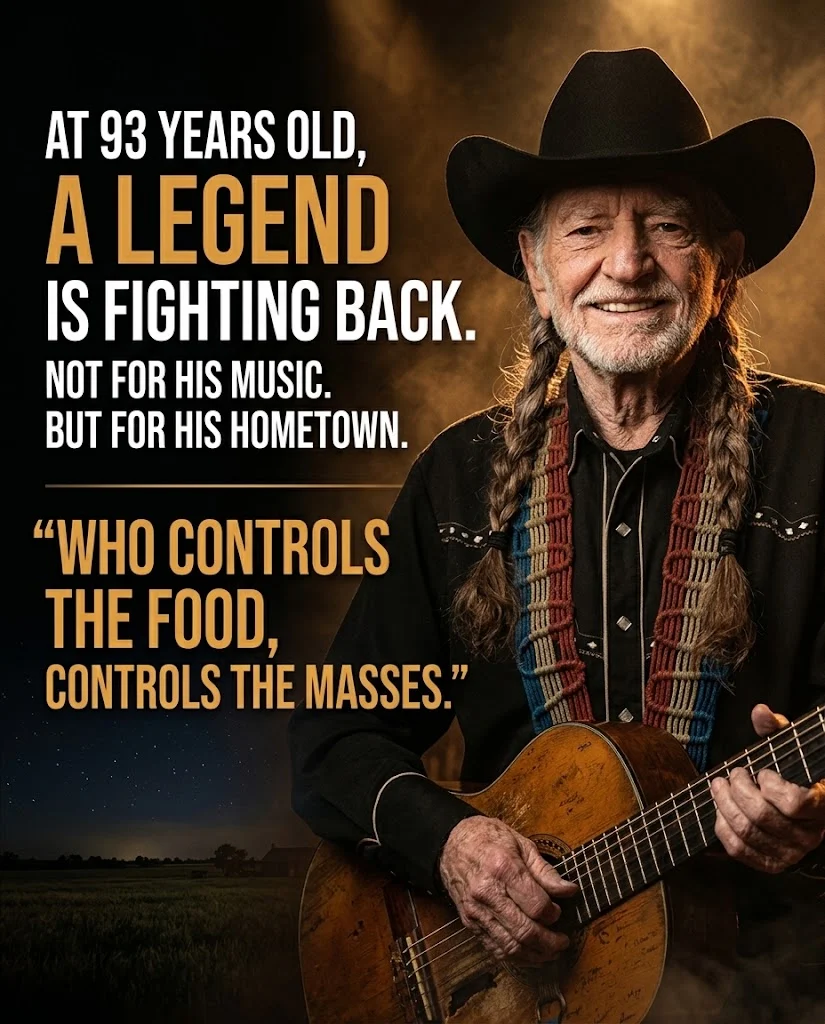
The warning came not from a boardroom but from a porch in Abbott, Texas, where 93-year-old Willie Nelson drew a line against a fast-moving wave of 56 proposed data centers sweeping Central Texas. On July 28, 2026, he published an open letter on his social media platforms and named the threat plainly, calling it a loud, water thieving, light polluting invasion that has no place beside the soil that raised him.
For a town of fewer than 400 people, the arrival of giant corporate footprints could mean the end of generations of family farming. Nelson did not speak as a global superstar. He spoke as a lifelong Texan who still owns and farms land in the rural town. He described a quiet community where a person can still look up and see the stars at night.
Abbott sits just south of the Dallas-Fort Worth metroplex, a region that has become a prime target for data center expansion. The facilities advanced rapidly across Central Texas, largely driven by state taxpayer handouts and a sudden corporate demand for artificial intelligence infrastructure. Many rural residents felt they had no voice in the transformation of their own backyards.
Nelson’s public stand quickly catalyzed a broader resistance. Political figures and grassroots organizations began rallying behind his call. Texas State Representative Gina Hinojosa publicly backed the singer and demanded that the state government sign an emergency order to end the taxpayer subsidies fueling the data center boom. Recent polling shows that seven in ten Americans oppose the construction of artificial intelligence data centers in their local areas.
This fight is a continuation of a promise Nelson made more than four decades ago. Since co-founding Farm Aid in 1985 with John Mellencamp and Neil Young, he has helped raise more than $90 million to keep family farmers on their land. Even just months after releasing his 79th solo studio album Dream Chaser and continuing his summer tour schedule, his focus remains with the people who work the soil.
At 93 years old, he acted as a protective shield for agricultural communities being pushed out by soulless machinery. He warned that allowing the facilities to drain local power grids and water supplies would destroy the environment and threaten the shared food supply.
“Whoever controls food and water controls the masses”
“Let’s not allow our own demise or give up control over necessary resources in the US and especially in Abbott”
He was not asking for a simple boycott or a standard political debate. He was fighting for the basic right of a small town to sustain itself without being consumed by the demands of a digital world. The letter proved that despite a lifetime spent under stadium lights, his deepest devotion was always to the land and the people who work it. The fight for Abbott reveals a much larger battle over the future of the American heartland.