
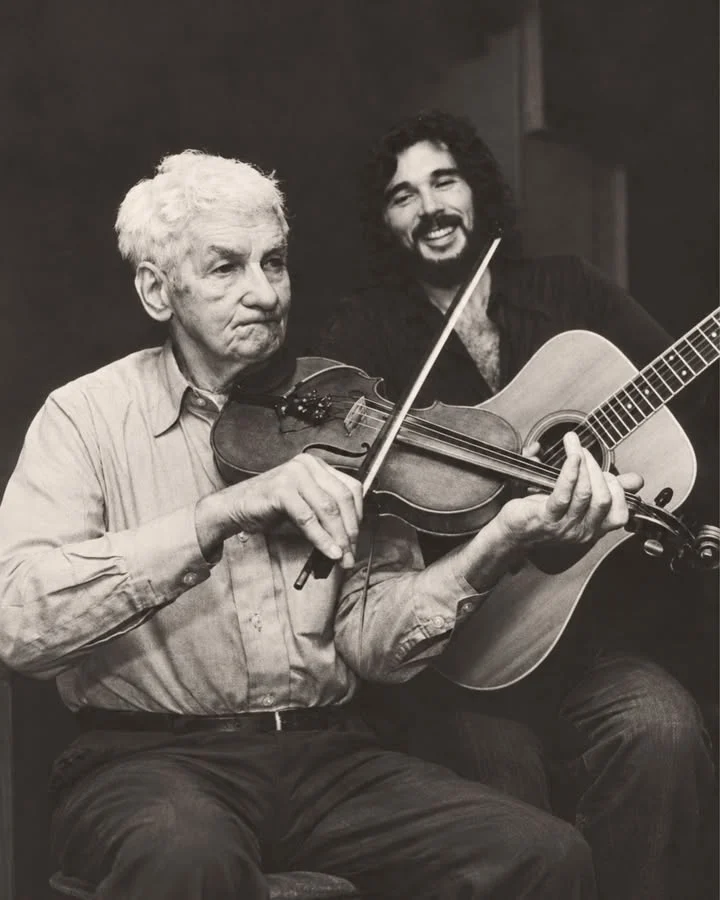
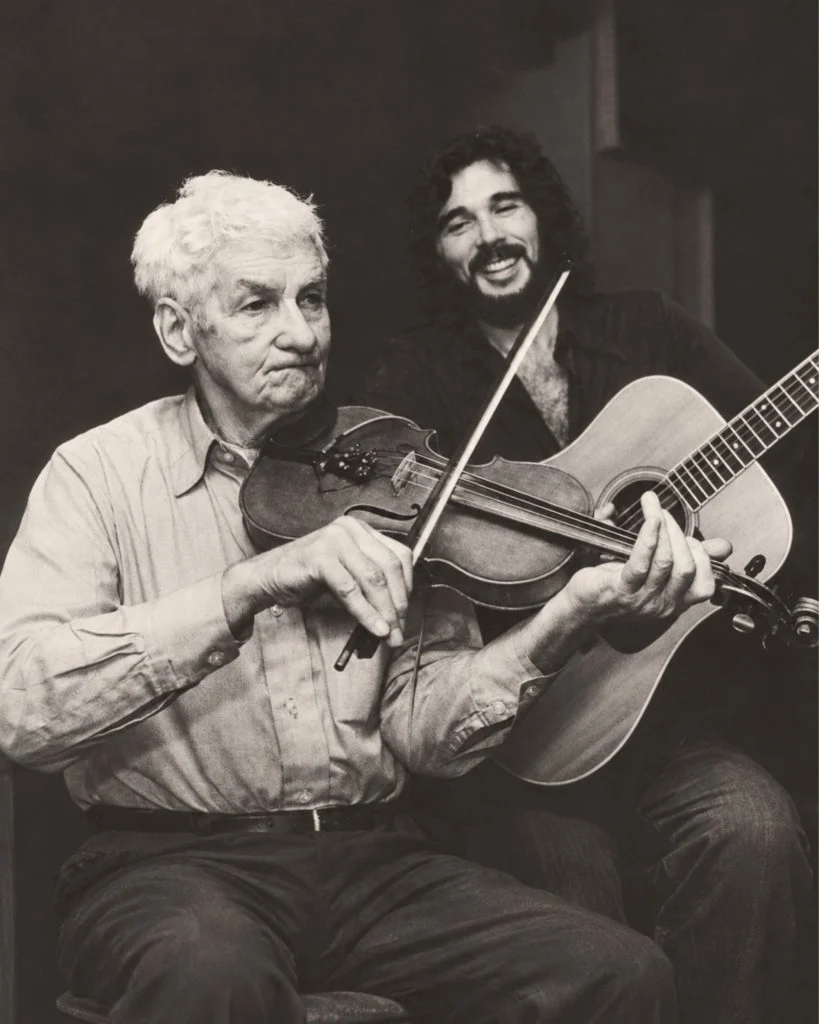
At age seventy eight, Thomas Rabbitt stepped into a Nashville studio and let his fiddle answer a question he had carried across an ocean.
He had spent his working life around an oil refinery, not beneath stage lights. His hands knew machinery, dance halls, weekend parties and the old Irish tunes that filled a New Jersey house. Yet in 1978 his son Eddie Rabbitt gave him one of the final credits on Variations for playing the fiddle on track ten.
Thomas and Mae Rabbitt came to America from Ireland during the 1920s and settled in New Jersey. Their son Edward Thomas Rabbitt was born in Brooklyn in 1941. He grew up hearing jigs and reels long before he understood how far those melodies had traveled.
Thomas worked in refrigeration at the refinery. Away from the plant he played fiddle and accordion at Irish dances, family parties and neighborhood gatherings. Eddie later remembered the music as a constant presence in the house. His father had a small trio, and the old tunes crossed the Atlantic with his parents.
“Eddie believed the minor chords in his writing grew from the Irish music his father played.”
Eddie chose the guitar rather than his father’s instruments. At twelve, after hearing his Boy Scout leader play during an overnight outing, he asked for lessons and began walking several blocks to the man’s home every few days. The scoutmaster played country music, so country became the first style Eddie learned. Yet the records he loved did not sound completely foreign inside the Rabbitt household. The fiddle tunes Thomas played and the country songs arriving from the American South shared older musical roots.
Eddie left New Jersey for Tennessee and survived on small jobs and a modest publishing salary while trying to place songs with established singers. His breakthrough came through writing. Elvis Presley recorded “Kentucky Rain.” Ronnie Milsap took “Pure Love” to number one. An Elektra contract finally allowed Eddie to move from the writer’s room to the front of his own records.
By 1978 he no longer needed to prove that he belonged in a studio. “Drinkin’ My Baby (Off My Mind)” and “Rocky Mountain Music” had established him as a recording artist, and the sessions for Variations used some of Nashville’s finest musicians. Among them were Hargus “Pig” Robbins, Reggie Young and Joe Osborn. Producer David Malloy and engineer Gene Eichelberger helped Eddie create the clean, melodic sound that would soon carry him farther into the pop market.
That made the choice on the album’s tenth track more revealing. Eddie did not ask a session player to imitate the sound of home. He turned to Thomas.
“Song of Ireland” was written with Even Stevens and producer David Malloy. Eddie sang about being born in America while feeling drawn toward a country he had never seen. Near the heart of the recording, the song opened into the traditional Irish tune “Mist in the Meadow.” Thomas played it at age seventy eight.
“Thomas Rabbitt did not become a novelty or a sentimental spoken introduction. His fiddle simply entered the arrangement and carried the dance hall music into Nashville.”
The moment was not presented as a novelty or a sentimental spoken introduction. Thomas was not asked to adapt his playing to a fashionable Nashville part or compete with the polished musicians around him. He played the kind of tune he already knew. Eddie supplied the new song. Thomas supplied the road behind it.
Variations was not a private family project. It was a carefully produced commercial album containing “Hearts on Fire,” “You Don’t Love Me Anymore” and “I Just Want to Love You.” Two of those songs reached number one on the country chart. “Song of Ireland” remained tucked near the end, never becoming one of Eddie’s signature singles. Yet its personnel list preserved something the hits could not. Thomas Rabbitt appeared as Irish fiddle on track ten.
The connection did not remain sealed inside the studio. A 1991 profile described fiddle tunes as part of Eddie’s live show and noted that his road manager sometimes played the spot Thomas had often filled. By then Eddie was known for records such as “Drivin’ My Life Away,” “I Love a Rainy Night” and “Step by Step.” His concerts were built around songs heard on American country and pop radio, yet there was still room for “Orange Blossom Special,” “Boil the Cabbage Down” and the kind of fiddle playing that had existed in the family before Nashville knew Eddie’s name.
When Eddie spoke with Irish America in 1991, Thomas was no longer there. He told the interviewer that his father had died the previous December 23. The conversation had been about Ireland, family and the music inside Eddie’s house when he was young. After mentioning the loss, Eddie picked up his guitar to rehearse before the evening performance. Later, he walked onto the stage and worked through requests from the audience. His road manager took the fiddle feature that Thomas had sometimes played.
Eddie’s public sound was often described in terms of crossover, country moving toward pop, Nashville records reaching listeners who did not ordinarily buy country albums. Thomas’s fiddle reveals movement in the other direction. Long before Eddie’s songs crossed a chart boundary, music had crossed an ocean, entered a New Jersey house and waited there for a son to carry it south.
“The refinery worker who played Irish dances on his nights off lived long enough to leave his tune on his son’s record.”
On Variations, the largest hits arrive earlier. Thomas Rabbitt is waiting on track ten. The recording gives listeners the sound of father and son sharing the same album credit.