
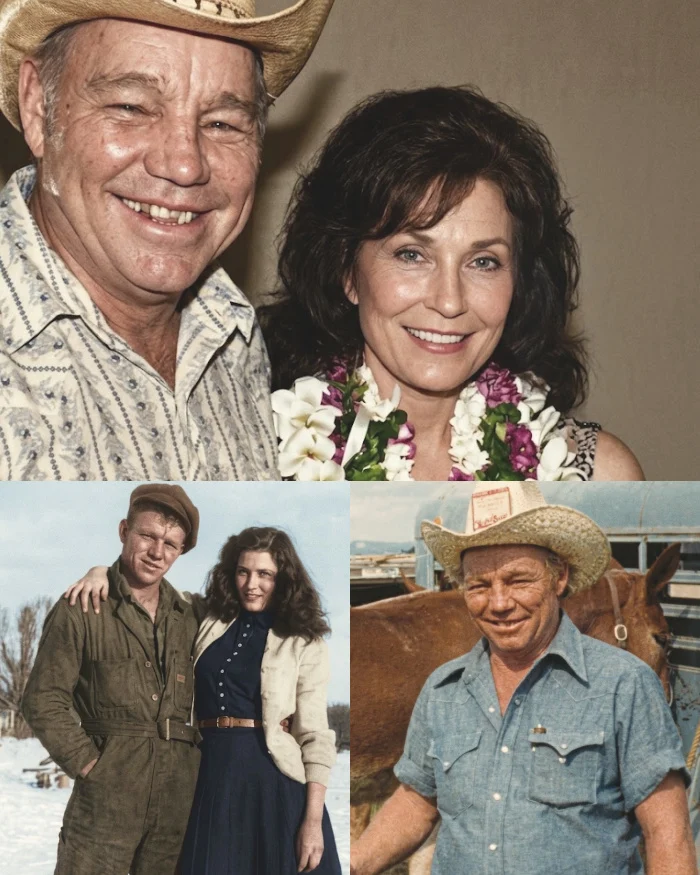
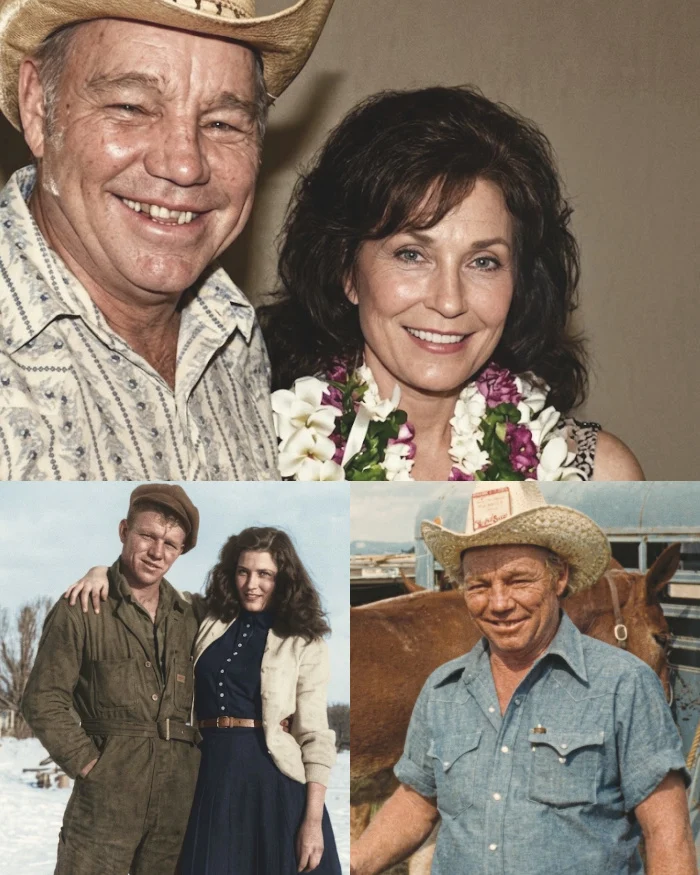
Doolittle Lynn walked away from a steady paycheck as a mechanic to bet his family’s survival on a single song. With a wife and four young children at home, he left the garage behind and transformed into a makeshift manager, publicist, and shipping clerk overnight.
He sat at an old typewriter night after night, hunting and pecking out personal letters to country radio DJs. Each note was folded carefully around a vinyl 45 of I’m a Honky Tonk Girl. He paid for postage out of their last savings, and every sealed envelope carried the weight of a family’s future.
We had no connections, no PR experience, and no safety net. But Doolittle believed in my voice more than anyone else.
Their tiny label Zero Records had no marketing budget. So the Lynn family launched a self-booked cross-country tour in a dusty 1955 Ford. They drove from town to town, scanning the radio dial for country stations and tracking down the studios.
Loretta was shy and homesick, far from the Kentucky coal camps of her youth. At each stop, Doolittle refused to leave the lobby until the local disc jockey agreed to play the record. They slept on the cramped car seats and lived on bologna sandwiches eaten on the highway shoulder.
Slowly the station-by-station hustle paid off. I’m a Honky Tonk Girl climbed the national charts to number 14 on Billboard’s Country chart. That single road trip proved Loretta had an audience, but arriving in Nashville brought a new challenge. They needed the backing of Music Row insiders to turn a grassroots hit into a lasting career.
The breakthrough came when the Wilburn Brothers recognized her songwriting talent. They brought Loretta onto their touring show, campaigned for her in Nashville, and helped her secure a contract with Decca Records in 1961.
At Decca, legendary producer Owen Bradley knew that smothering Loretta’s sharp Kentucky twang in lush strings would destroy the authenticity that drove her success. He stripped back the production, surrounding her vocals with traditional steel guitar and fiddle. This approach allowed her direct, conversational lyrics to remain the focal point of every session.
Decca released a relentless string of hits including Don’t Come Home A’ Drinkin’ (With Lovin’ on Your Mind) and Fist City. Loretta Lynn became the undisputed Queen of Country Music, unafraid to tackle the stark realities of domestic life.
Yet the foundation of that unprecedented career was not built in a Nashville boardroom. It was secured mile by mile, by a husband who traded his mechanic’s tools for postage stamps, and a woman who earned her first audience from the front seat of a 1955 Ford.
Before the world knew the Queen of Country Music, Doolittle was her most fiercely devoted believer. He used his calloused hands to push his wife’s voice out of the coal camps and into the light.