
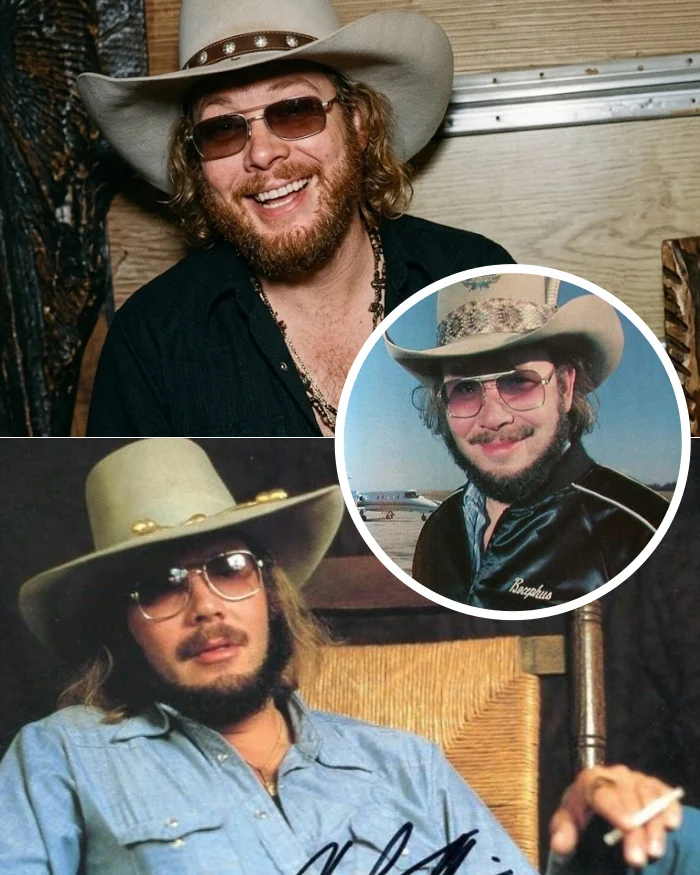

August 1975 became the moment a Montana mountain nearly erased a country singer before he could become his own voice.
Hank Williams Jr. was climbing Ajax Peak with a friend when the snow beneath him gave way. He fell nearly 500 feet across jagged rock and sustained severe injuries and multiple skull fractures. Rescue teams reached him in a condition so critical that survival seemed unlikely.
The phone call reached his wife, Gwen Yeargain, and changed their lives in seconds. As the public braced for the worst, she became the quiet anchor in the hospital room. Doctors spent years performing complex reconstructive surgeries to save his life and rebuild his facial structure. Johnny Cash and June Carter Cash stood by his bed with prayers and steady presence.
He had to fight for the face that would later hide his scars.
The physical toll left permanent damage. The trauma brought extreme sensitivity to light, and the surgeries left deep, lasting scars. He grew a thick beard, pulled down a cowboy hat, and wore dark sunglasses to protect his eyes and shield his face. That practical defense became country music’s most recognizable armor.
Before the fall, he had spent years resisting the quiet expectation that he should simply be a copy of his famous father. He had just begun to break away and had been venturing toward a grittier Southern rock sound with the Muscle Shoals project Hank Williams Jr. and Friends.
The mountain nearly stopped that evolution. Instead, the grueling recovery hardened his resolve. He realized that if he had to survive that much pain, he would not spend his life singing someone else’s songs in a matching rhinestone suit.
The beard, the hat, and the dark glasses were not vanity.
They were survival. When he finally returned to the studio, that raw energy shaped the sessions for his watershed 1979 album Family Tree and pushed him into a more independent and powerful sound.