
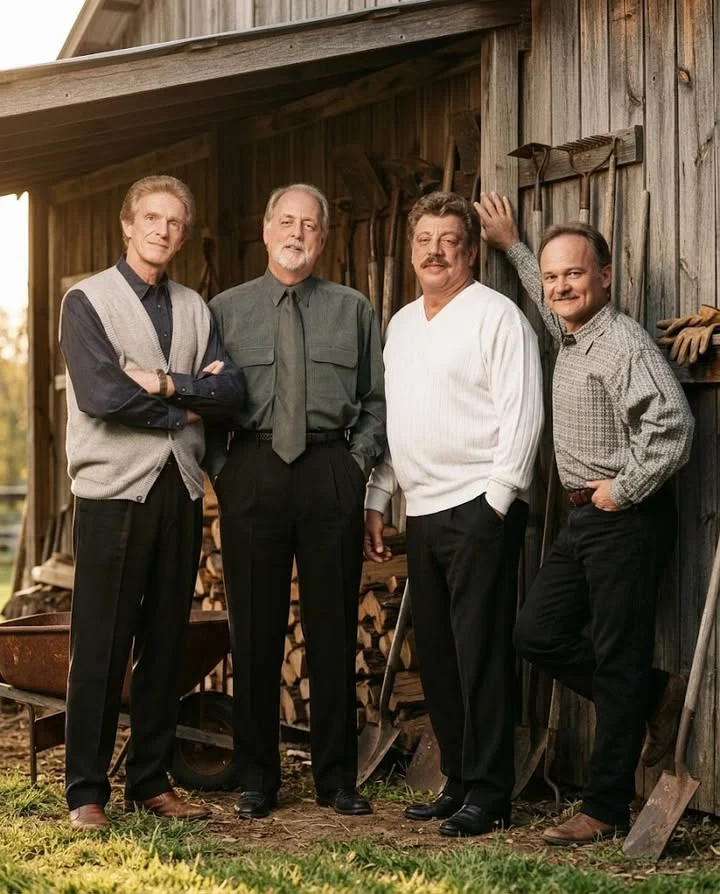

The room went still when Jimmy Fortune placed a song he had written in front of the Statler Brothers. He was young. He was untested. And he was asking country music royalty to trust a melody that had come from his own heart.
That quiet risk became the turning point for a singer from Virginia who joined the group in the winter of 1982. He was not walking onto just another stage. He was stepping into one of country music’s most beloved quartets while the ailing Lew DeWitt was forced to step away. The void was enormous, and fans were not ready to pretend otherwise.
Audiences watched the newcomer with folded arms and cautious ears. Many assumed he was only a short-term answer, a voice brought in to keep the buses rolling and the shows on schedule. Fortune understood the doubt. He could not imitate the past and hope to last. He had to prove that he belonged beside veterans who had already defined an era.
His proof was “Elizabeth,” a plainspoken and tender song he had written himself. When his clear tenor met the group’s seasoned blend, the room changed. The four-part harmony found a fresh spark. By 1984, “Elizabeth” had reached the top of the Billboard Hot Country Singles chart and showed that the Statler Brothers could still compete with force in the shifting country music landscape of the 1980s.
A chart could measure the song’s reach. It could not measure the relief in the room when four voices discovered they still belonged together.
Night after night, under warm stage lights, “Elizabeth” became something larger than a hit. The harmony rolled over audiences with a gentle power. It felt like a love letter to ordinary devotion, and it echoed through living rooms, front porches, and small towns. Husbands and wives heard their own long marriages, small sacrifices, and steady affection reflected in its lines.
The founding members standing beside Fortune felt a deep collective exhale. They had not merely found a new tenor. They had found a gifted narrative songwriter who understood the heartbeat of country music. Fortune kept writing. He added two more consecutive chart-toppers, “My Only Love” and “Too Much on My Heart,” helping the quartet build a second golden chapter.
Decades later, Jimmy Fortune still steps to the microphone. He still sings with conviction. He still shows how a well-crafted country song can outlast trends and touch listeners across generations.
He was handed the spotlight because a legendary group needed someone to carry on. He turned that opportunity into a lasting legacy. A band needed a voice to answer an aching silence. Jimmy Fortune gave country music a feeling it will never forget.