
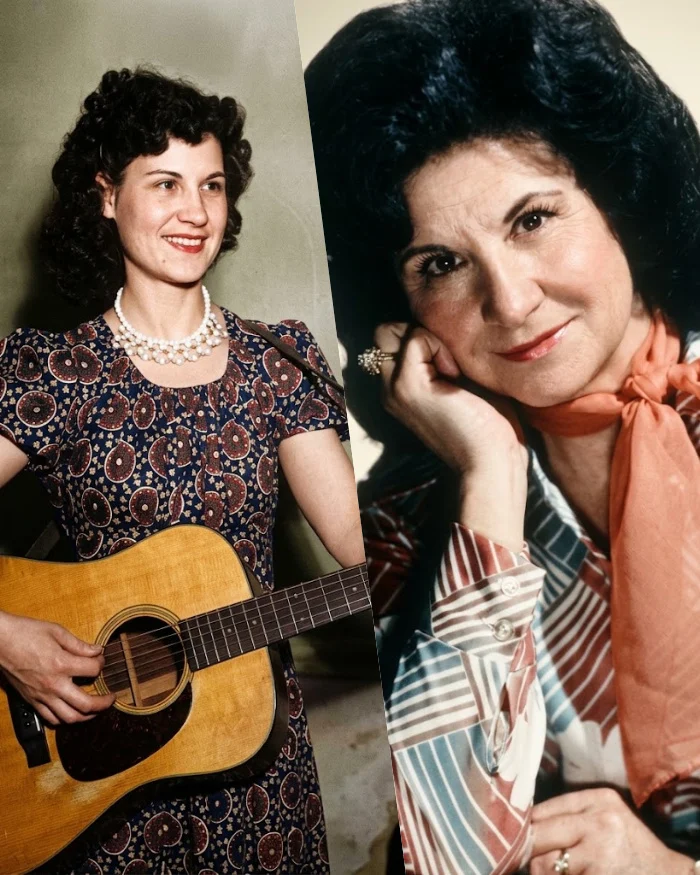
Nashville almost lost the most powerful voice in country music because a tired mother of three was trying to buy groceries.
In 1952 the music industry had made up its mind about women. Paul Cohen of Decca Records reportedly told Johnnie Wright that female singers could not sell records. That belief left Kitty Wells, Wright’s wife, with little room in a male dominated business. She was 32, worn down by years of small stages and quiet rejection, and she was ready to quit.
She agreed to go into Castle Studio at the Tulane Hotel on May 3, 1952 for a simple reason. The session paid a $125 union fee and that money could help feed her family. She did not arrive as a rebel. She arrived as a mother with a gingham dress and a need for steady work.
The song she recorded became a quiet counterargument to Hank Thompson’s hit The Wild Side of Life. It Wasn’t God Who Made Honky Tonk Angels spoke for women who were blamed, ignored, and pushed aside. The conservative music establishment tried to shut it down. NBC Radio banned it. The Grand Ole Opry initially refused to let her perform it. The backlash only made the record more magnetic.
Housewives and working women bought it with saved quarters. They finally heard their own frustration sung back to them in a plain and powerful country voice. The single sold more than 800,000 copies in its initial release and held the No. 1 spot on the Billboard Country chart for six straight weeks. Kitty Wells became the first solo female artist in history to reach that rank. She proved it was not a fluke by collecting dozens of Top 10 hits through 1968.
She did not shout for revolution. She let the cash registers speak.
The success did not just make her a star. It forced Nashville to rebuild its assumptions. Labels such as RCA Victor, Capitol, and Columbia had dismissed women as a commercial risk. After Wells proved the demand, their scouting teams raced to find the next female headliner. The era of the background girl singer collapsed because one record had turned an ignored audience into a market.
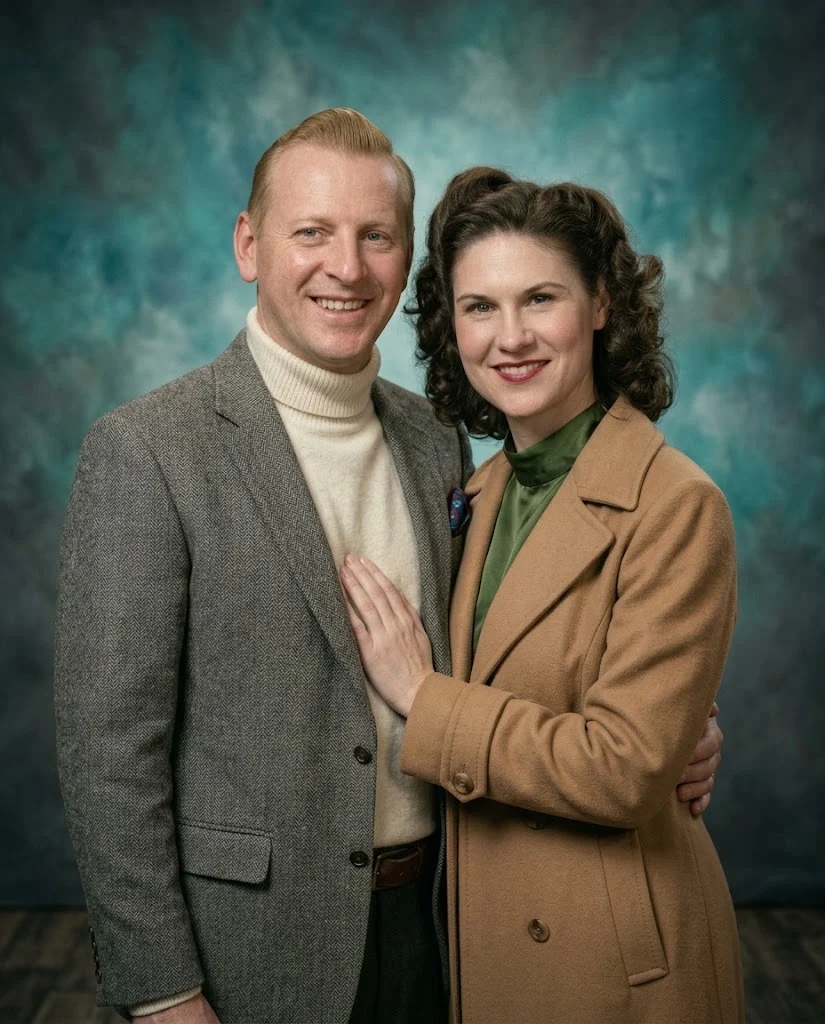
What made the victory even more striking was the woman behind it. Kitty Wells never looked like the industry’s idea of a scandal. She remained devoted to Johnnie Wright for 64 years. She carried herself with maternal dignity. She sang traditional country with a modern impact. Her quiet courage opened the road for Patsy Cline, Loretta Lynn, and Dolly Parton.
She changed country music forever by stepping to a microphone for $125 and letting the truth of her voice do what executives could not control.