
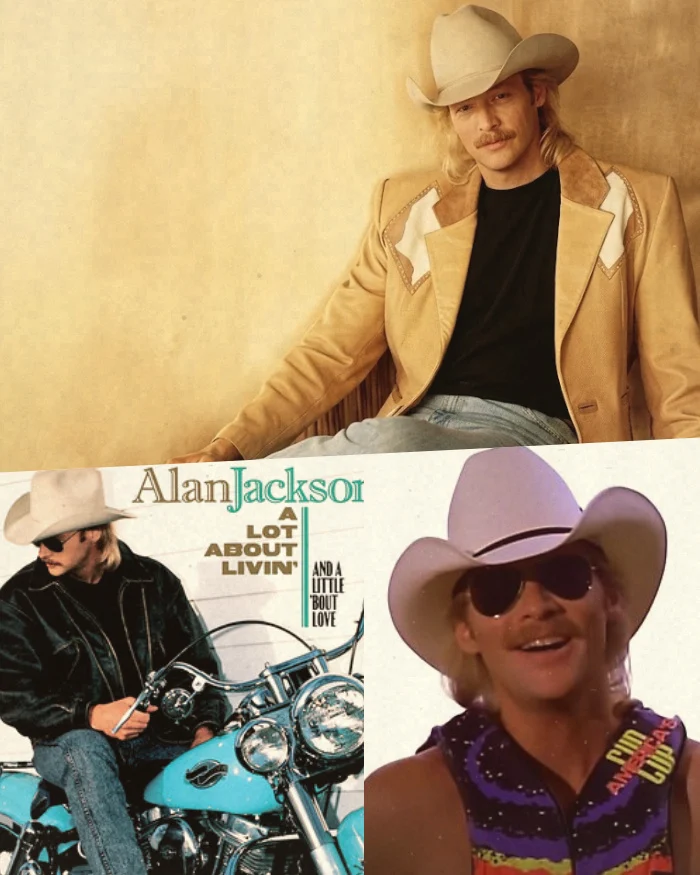
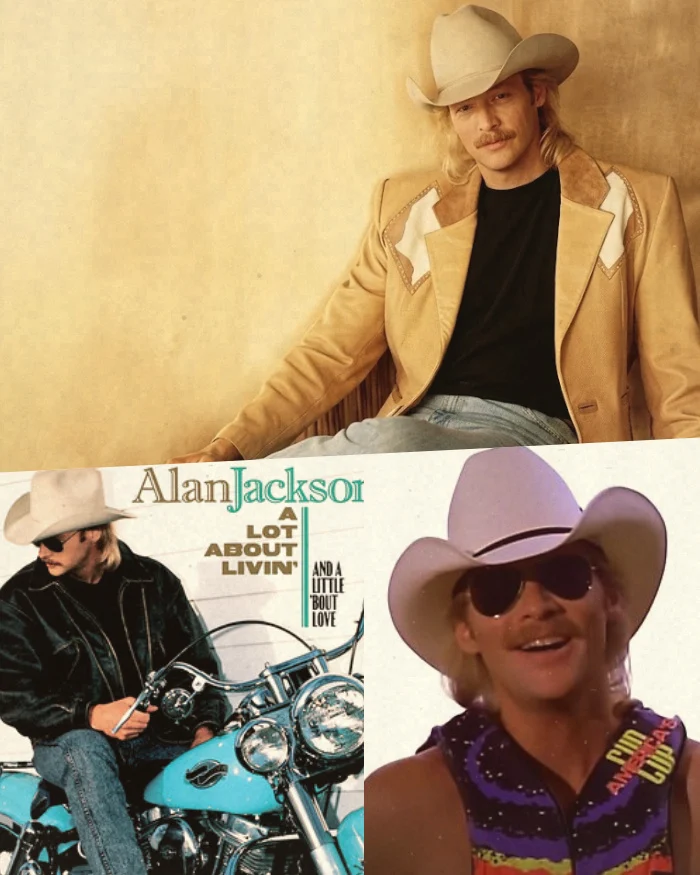
The man once dismissed as too traditional for modern radio ended up selling more than six million copies of an album that never begged Nashville to change him.
When A Lot About Livin’ (And a Little ‘Bout Love) reached number one on the Billboard Top Country Albums chart, Alan Jackson stood in worn denim and a white cowboy hat as proof that hard country roots could conquer the mainstream.
Arista Nashville released the record on October 9, 1992, after years of label executives warning that his Georgia drawl and stripped-down style were too old-fashioned for country radio.
His first two records had made him a steady presence, but the industry was racing toward booming crossover arrangements and arena-sized spectacle.
Garth Brooks had blown the doors open, and Music Row chased acts with rock-inflected polish, yet Jackson wanted the raw feel of a Saturday night at a rural Georgia dance hall.
Before the fame came forklifts, freight, and packages in the mailroom at The Nashville Network, where he wrote songs during lunch breaks while living in a modest basement apartment with his wife, Denise.
When doors stayed shut, Denise took a cassette tape to Glen Campbell at an airport counter and handed it to the star herself.
That fearless act opened a path to Seventh Son, a real songwriting contract, and a partnership with producer Keith Stegall.
They told him his roots were too dusty for Music Row, so he planted them deeper.
In the studio, Jackson and Stegall refused slick pop production and put fiddle and steel guitar at the front of the mix.
The songs came from working-class life in Newnan, Georgia, and from memories of muddy riverbanks, cheap beer, waterskiing, and first love.
The biggest gamble became Chattahoochee, an uptempo song Jackson co-wrote with Jim McBride and believed only locals would understand.
Stegall pushed him to cut it anyway, and Brent Mason’s fiery Telecaster lead helped the single cross every regional boundary when it hit radio in May 1993.
The song dominated country charts, sent young listeners into line-dances, and swept Single of the Year and Song of the Year at the 1993 CMA Awards.
Beside it sat a spirited take on Mercury Blues, a 1949 K.C. Douglas tune Jackson retooled into a revved-up country rocker.
He also reached out to early mentor Randy Travis, and the two co-wrote She’s Got the Rhythm (And I Got the Blues), a barroom shuffle anchored by twin fiddles.
Travis sang background harmonies and offered a quiet endorsement linking two generations of traditionalists.
The album went on to sell over six million copies and earned a six-times platinum certification from the RIAA.
Commercial dominance never required surrendering the ground beneath his boots.
For an artist once told his sound was too dusty for radio, the victory was total.