
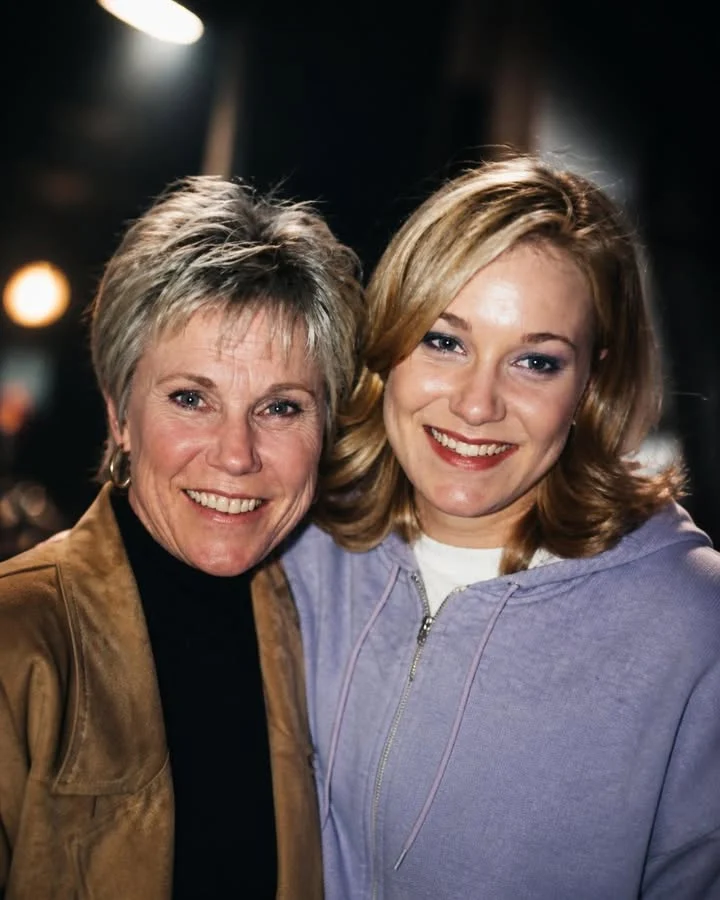
When Anne Murray walked into the studio with her daughter Dawn Langstroth, “Nobody Loves Me Like You Do” stopped being a simple love song. The year was 2007, and the words had not changed at all. But the voice answering Murray’s line for line was the same daughter she had once been terrified of losing. In that moment, the song became something else entirely.
Twenty-three years earlier, in December 1984, the same song had given Murray her ninth number one country hit in America. It was a polished duet with Dave Loggins, a warm and direct ballad that fit perfectly on the radio. Dawn was only five years old then, too young to understand what a number one record meant.
Behind that bright success, Dawn Langstroth was fighting a quiet and exhausting battle with anorexia nervosa. None of her mother’s fame could shield her from the illness. For years, the family struggled in private, watching someone they loved disappear into a disease that did not care about gold records or standing ovations.
Everything changed in January 1999. Anne Murray and Dawn Langstroth decided to stop hiding. They sat down together for interviews, and Anne performed a benefit for Sheena’s Place, the Toronto centre that had supported them through the darkest days. It was not an instant rescue, but it was a brave step forward.
Some songs begin as performances and end up becoming testimony.
Dawn did not heal in a straight line. She had to find her own way back, and eventually she did. She started writing and recording music under her own name, creating a separate identity from her mother’s legendary career. That journey made the 2007 duet possible.
Anne Murray chose Dawn to sing “Nobody Loves Me Like You Do” again for Duets, the last album of new material she would ever release. Not a single word of the lyric was rewritten. But everyone who knew their story heard the difference. The song was no longer about romance. It was about survival, about a mother and daughter who had crossed a painful distance and met on the other side.
There is no easy moral here. The duet does not pretend that love alone cures an eating disorder. It simply proves that love can keep a family from letting go. When Dawn Langstroth sang back to her mother in 2007, the music carried every fear they had shared and every moment of courage it took to reach that studio. That is why this version still matters. It was not just a duet. It was a homecoming.