
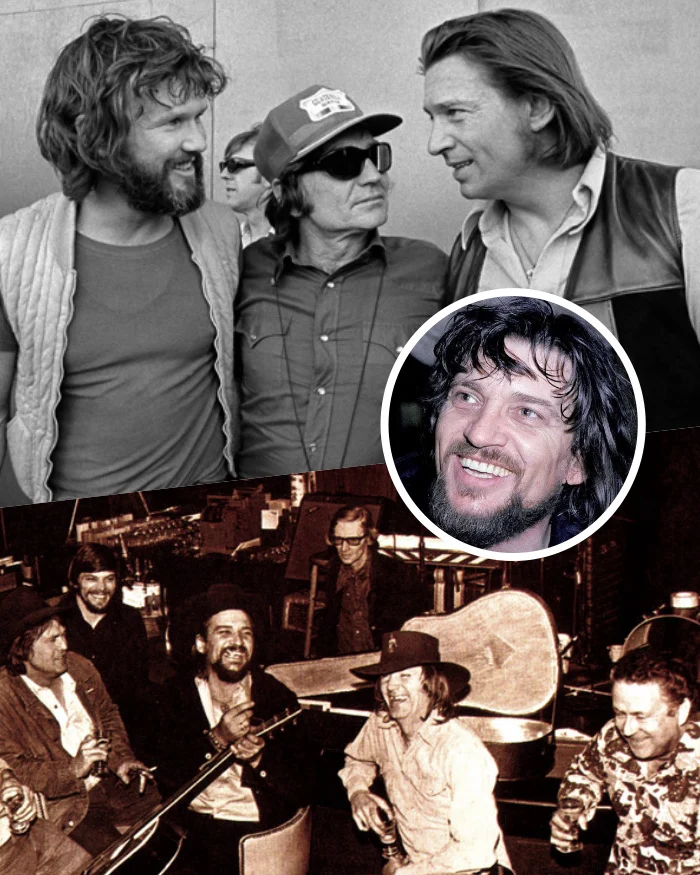
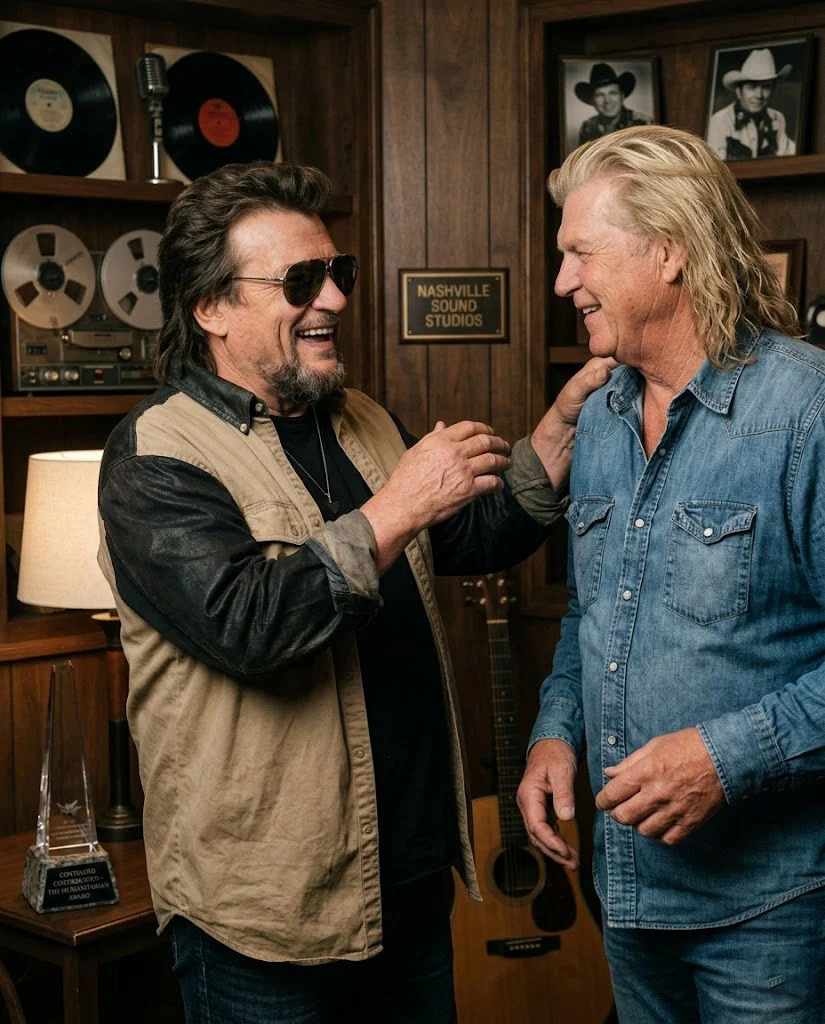
$100 sat on the table. Billy Joe Shaver did not take it. He stood in Nashville with ten songs waiting in his chest and refused to disappear.
Waylon Jennings tried to end the meeting with cash. Billy Joe looked at the bill. He looked at the man. He chose the songs.
That is the moment the story turns. Not in a boardroom. Not under bright stage lights. Inside an RCA session. Chet Atkins was nearby. Waylon was busy. Billy Joe stood there like a broke Texas storm that would not move.
He had come to collect a promise.
In 1972 at the Dripping Springs Reunion in Texas, Waylon heard Billy Joe sing Willy the Wandering Gypsy and Me. It sounded rough and old and alive, like something pulled from dust and whiskey and hard miles.
Waylon asked if he had more songs like that.
Billy Joe did.
Waylon said he might record a whole album of them.
Most men would have let that sentence live as hope. Billy Joe made it a mission.
So he went to Nashville carrying those songs like a man carrying his last good tools. They were not polished. They were not written to flatter radio.
They had dirt on them.
They had hunger.
They had the sound of men who had loved wrong and lost jobs and left towns and kept walking because stopping felt worse.
Then came the waiting.
Waylon dodged him. Days turned into weeks. Weeks stretched into months. Billy Joe kept showing up. He kept asking. He kept hunting down the man who had heard something in him back in Texas.
That kind of waiting can shrink a person.
It did not shrink Billy Joe.
It sharpened him.
Finally, he found Waylon at an RCA recording session. Waylon, maybe tired of the chase, maybe trying to end it without a scene, offered Billy Joe $100 to go away.
One hundred dollars.
For a broke songwriter, that was not nothing. It could have bought food. Gas. A few nights of breathing room. It could have made the humiliation easier to swallow.
But Billy Joe knew what was in his chest was worth more than a folded bill and a quiet exit.
So he said no.
Then he told Waylon he would fight him right there if he did not listen.
Not because he wanted violence.
Because he had run out of polite ways to defend the truth.
Waylon made a deal. Billy Joe could sing one song. If it was good, he could sing another. If it was not, he had to go home.
So Billy Joe sang.
Then he sang another.
Then another.
The room changed one song at a time.
By 1973, Waylon Jennings released Honky Tonk Heroes, an album built almost entirely from Billy Joe Shaver songs. Country music had to make room for something it could not quite tame.
The album did not feel manufactured.
It felt walked in.
It carried the voice of Waylon, but the bones belonged to Billy Joe. He was the Texas poet who would not take the money and would not go home and would not let his songs be treated like an inconvenience.
That is the quiet truth at the center of it.
Outlaw country did not arrive clean and invited.
It came broke and stubborn and certain.
Sometimes a man’s whole future comes down to one small offer and the courage to leave the money on the table.