
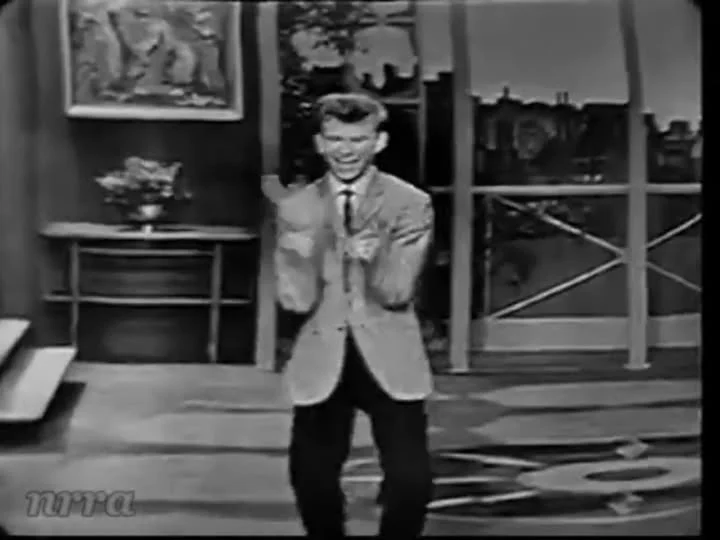
When Bobby Rydell left us in 2022, the soundtrack of an entire generation grew a little quieter. Yet his sparkling debut, “Kissin’ Time,” continues to play on, a perfect two-minute and thirteen-second capsule of pure teenage joy. It is a song that refuses to age, still capable of transporting listeners back to a time when the biggest concern was where to steal a kiss after the school dance.
The late 1950s in America felt less like a decade’s end and more like an endless summer afternoon. Into this scene stepped a 17-year-old drummer named Robert Louis Ridarelli, soon to be known as Bobby Rydell. His early singles had faltered, but everything changed when he entered the small Cameo studio in South Philadelphia to record a song written and produced by the label’s co-founders, Bernie Lowe and Kal Mann. That song was “Kissin’ Time,” and it became the first brick in the foundation of the Philadelphia teen-idol movement.
The single climbed to number 11 on the Billboard Hot 100 and reached number 5 in Canada. It was soon included on Rydell’s debut album, We Got Love. More importantly, it established the template for his subsequent hits like “Wild One” and “Volare.” The track was crafted at Cameo, a label known for turning local talent into national sensations with a sound that was both polished and irresistibly danceable.
What made “Kissin’ Time” so instantly captivating was its arrangement, a masterclass in pop production that balanced brass, rhythm, and vocal charm. The horns, trumpets and trombones, punched out tight, sharp figures that framed Rydell’s earnest voice. The drums, played by Georgie Young and The Rockin’ Bocs, provided a steady four-on-the-floor beat that made dancing irresistible. A hot, blues-tinged saxophone solo injected a shot of rock-and-roll grit into the otherwise polished sheen, a moment of raw energy that reminded listeners this music was rooted in rhythm and blues.
Beneath the soaring brass, the piano chugged along, doubling the bass line for extra weight, while the electric guitar added shimmering off-beat chords that kept the track from sounding too square. It was an arrangement that maximized energy through careful density. I once tried to learn the simple chord progression on piano, but soon realized that the true magic of the song lies in the push and pull of the band’s collective timing, something no sheet music can capture.
Lyrically, the song is a delightful catalog of teenage exuberance, name-dropping cities from Philadelphia to Walla Walla as locations for kissing. It is geographically exhaustive and emotionally straightforward. The genius of Lowe and Mann was capturing that universal language of infatuation and setting it to an unforgettable tune.
The genius of Lowe and Mann was recognizing the simple, universal language of teenage infatuation and setting it to a tune that was impossible to resist.
Rydell’s voice, clean and slightly nasal, cut through the busy arrangement with remarkable flexibility. He was not a swaggering rebel but the charming boy next door, urging teenagers across America to embrace fun. The song launched his career and became a cultural flashpoint. It even resurfaced ironically in 1974 when the rock band Kiss was forced by their label to cover the song for their debut album. That distorted, resentful version only highlighted the original’s effortless innocence by contrast. Rydell’s version is light and jubilant; Kiss’s is heavy and leaden.
Today, in an age of music streaming subscriptions, tracks like this risk becoming background noise. But a dedicated listen, focusing on the precision of the backing vocals and the controlled explosion of the horns, reveals its brilliance. It is a perfectly constructed pop history.
Bobby Rydell bridged the gap between pre-rock crooners and the post-Beatles pop star. “Kissin’ Time” began that journey, an infectious invitation to a party that never truly ends. For those who want to explore more of this sound, listen to Chubby Checker’s “The Twist,” Frankie Avalon’s “Venus,” Dion and the Belmonts’ “Teenager in Love,” Connie Francis’s “Where the Boys Are,” and Ricky Nelson’s “Travelin’ Man.” Each shares the polished, danceable energy that defined an era.