
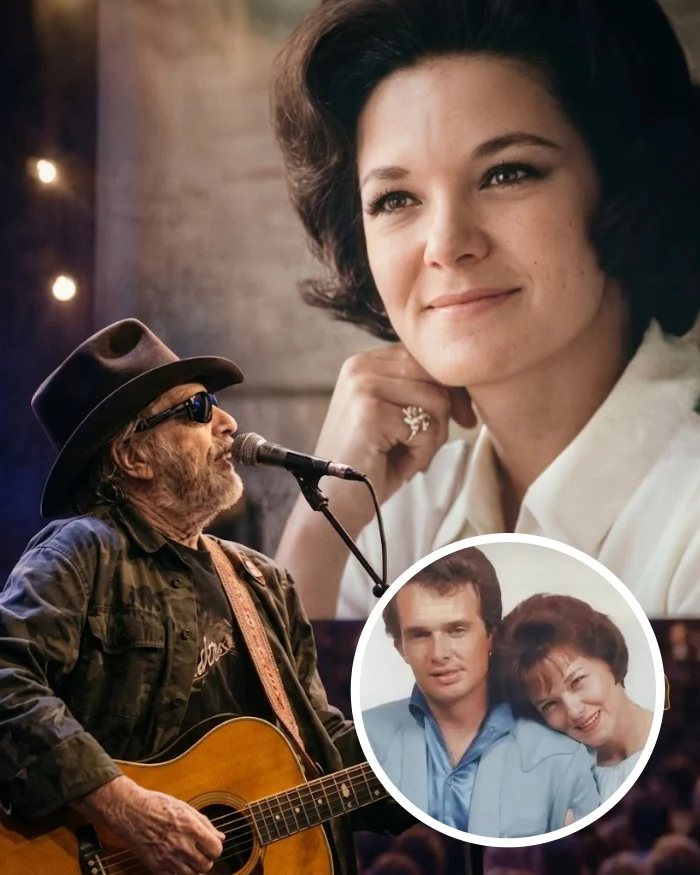
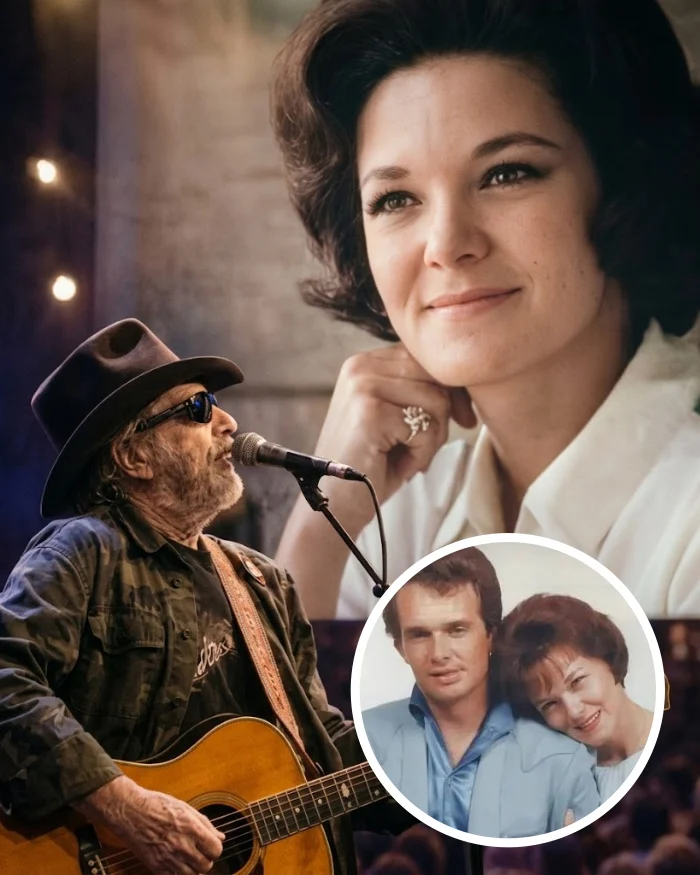
A nursing home room held the final harmony of one of country music’s deepest bonds. Bonnie Owens could no longer name the man sitting beside her, yet she still knew the feeling of his presence.
Long before she became the steady voice behind Merle Haggard, Bonnie had already survived a difficult early marriage to Buck Owens and raised their two sons. By 1965, the same year she married Haggard, she had won the Academy of Country Music’s first Female Vocalist of the Year award.
As Haggard’s fame surged, Bonnie turned her own spotlight into a foundation for his sound. She co-wrote the classic Today I Started Loving You Again and shaped the vocal blend of his band, The Strangers.
The marriage lasted thirteen years and ended in divorce in 1978. Most business partnerships would have collapsed, but Bonnie kept packing her bags for the next tour stop. She remained Haggard’s primary backup singer, emotional anchor, and trusted friend through later marriages, money troubles, and personal storms.
She cared for younger musicians, steadied the band’s morale, and stayed close enough to Haggard to serve as a bridesmaid at one of his later weddings. He often said she was the person who understood him without trying to change him.
Alzheimer’s disease eventually ended her road life. Bonnie moved into a specialized care facility in California, and the woman who had remembered every lyric and harmony began losing the thread of her own past.
Merle Haggard never stopped visiting. Even with his own aging body, constant touring, and personal struggles, he returned to sit beside her again and again. The man who had once filled arenas with noise chose quiet company at the end of the line.
There came a point when Bonnie no longer recognized the gray-haired man across from her. She knew only a version of him preserved in memory and affection.
He’s my favorite
Those words came after someone showed her an old photograph of a younger Merle. The recognition was gone, but the love had become instinct.
Merle did not fight the disease with corrections or demands. He sat, smiled, and let her keep the fragile pieces she still held. His greatest loyalty was not a stage moment. It was the quiet act of remaining present when she no longer knew his name.