
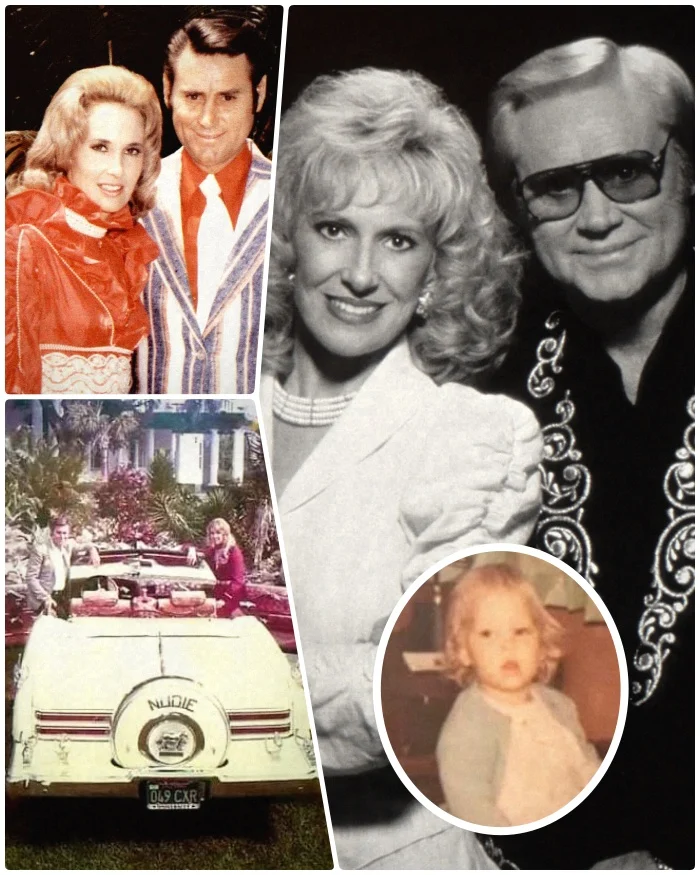

On a humid Tennessee night in August 1968, a young mother made a choice that would change country music forever. With her heart pounding and her three little girls close beside her, Tammy Wynette stepped out of a house filled with anger and into the darkness, carrying only what they could hold and a fierce hope for a safer tomorrow.
Inside that Nashville home, which she shared with songwriter Don Chapel, tension had finally boiled over into a hostile confrontation. George Jones, already a revered voice in country music and a close family friend, stepped into the middle of the argument. He openly confessed his love for Wynette, overturned a coffee table in the heat of the moment, and urged her to leave a situation that could no longer be endured.
Wynette did not hesitate. She gathered Gwen, Tina, and Jackie, packed their clothes into a car, and walked away from her second marriage without looking back. At just twenty-six, she was already topping the charts with songs about enduring heartbreak, yet behind closed doors her own private life was unraveling in ways her listeners could never have imagined.
She was not running toward fame. She was running toward safety for her children and toward a love that had finally refused to stay silent.
That courage had been forged long before Music Row. Years earlier, Wynette had worked long shifts in Alabama beauty parlors and picked cotton in Mississippi mud, raising her girls as a single parent through poverty. Climbing into that car was not a sudden impulse. It was the decisive act of a mother determined to shield her daughters from another broken domestic world.
Determined to clear every legal obstacle, Wynette boarded a flight to Ciudad Juárez, Mexico in early 1969 to seek a rapid divorce. But when attorneys examined the paperwork, they uncovered an unexpected twist that changed everything. Her 1967 union with Chapel had taken place before the mandatory waiting period from her first divorce from Euple Byrd had legally expired. Because that second marriage was void from the start, she was already legally free without any formal court proceedings.
With the path suddenly clear, Jones and Wynette moved quickly to make their commitment official. On February 16, 1969, they drove across state lines to Ringgold, Georgia, a small border town known among touring musicians because it required no blood tests and no waiting period. Far from Nashville executives and flashing cameras, they stood before a justice of the peace and exchanged quiet vows.
Their union soon became the definitive romantic story of American country music, immortalized in timeless studio duets where their voices wrapped around each other with unmistakable authenticity. Yet the harmony listeners heard on record was forged through real human struggle. Jones was already battling deep personal demons, while Wynette carried the exhaustion of a demanding career and anchored a home for four children after the birth of their daughter Tamala Georgette in 1970.
The marriage would face severe trials and eventually dissolve in 1975, but the bond between them never fully broke. They continued to record together, tour together, and share a stage where audiences could still hear the profound understanding of two lives that had lived every line they sang.
Their story did not begin under stage lights. It began on a dark Nashville driveway, where a mother chose the unknown over fear and carried her daughters toward a new beginning.