
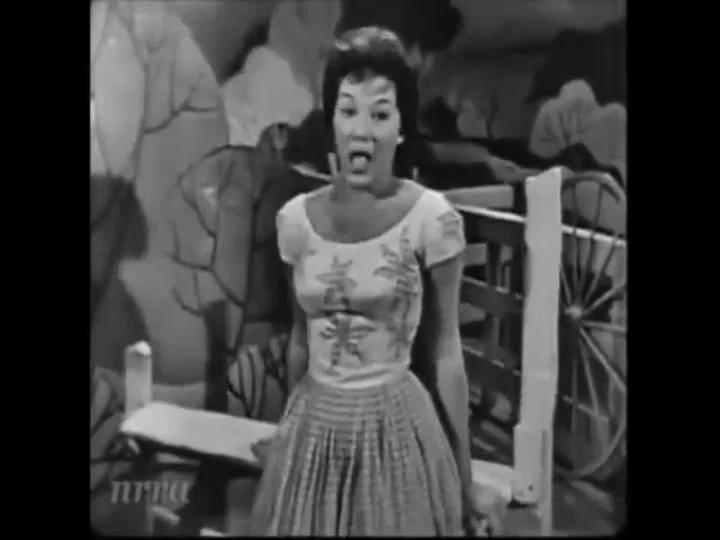
Elegance, in this recording, is not decoration—it’s the chosen tone of truth.
A vinyl fair in a church hall. Someone flips through a Connie Francis compilation and pauses. A seller with a kind face says, “That one’s got ‘Everybody’s Somebody’s Fool.’” The buyer nods as if they meant to find it all along. They take it home, drop the needle, and for the first time in years allow the chorus to land where it wants to land.
That quiet moment captures something essential about the 1960 MGM single that turned Connie Francis from a dependable hitmaker into an era-defining voice. The song topped U.S. charts and traveled across the Atlantic—a German-language version, “Die Liebe ist ein seltsames Spiel,” made her a household name in parts of Europe. Written by Howard Greenfield and Jack Keller, the English recording belongs to that rare class of early-60s sides whose elegance feels inevitable.
On paper, the lyric is a homily: pride blinds, love bruises, nobody escapes with their heart entirely unscathed. What makes Connie’s interpretation timeless is the way she transforms that lesson into conversation. She neither pleads nor scolds. She sounds like someone who has survived the first shock of romantic disillusionment and discovered that wisdom speaks best at a moderate volume. Her phrasing sets consonants down gently; her vibrato stays clean; the tiny decrescendos at phrase ends read as acceptance, not defeat.
The arrangement wears its era with unapologetic grace. Strings provide the carry—not a syrupy bath but a set of supportive beams. Woodwinds, likely clarinet or oboe, sketch curling figures that answer her vocal like a confidante in the next seat. The rhythm section is tidy: a bass that steps without swagger, a snare that gives the track a dignified spine, and a brushed pattern that keeps the song hovering rather than stomping. Listen for the glockenspiel or celesta shimmer—the little pinpricks of light that define so many pre-Beatles pop records. A piano tucks in the harmony, understated, reminding you this is a small drama on a well-lit stage.
One of the subtle marvels is the dynamics. The track never gets loud in the modern sense; it grows radiant. Each chorus arrives with a slightly broader shoulder—the strings open their wings, the background parts lean in. Yet the performance resists showiness. The emotion lands by accumulation, not crescendo. Refrain after refrain, you accept Connie’s premise because her resolve is steady. In an era when belters often had to prove themselves every thirty seconds, she scales the room with a steady hand.
The melodic design is conversationally modal—small intervals, scale-wise motion, an easy singability that makes the hook feel like something a friend once told you and you’ve been repeating to yourself ever since. Greenfield and Keller were craftsmen; they understood how to make a moral feel hummable. The rhyme scheme keeps the floor steady while the harmonic rhythm—those graceful chord changes at just the right moments—encourages the voice to float a half-step above resignation.
Connie Francis was moving through a heavy schedule of sessions, film tie-ins, and multilingual releases. This record feels like the product of a well-oiled machine—A-list New York or Nashville players, arrangements aimed at radio lift and jukebox clarity, and a control room steeped in the practical magic of capturing sung emotion quickly and cleanly. Production and arranging credits tend to be attributed broadly to MGM’s in-house operation from this period, which aligns with the sleek, string-forward signature.
There’s a tension at the heart of the recording that gives it staying power: the glamour of the orchestral palette versus the grit of the message. On the surface, the record is elegant—pressed hair, perfect lipstick, a smile for the camera. Underneath, the lyric acknowledges that dignity doesn’t protect you from heartbreak. Pop would soon embrace louder truths, but in 1960 truth arrived with good posture. That contrast is the record’s quiet electricity.
Two sonic details reward close listening. First, the reverb: not cavernous, not a surf-era wash, but a carefully controlled chamber that elongates the vowels by half a heartbeat. You can almost measure the room in her “oo” sounds. Second, the backup textures, likely a blend of winds and vibraphone-like sparkle, which function like moral support—never a crowd, just the right number of friends. This is not a wall of sound; it’s a veranda with a view.
The form is built for radio: concise intro, first verse establishing premise, chorus with title line clearly articulated, second verse deepening the narrative, a final chorus that seals the viewpoint. In under three minutes, the song maps pride to pain to perspective. Plenty of singers have preached that lesson, but few have made it sound this courteous.
Listeners often remember where they were when a song first read them back to themselves. A late-night diner, plastic roses in a green bottle. Two people who insist they’re “just friends” are doing what just-friends do at 12:45 a.m.—lying politely. The jukebox settles on Connie and the room leans into the vocal. Nobody says anything. The chorus arrives, and one of them looks down at the coffee ring their cup left behind. They laugh. It sounds like the first honest sound either has made all night.
An office supply store on a Wednesday. A middle manager lumps printer paper into a cart and tries not to check their phone. Over the tinny store system, Connie’s line about foolishness floats past the aisle of binders. Pride, paper, toner, regret. They add a highlighter they don’t need and steal a breath in the parking lot that is equal parts apology and hope.
Beyond personal resonances, the track speaks to the craft standards of its moment. Early-60s pop placed a premium on clarity: clean diction, memorable melody, arrangements that stayed out of the singer’s way. The microphones of the period captured a soft sheen on the top of the voice, a polite sparkle that flatters without ironing out the human grain. That restraint is not detachment; it’s poise.
If you approach the song as a study text, you’ll notice how economical the orchestration is. Strings sustain harmony and add sighs between phrases. Woodwinds do the filigree work. A minimal, polite guitar strum occasionally shades the rhythm, while the piano offers harmonic ballast without showy runs. Nothing calls attention to itself, which is why the whole shines.
One could argue that the record’s true innovation is its refusal to choose between sweetness and sobriety. The lyric doesn’t punish or excuse; it merely observes that romance has a way of tugging everyone into the same weather. The singer makes no threats, levels no revenge. The mercy in the song is universal and unadorned. In the current age of confessionals that spill to the edges of the frame, a message this measured feels almost radical.
For listeners discovering the track today, two practical notes. If you’re chasing the most faithful playback, seek out a transfer that preserves the gentle tape saturation; high-resolution sources can reveal how the upper strings and sibilants behave in the room. And if you’re curious to understand how the melody sits under the voice, old anthologies sometimes include the original sheet music—a reminder that pop once assumed you might want to sing it yourself at the family upright.
The song also clarifies something about Connie Francis as an interpreter. She wasn’t merely selling a hook; she was curating perspective. In other hits from the same year and surrounding seasons, she toggles between flinty and forgiving, but here she lands on a voice that seems to speak for a whole peer group—teenagers stepping cautiously into adult weather, adults remembering their first skinned‑knee love. That dual address is tricky; she makes it feel natural.
Released as a single rather than framed by a dedicated album cycle, “Everybody’s Somebody’s Fool” operates like a statement pinned to a noticeboard. It’s designed to stand on its own, to fold into compilations comfortably, to travel across countries in multiple languages. The German version’s success underscores the pliability of its premise: love renders us all slightly ridiculous. That’s not a national trait; it’s a human one.
There’s an audio‑engineering charm, too. The light chamber reverb keeps the edges round, and the mastering leaves headroom for the crescendos to breathe. If you audition the track through good studio headphones, you’ll hear the vocal sit a half‑step forward of the orchestra—not by volume but by presence—as if Connie is leaning over the balcony rail to deliver advice privately to you and you alone.
Some songs are remembered because they changed everything. Others are remembered because they changed nothing except us. “Everybody’s Somebody’s Fool” belongs to the second group. It didn’t reinvent form or sonics, but it gave pride and tenderness a meeting place and invited radio to eavesdrop. In a world hooked on novelty, that kind of durable clarity is its own quiet revolution.
Even now, more than six decades on, the track has practical uses. It works on a rainy commute where you need a voice to lower your shoulders. It works when you’re practicing forgiveness that doesn’t quite fit yet. It works when you want to hear an adult accept the costs of love without spoiling the sweetness that made it worthwhile. The melody carries, the rhythm steadies, and the message lands without splinters.
Return to it not for nostalgia alone but for calibration. This record sets the needle: handsome but honest, poised but not guarded. And when the final chorus fades, what remains is the small liberation of realizing that being someone’s fool isn’t a permanent condition. It’s a season you outgrow with grace.
Listening Recommendations
1. Connie Francis – “My Heart Has a Mind of Its Own” — Sister single from the same period, sharing orchestral polish and a clear‑eyed view of love’s stubborn logic.
2. Brenda Lee – “I’m Sorry” — A 1960 ballad whose controlled vibrato and string support mirror the elegant restraint of Connie’s delivery.
3. The Shirelles – “Will You Love Me Tomorrow” — Early‑60s pop melodicism with a wise lyric about vulnerability and consequence.
4. Patsy Cline – “I Fall to Pieces” — Country‑pop crossover with similarly impeccable phrasing and a patient, string‑forward arrangement.
5. Lesley Gore – “You Don’t Own Me” — A few years later in tone and theme, but an instructive contrast in agency and orchestral sweep.
6. Connie Francis – “Who’s Sorry Now” — Her late‑’50s breakthrough, offering a brassier, pre‑1960 snapshot of her interpretive poise.