
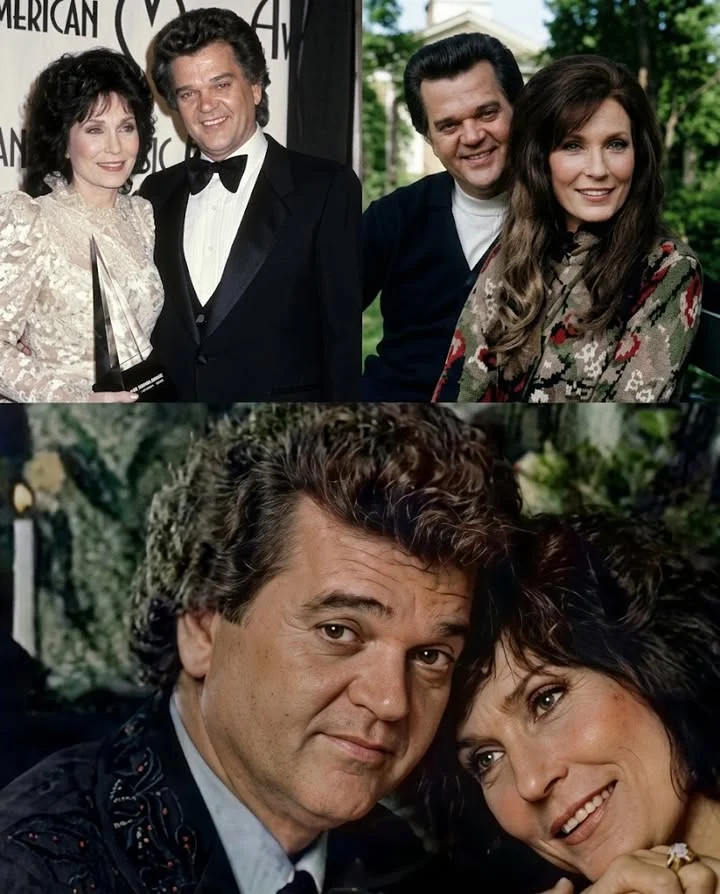
The center stage microphone held two voices so close together that gossip magazines spent twenty years imagining a secret affair between Conway Twitty and Loretta Lynn.
The Country Music Association named them Vocal Duo of the Year for four straight years. Every time they leaned in under the lights, tabloids guessed about a hidden romance.
They answered with something far stronger than scandal. They built a partnership rooted in trust, family, and protection.
Every harmony they sang felt electric. Records such as After the Fire Is Gone and Lead Me On carried a blend so natural that outsiders mistook artistic closeness for romance.
The truth lived in plain sight. In the early 1970s, as rumors grew, Twitty and his wife Mickey became regular dinner companions for Lynn and her husband Oliver Doolittle Lynn. The four traveled together on shared holiday breaks and turned suspicion into open friendship.
Their story began in late 1970 at Bradley’s Barn in Mount Juliet Tennessee. Producer Owen Bradley heard something rare in Lynn’s sharp Appalachian timber and Twitty’s smooth Mississippi phrasing. He asked them to sing face to face at the same microphone instead of layering separate tracks.
Both came from hard rural roots, and that shared background gave them an artistic understanding that needed no romance.
They learned to control volume by leaning forward or stepping back by inches. That tiny physical adjustment became the sound of a legendary duo.
From 1971 through 1981 they released a collaborative studio album every year. They generated five straight Billboard number one country hits and twelve Top 10 singles.
Yet the deeper story was not chart numbers. Conway Twitty became a fierce advocate for Loretta Lynn in an industry that often treated solo women unfairly. He reviewed performance schedules, checked contracts, stage lighting requirements, and box office settlements. If a regional promoter tried to shortchange Lynn’s band or push unreasonable tour dates, he refused to take the stage until the issue was fixed in her favor.
They kept touring logistics clear. Separate Silver Eagle buses and distinct road crews reduced backstage friction. They met mainly during pre show sound checks.
The grind took a toll. Lynn faced severe migraines and exhaustion from relentless travel. When illness forced her to cancel dates or rest at her ranch at Hurricane Mills, Twitty often called her home just to check in. He offered to carry solo dates or rearrange tour stops so she could recover without financial penalties.
Interviewers kept asking whether their chemistry hid an affair. Lynn later spoke on national television and set the record straight.
Lynn called Conway Twitty an older brother and one of the most decent, respectful men she had ever known.
Later, Twitty’s wife Dee Henry became another trusted presence in Lynn’s life. That bond reached its most emotional moment in June 1993. Twitty suffered a fatal abdominal aortic aneurysm at age 59. Lynn waited at Cox South Hospital in Springfield Missouri and held Dee Henry’s hand through the early morning hours.
Their catalog remains one of the most decorated in American duet history. They proved that commercial chemistry did not need manufactured drama.
Conway Twitty and Loretta Lynn silenced rumor by living out in the open. Their alliance stood on clean boundaries, practical loyalty, honest respect, and two families who trusted each other completely.