
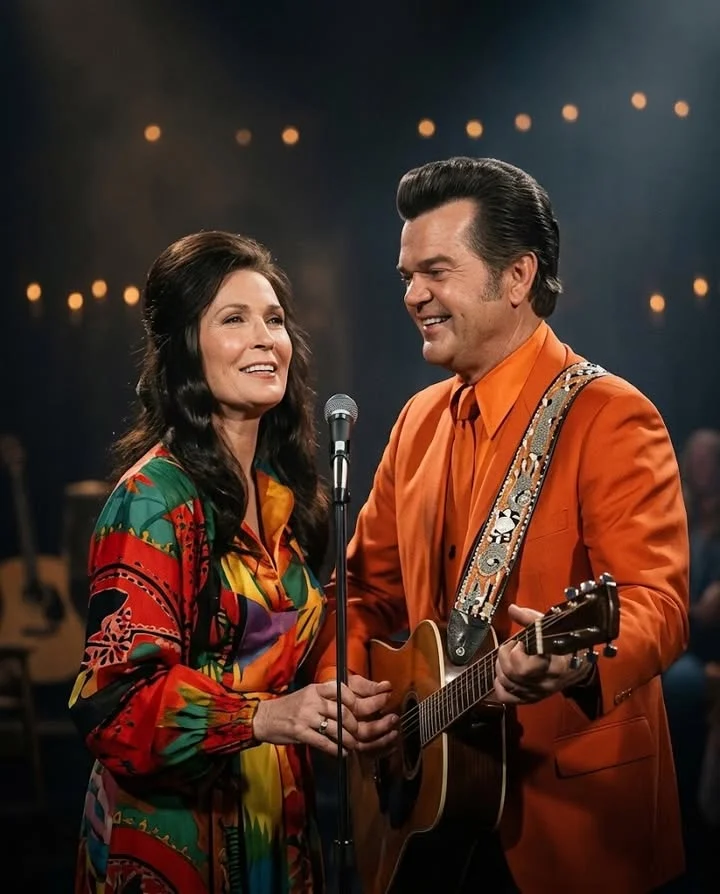
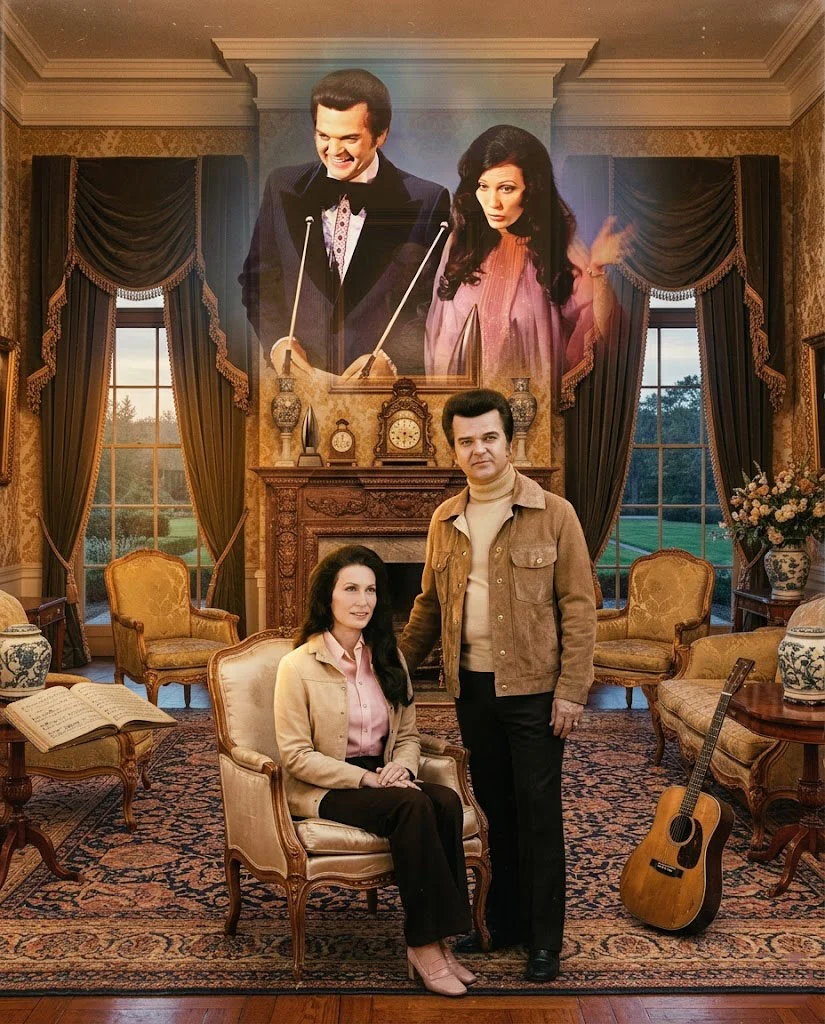
When the red studio light burned on in 1971, Conway Twitty and Loretta Lynn carried a secret into the microphone.
They did not bring a polished promise of forever love. They brought a trembling confession about two married hearts leaning toward danger.
After the Fire Is Gone was not a safe radio ballad.
It was a daring duet about forbidden comfort, fading passion, and the ache of a marriage that no longer felt warm.
“Sometimes the loudest truth comes from two voices refusing to hide.”
Country music had trained listeners to expect loyalty, clean homes, and heroic devotion. The industry favored songs that comforted families rather than exposing them.
Conway Twitty already ruled classic country romance with a smooth voice. Loretta Lynn already spoke for working women with fearless honesty.
Both had massive solo careers, sold millions of records, and fans who trusted their images.
Singing from the point of view of people betraying spouses was a professional gamble.
Most artists avoided that messy subject because it could stain a reputation.
They chose it anyway.
The first take arrived with quiet intensity. Conway’s low growl leaned against Loretta’s raw Kentucky truth.
Neither singer forced melodrama. Their restraint made the pain feel larger.
They sounded like two exhausted souls in a cold room, caught between guilt and hunger for one more spark.
The sparse arrangement gave the lyrics space to settle deep inside the listener.
It painted empty routines, dying warmth, and the quiet desperation behind closed doors in small towns across America.
Instead of destroying their reputations, the song connected with millions who recognized the hidden struggle.
After the Fire Is Gone won a Grammy Award and lit the greatest duet partnership in country music history.
“The most beautiful harmony can rise from the courage to sing the hardest truths.”
Decades later, the recording remains a masterclass in emotional restraint and artistic bravery.
It proved that audience trust is not built on flawless fairy tales alone.
It is built when two legendary voices name the complicated, painful realities of being human.