
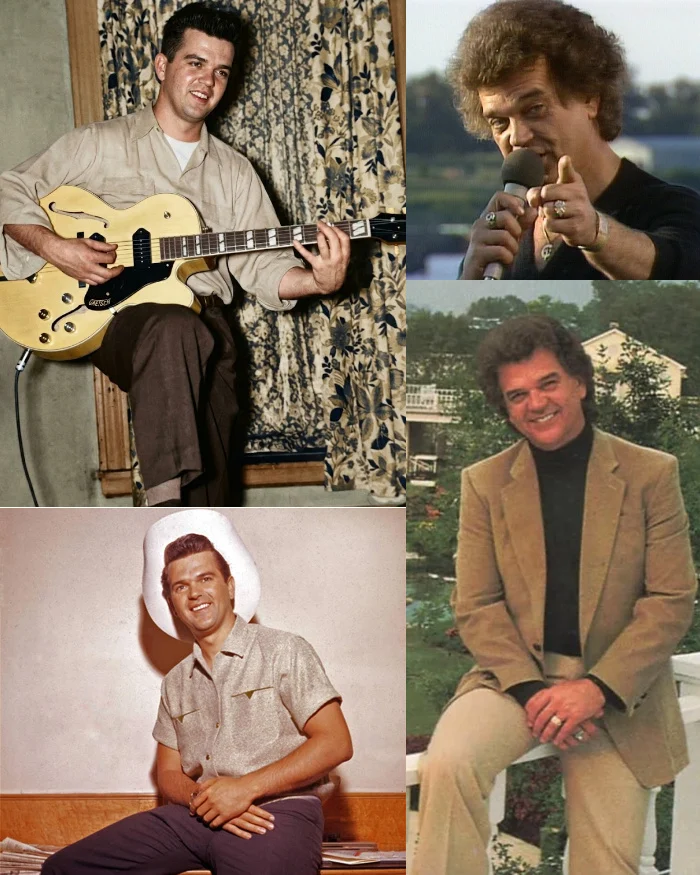
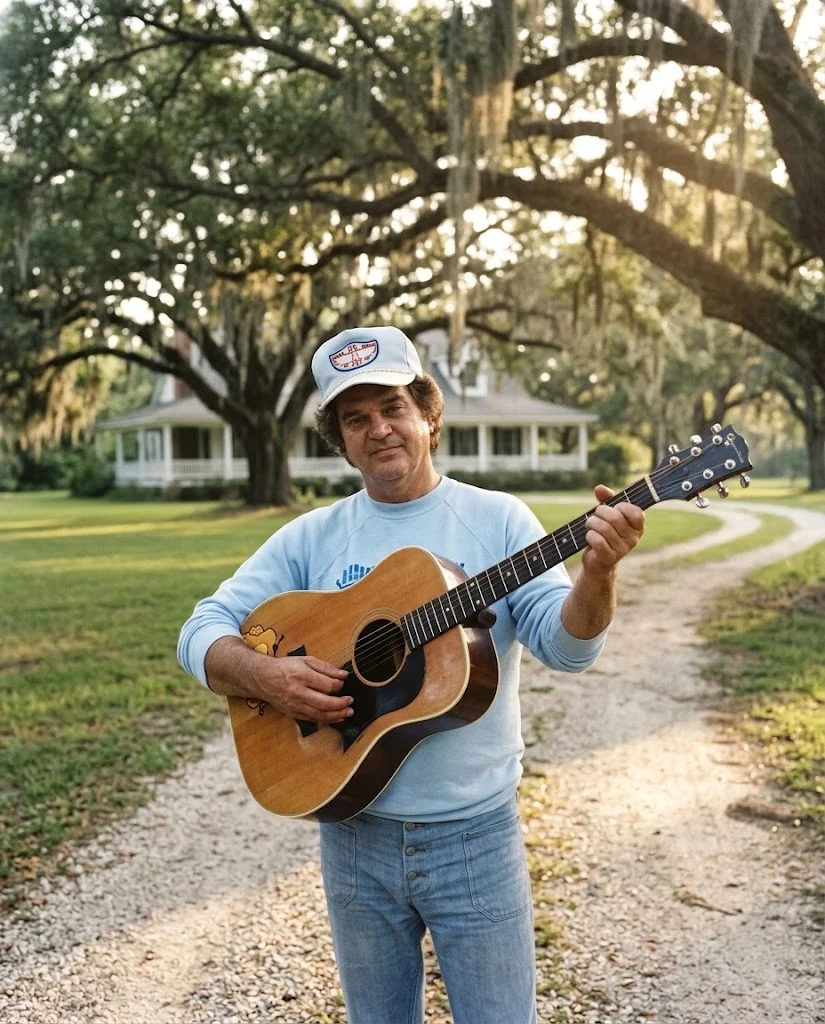
Conway Twitty showed his true character after the applause died and the arena emptied, when he stood in the dark and spoke with a janitor instead of rushing to a private bunk.
His road crew believed the country music icon had already boarded the famous Twitty Bird tour bus after a massive show, so they started the engine and drove away without him.
Twitty had not been entertaining sponsors or VIPs in a hidden lounge. He had stayed behind to honor the people who still wanted a moment with him, and that quiet dedication made him one of the most respected stars of the 1970s and 1980s.
For decades he carried an almost untouchable record, reaching forty number one Billboard country hits. Most entertainers of his era slipped out the back door as soon as the curtain closed, but Twitty refused that habit. He stayed until every fan who wanted an autograph received one, and he looked each person directly in the eye.
That night, after the cheers faded and the house lights revealed scattered trash in the seating area, he was still inside the venue. He was listening to a local janitor talk about life while the man swept the concrete floor.
When Twitty finally reached the loading dock and saw that his ride had vanished, he did not rage like a wounded superstar. He calmly flagged down a police officer patrolling the venue perimeter, and the stunned officer gave him a ride in a cruiser down the interstate.
They found the anxious bus crew at a nearby truck stop, and the story became a lasting joke among his bandmates instead of a crisis.
That humility shaped the way he ran his musical empire. He demanded total professionalism from the Twitty Birds, his backing band, during an era known for excess and chaos.
He enforced a strict no drinking policy before and during shows, required immaculate matching uniforms, and insisted that local sound engineers, opening acts, and venue staff receive profound respect.
He paid his crew exceptionally well and made sure they traveled comfortably, yet he expected them to honor the audience exactly as he did.
A man who treats the janitor with the same warmth as the front row fans is not performing kindness for applause.
The sincerity heard in classic ballads such as Hello Darlin’ and Linda on My Mind came from a man who refused to let fame sever his connection to everyday reality.
His chart dominance secured his permanent place in the Country Music Hall of Fame, but his deeper legacy lives in the quiet moment when the microphones were off and he still had time for the person sweeping the floor.