
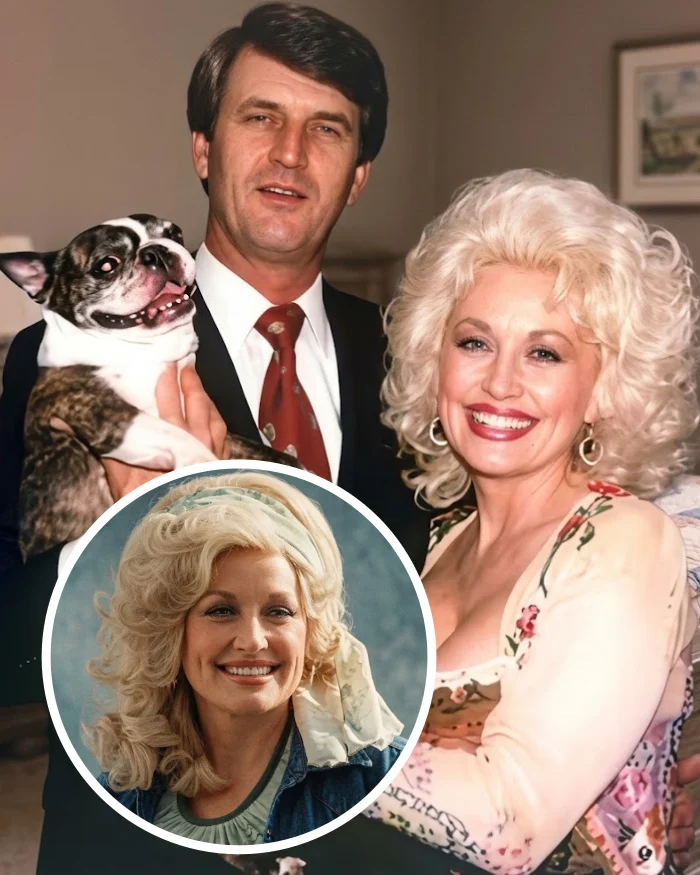
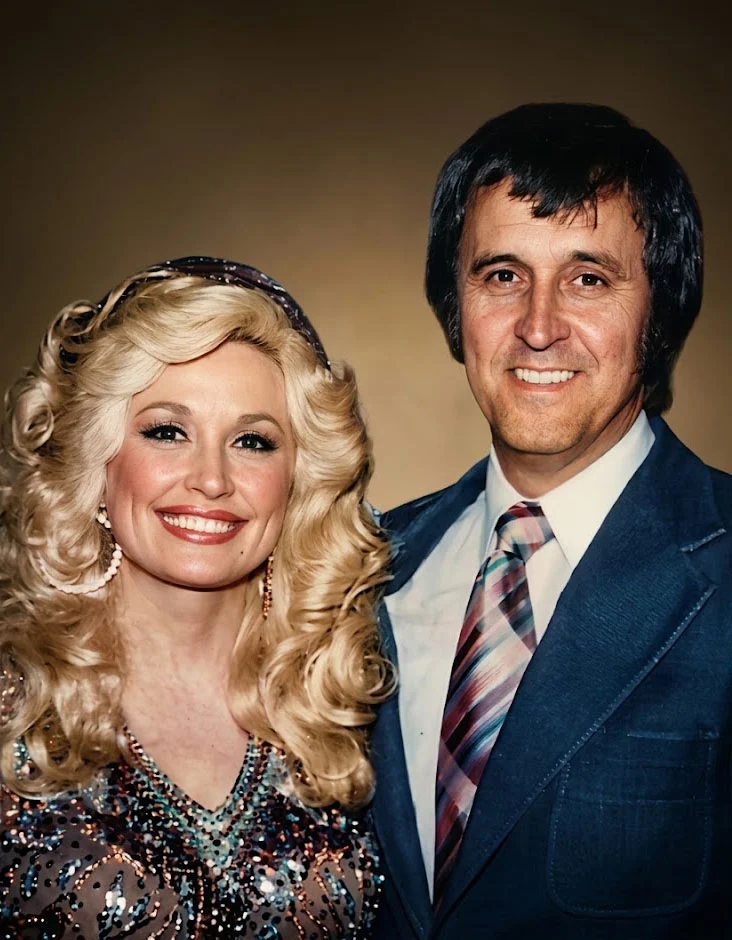
His sacrifice was not a grand cinematic gesture. Carl Thomas Dean left the peace of his beloved Tennessee farm and lived in a cramped motorhome in a congested city he loathed so Dolly Parton would not have to face the terrifying isolation of Hollywood alone.
For years, Hollywood whispers suggested the husband of Dolly Parton was merely a fictional character, but the true measure of their marriage was written far from the cameras inside a parked motorhome in Los Angeles. By the late 1970s and early 1980s, Parton was no longer just a rapidly rising country music singer. She was transitioning into a global multimillion dollar cultural phenomenon, yet the man she had married in 1966 remained conspicuously absent from the frame.
Carl Thomas Dean never walked the industry red carpets. He did not attend the massive arena shows, and he politely declined every interview request.
His absence was so absolute that a bizarre theory began to circulate through the entertainment industry that Carl Dean did not actually exist. Critics, tabloids, and even some industry insiders speculated that Parton had invented a phantom husband to keep suitors at bay and protect her wholesome public image.
In reality, Dean was exactly where he wanted to be. He was back in Nashville running his asphalt paving business and actively avoiding the deafening noise of the skyrocketing celebrity of his wife. He despised the crowded rooms, the glaring flashbulbs, and the relentless machinery of the music business.
But in 1980, when Parton accepted her first major acting role in the film 9 to 5 alongside Jane Fonda and Lily Tomlin, the Hollywood machine threatened to swallow her whole. The grueling production schedule required her to relocate to Los Angeles, a city that represented everything her fiercely private husband actively avoided.
Dean made a rare exception, but he did it entirely on his own terms. Rather than flying first class or booking a luxury Beverly Hills hotel suite to mingle with the cinematic elite, Dean quietly packed the RV of the couple in Tennessee. He drove the motorhome cross country to California and parked it just outside the chaotic orbit of the film set.
He never once walked onto the soundstage. Instead, he lived in that motorhome and waited for the director to call cut so his wife could step out of the spotlight and back into reality.
Those quiet Los Angeles evenings inside the RV became the ultimate anchor for Parton during one of the most intimidating transitions of her career. Away from the studio executives and the immense pressure of a major motion picture, their nights looked incredibly ordinary. They sat at a small table eating simple home cooked meals. They talked about things entirely unrelated to box office projections or record sales.
Dean absorbed the stress of her filming schedule and offered her a private sanctuary where she never had to perform the exhausting role of Dolly Parton the brand. For Parton, Carl was the only space where the towering wigs and heavy rhinestones could finally come off. He was famously indifferent to her global success. He rarely listened to her music, did not care about her chart positions, and never asked to share her spotlight.
Carl Dean never needed the world to know he existed, as long as his wife knew he was always there.
He did not love the superstar who commanded international stages. He simply loved the woman he had quietly married in a small Georgia church before the fame ever took hold. In an entertainment industry where high profile relationships are routinely leveraged for publicity, his absolute refusal to be seen was his most profound statement of devotion. His steady and unbroken silence provided the undeniable foundation that allowed Parton to take on the world fearlessly.
The public was given the rhinestone legend, but the motorhome in Los Angeles proved who held the heart of the woman behind it.