
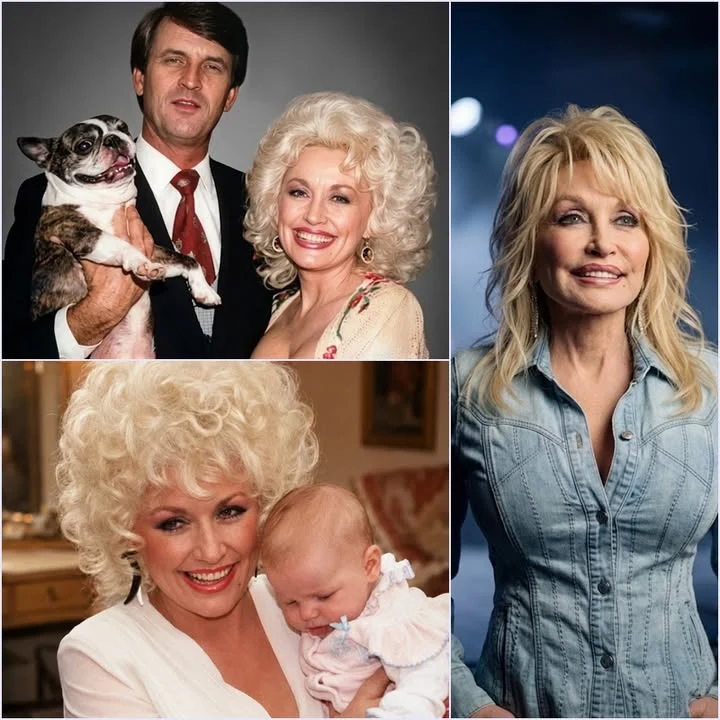
The most crowded room in Dolly Parton’s life was never a stadium. It was the Nashville area home she shared with Carl Dean, where heartbreak became an open door and where generations of her family found shelter.
In the early 1980s, severe endometriosis and an emergency medical crisis led to a partial hysterectomy. The surgery ended Dolly’s chance to have biological children. The loss sent her into deep depression. Carl stayed close, steady and private, as the couple faced that grief together.
Dolly had grown up as the fourth of twelve children in a one room cabin in Sevier County, Tennessee. Family was her foundation. So she and Carl chose not to let their spacious home outside Brentwood stay silent. They welcomed several of her younger siblings into the household, including Floyd, Freida, and Rachel, so they could finish school with stability and care.
Their home became a place where loss was answered with practical love
Dolly’s career demanded national tours, television tapings, and long studio sessions. Carl took on the daily rhythm at home. He cooked meals, managed morning schedules, drove the younger siblings to school and activities, and offered patient guidance through their teenage years. He was a brother in law by title and a dependable father figure in daily life.
The open door did not close when those siblings grew up. Over the decades, nieces, nephews, and extended family members found a safe haven in the Parton Dean residence when they needed lodging, support, or a peaceful place to find their footing.
That nurturing instinct inside her private walls eventually reached far beyond Tennessee. In 1995, inspired by her father Robert Lee Parton and his inability to read, Dolly founded the Imagination Library. The program has mailed hundreds of millions of free books to preschool children across the United States, Canada, the United Kingdom, Australia, and Ireland.
Across nearly sixty years of marriage, Dolly often said that not having biological children allowed her to mother everyone around her. The children in the family called her Aunt Granny and Carl Uncle PeePaw. The nicknames captured the informal warmth of a home built on chosen care.
The world saw rhinestones, chart topping songs, and legendary stage presence. The heart of Dolly Parton’s legacy also lived in a living room where Carl quietly kept the household moving and where personal loss became an enduring refuge for an entire family.