
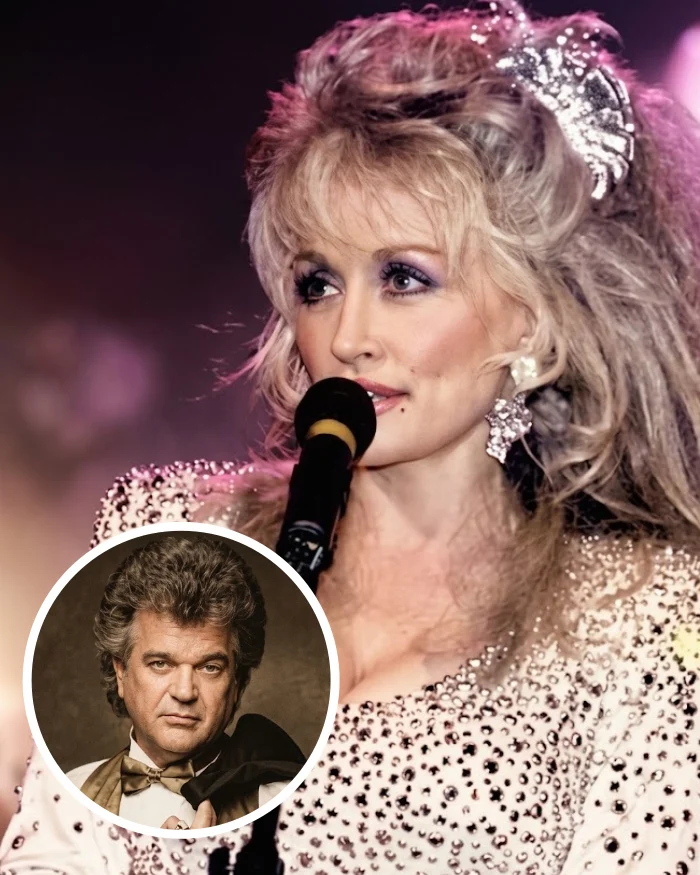
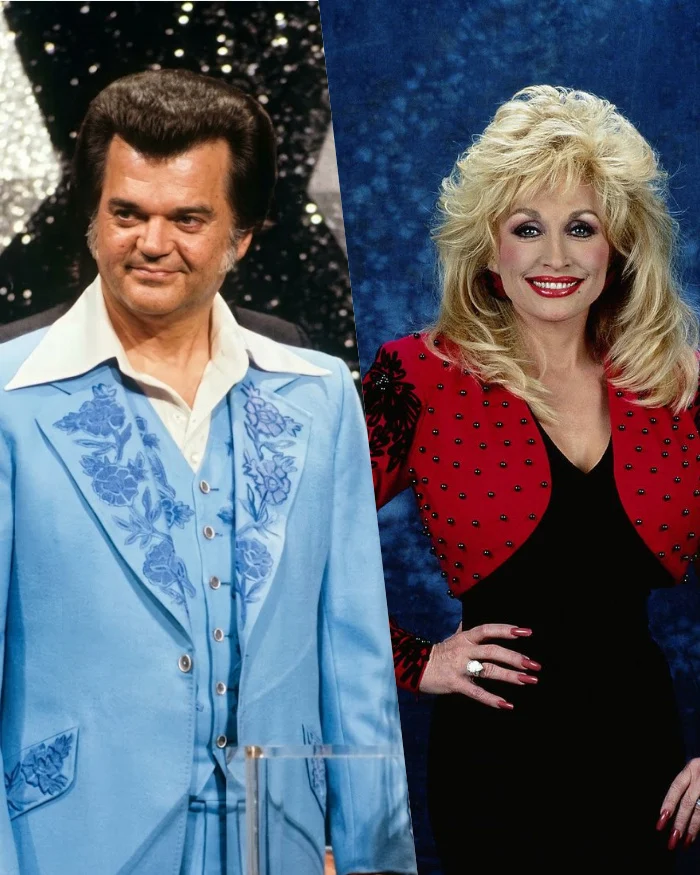
The most haunting duet in country music history arrived long after the players had left the room, and it did not begin with a handshake in a studio.
During the golden years of the 1970s, Dolly Parton and Conway Twitty ruled the same charts with different voices and separate empires. Their names rose and fell across Nashville with such steady power that fans assumed a meeting was inevitable. It never happened.
Twitty stood anchored to MCA Records. Parton remained bound to RCA. One recorded at Bradley’s Barn while the other worked inside RCA Studio B. Their paths crossed in awards shows and on festival stages, yet the business walls around them kept the microphones apart.
The obstacle was not rivalry. It was contract. Cross label collaborations demanded difficult publishing clearances, conflicting release schedules, and royalty splits that executives often saw as costly and dangerous.
Twitty was already deep in his famous duet partnership with Loretta Lynn. Parton was locked into a demanding era with Porter Wagoner. Each artist carried relentless touring and album cycles that left little space for a risky one off session.
That silence became a blank space in the archives. It was not a creative failure. It was an industry boundary drawn around two of country music’s most distinct singers.
Decades later, fans and audio engineers refused to let the blank space remain empty. They turned to modern sound tools and began reconstructing what Nashville had never arranged.
Using spectral de mixing algorithms and source separation models, specialists isolate the lead vocal from old vinyl or tape masters. They map harmonic frequencies and transient signatures, then peel the voice away from rhythm guitars, steel notes, and backing tracks.
Once the vocal stem stands alone, engineers match pitch, align tempo, and place each voice in a balanced stereo field. The result is a ghost session, a meeting that could not happen in life but can be imagined in sound.
When Twitty’s heavy baritone meets Parton’s bright storytelling soprano, the harmony feels both miraculous and quietly melancholic
These files reveal what was sacrificed. They do not replace a real studio conversation. They expose the cost of corporate separation and the stubborn love fans hold for missing possibilities.
Behind the artificial duets, there was real respect. Parton and Twitty understood the pressure of maintaining their empires. They sang about working class heartbreak from parallel tracks that never crossed.
Modern audio preservation has not rewritten history. It has simply given listeners a way to hear the duet that the industry kept locked away.