
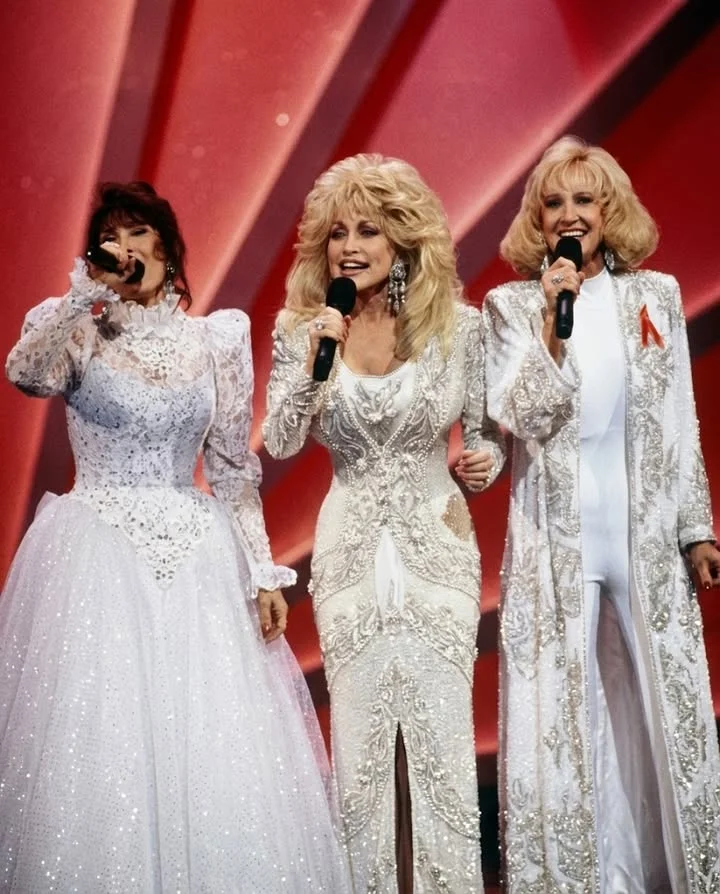
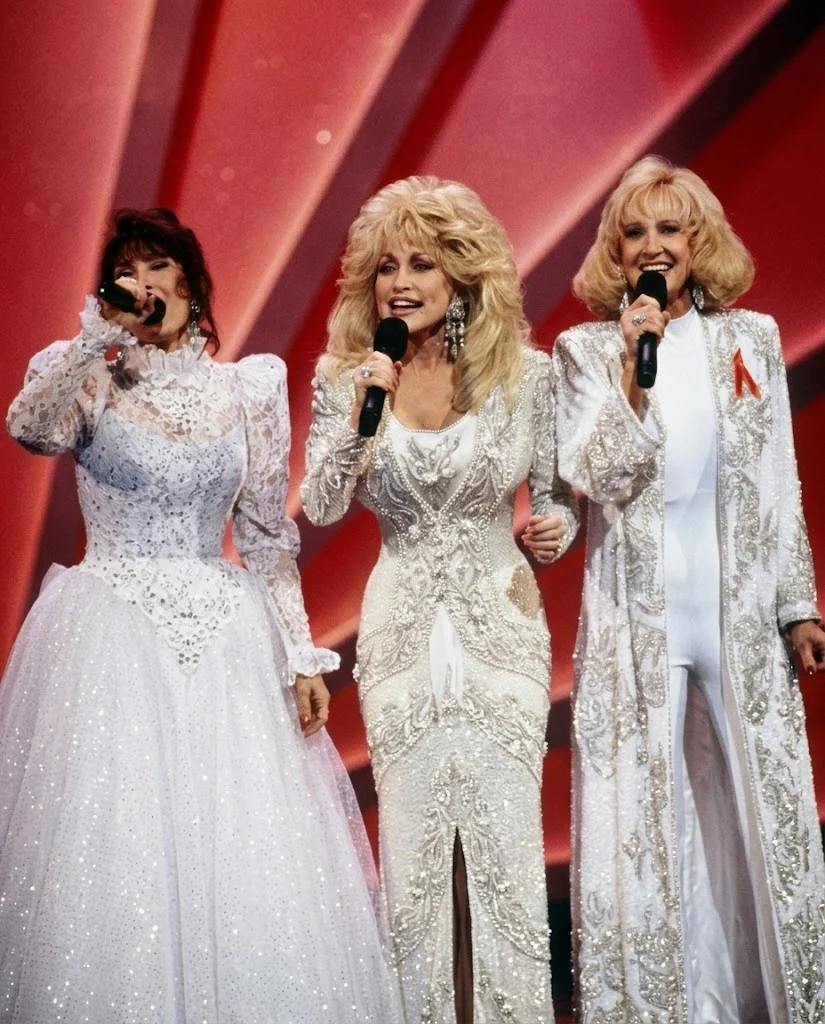
When Tammy Wynette’s health was failing and the tabloids had made her pain into gossip, Dolly Parton and Loretta Lynn stepped forward with more than sympathy.
They gave her a stage, a studio, and a circle of protection.
In 1993, the three country icons came together for Honky Tonk Angels, a landmark collaborative album released by Columbia Records in the fall of that year.
By then, Wynette had endured dozens of major medical procedures, chronic intestinal inflammation, and years of public scrutiny. The country music business was also moving toward newer sounds, and her towering legacy often seemed overshadowed by sensational coverage.
Parton and Lynn understood the cost of fame from the inside. They shaped the project around Wynette’s stamina, not around rigid deadlines.
Produced by Steve Buckingham and Dolly Parton, the album brought together classic country material and featured guest appearances from pioneering voices such as Kitty Wells, Patsy Montana, and Brenda Lee.
At Nashville’s tracking studios, the schedule remained patient and unhurried. Wynette could step to the microphone when she felt strong enough. Between takes, Parton and Lynn brought home-cooked comfort food into the lounge, and the room filled with shared laughter and quiet encouragement.
When fatigue took hold, recording paused naturally. Engineers prepared acoustic arrangements and harmony tracks designed to lift her signature voice without pushing her body too hard.
Dolly Parton and Loretta Lynn did not simply make a record. They built a protective circle around Tammy Wynette when the world was looking away.
The lead single, a stirring rendition of Silver Threads and Golden Needles, showed how naturally the three voices balanced one another. The accompanying music video placed all three icons side by side in equal prominence, a visual answer to any suggestion that Wynette had been pushed aside.
On the album cover, their names stood together as equals. That was not a small detail. It declared that Wynette still belonged at the highest table of American music.
Listeners and critics responded. Honky Tonk Angels earned Gold certification from the Recording Industry Association of America for sales beyond 500,000 copies. It also received a Grammy Award nomination for Best Country Collaboration with Vocals.
For Wynette, the success marked a meaningful artistic resurgence during a difficult decade. For fans, it became a reminder that Nashville’s deepest bonds could be built on loyalty rather than competition.
The quiet care behind the sessions, the patient arrangements, the outtakes, and the unspoken support among three legends remain an essential part of their shared story.