
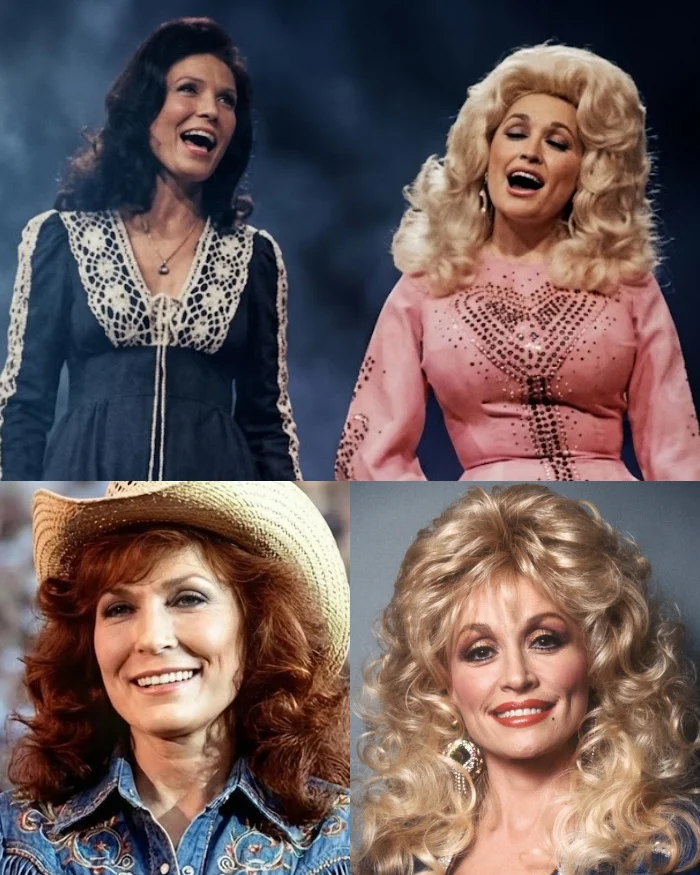
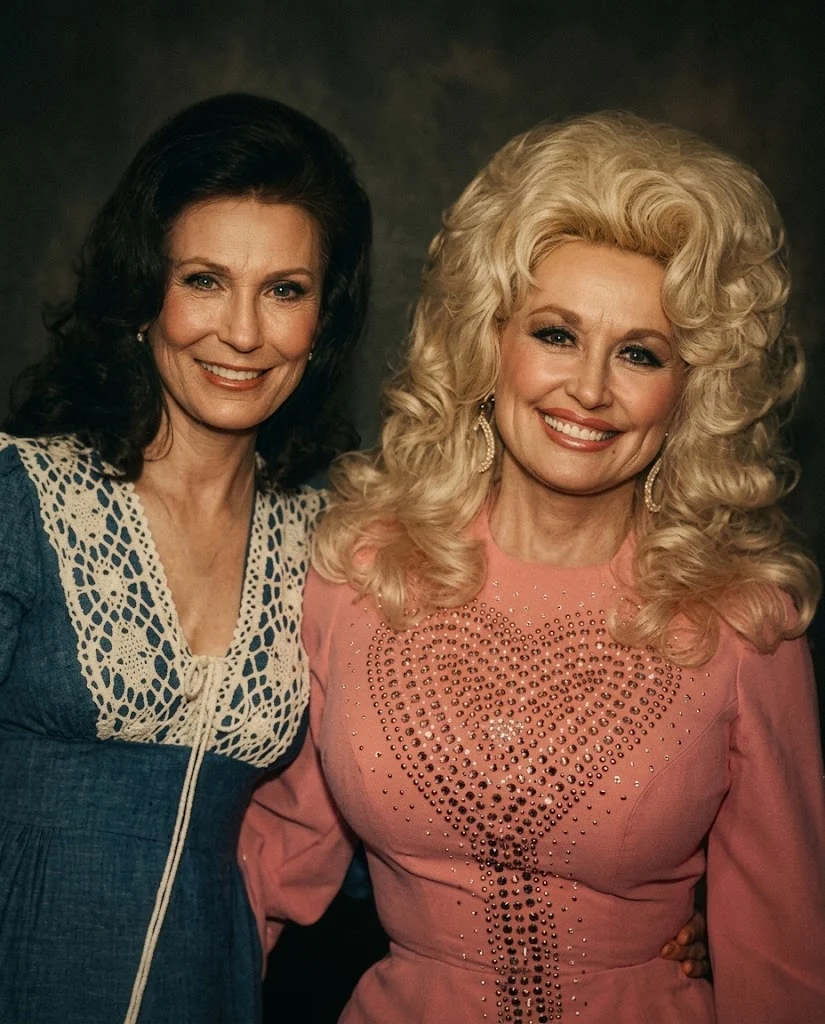
Nashville in the 1960s tried to make Dolly Parton and Loretta Lynn compete for one narrow space on the airwaves. Instead, they built a bond that helped them survive a business built to keep women small.
They came from hungry mountains and coal camp floors. Loretta Lynn carried Butcher Hollow, Kentucky, in her voice. Dolly Parton carried a one-room cabin in the Great Smoky Mountains. They arrived with songwriting, nerve, and almost nothing else.
The industry did not hand them solo thrones. It gave them the same polished role. Lynn sang harmony beside the Wilburn Brothers. Parton later stood beside Porter Wagoner. Their job was to look charming, blend their voices, and make powerful men look better.
Female artists were taught to see each other as threats. Radio playlists kept women scarce. Executives treated a hit by a woman like a limited novelty. The message was clear. There was only one chair, and they were supposed to fight for it.
They did not fight each other. They understood the mud beneath the rhinestones. They remembered poverty. They knew the fear of pleasing bosses who could erase a career with a phone call.
“They chose sisterhood when the system demanded rivalry.”
That trust became armor when both women tried to break free. Leaving television partners was not a simple change of wardrobe. It meant legal fights, money battles, and career risk.
Lynn had to battle the Wilburn Brothers company Sure-Fire Music to reclaim control over songs born from her own life. Parton faced a punishing split from Wagoner. Her push for independence led to a massive $3 million breach-of-contract lawsuit in 1979.
They bought their way out of the men who had shaped their early fame. They took creative control. They wrote about marriage, poverty, desire, judgment, and the double standards facing women. They turned personal struggle into public truth.
Parton and Lynn reached the top of country music without losing the friendship forged on Music Row. They never forgot the poor girls who arrived with nothing and refused to be divided.
“The system wanted them to smile in the background. They took over the entire stage.”