
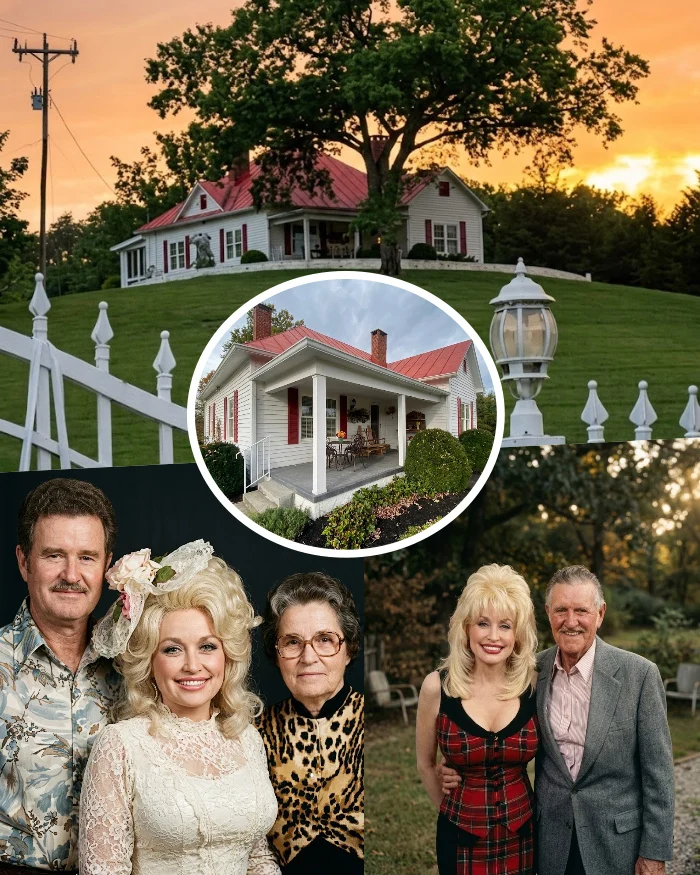
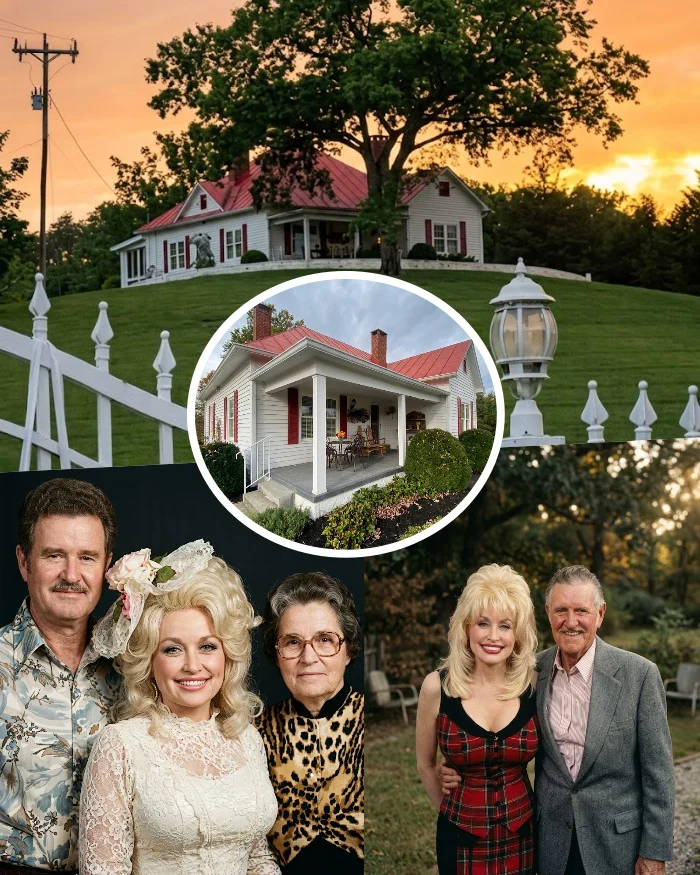
Robert Lee Parton had worked land owned by other men for most of his life. In 1984, his daughter Dolly Parton bought the Red Top farm in Sevier County and handed him ownership of the soil he had farmed for decades.
She was earning millions on the biggest stages in Los Angeles and Las Vegas, yet her most profound purchase happened quietly on East Tennessee dirt. The country music icon was operating a global entertainment empire, starring in major films, breaking pop radio charts, and facing ruthless industry executives. Her heart remained anchored in Sevier County.
For decades, Robert Lee and Avie Lee Parton had raised twelve children inside a drafty one-room cabin on Locust Ridge. They lived through the brutal conditions of Appalachian poverty, where space was scarce, money was scarce, and every season carried its own hardship.
She did not move them into a sprawling Hollywood mansion. She bought them a working agricultural property.
The 62-acre farm sat directly against the Great Smoky Mountains. It provided modern heating, clean running water, and sturdy barns. For Avie Lee, the woman who had once washed clothes in freezing spring water, the home offered physical comfort after years of exhausting labor.
For Robert Lee, the deed carried a deeper meaning. He had never learned to read. He had spent his adulthood breaking his back on rocky soil that belonged to other people. Now he owned 62 acres of fertile land. He could still raise livestock, still farm, and still work at his own pace, without the constant threat of poverty.
He refused to retire into idle celebrity comfort. He took over the day-to-day operations of the estate. He woke before dawn, tended his own cattle, maintained heavy machinery, and drove his familiar dust-covered work truck across the acreage.
Dolly installed a heavy security gate at the front entrance. Her global fame had brought intense media attention and eager tourists hoping for a glimpse of the superstar’s roots. The fence became a physical shield, letting Robert Lee and Avie Lee live their final decades in absolute privacy.
Behind that gate, no one was asking for autographs or television interviews. The farm became a quiet sanctuary where the Parton family could gather for Sunday dinners, holiday celebrations, and ordinary afternoons.
The gate kept a strict boundary between the public and their 62 acres. Robert Lee still wore dirt-stained work clothes. Avie Lee still cooked traditional mountain meals. They lived as themselves, simply freed from the financial insecurity that had shadowed their youth.
The quieter chapter of Parton history lived behind that fence. It was the day-to-day work of a farmer on his own land, the sound of a family gathering away from the press, and the dignity of a mountain morning earned after a life of hard labor.