
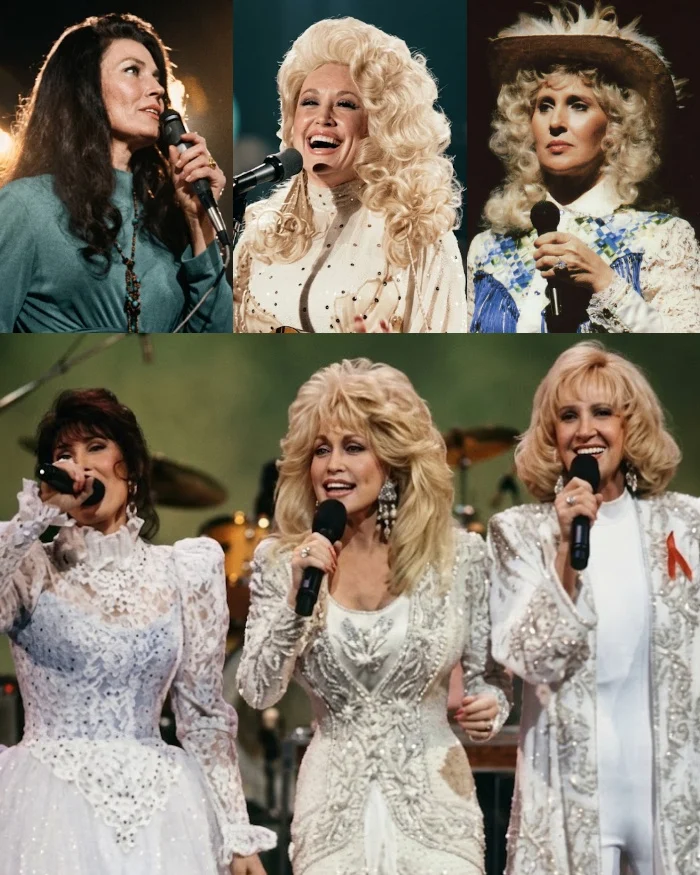
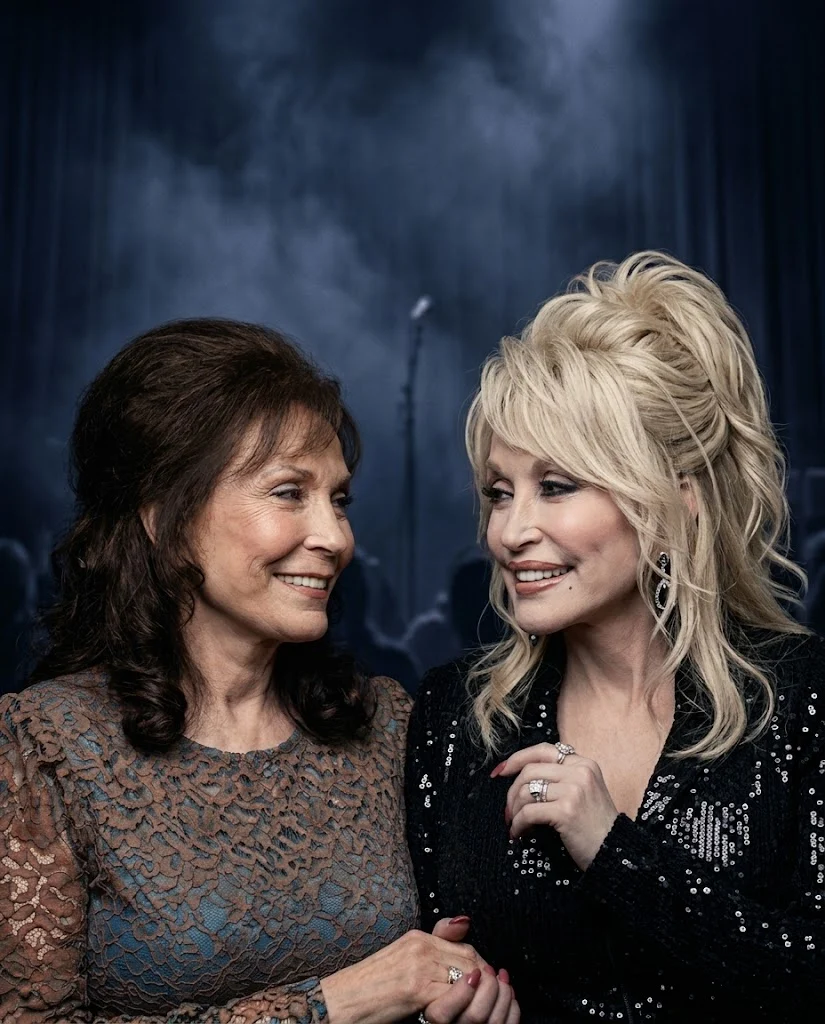
Dolly Parton had already built a towering country empire from her own pen, yet one 1993 studio session revealed a softer and more powerful choice.
When Parton, Loretta Lynn, and Tammy Wynette gathered in Nashville for Honky Tonk Angels, the album was more than a meeting of legends.
Their track Wouldn’t It Be Great came from Lynn alone, and its story rose from the ache of her marriage and Doolittle’s long battle with alcoholism.
Country music usually expects the wounded writer to stand at the microphone and confess the truth.
Inside the booth, Parton stepped forward instead.
She carried the lead vocal while Lynn and Wynette offered the harmonies.
Parton did not use the spotlight to claim another woman’s pain.
She used her voice as a shelter, letting Lynn stand beside the song rather than under its full weight.
That kindness mattered even more because Wynette arrived at the sessions carrying severe physical decline and chronic pain.
There were no rival divas in that room, only three women offering grace to one another.
The session was also the reward of a long corporate fight.
Parton spent years trying to bring the three artists onto one master tape, while executives guarded exclusive contracts and label borders.
Lynn had deep roots at MCA Records, and Wynette and Parton worked under different banners within the Sony family.
As a co-producer, Parton pushed through legal waivers, demanded equal billing, and forced the labels to make the collaboration possible.
Honky Tonk Angels later earned Gold certification, showing that authentic storytelling could still cut through a radio climate shifting toward younger pop country.
Wynette’s death in 1998 gave the recordings a heavier meaning, turning the 1993 tapes into an irreplaceable document of friendship and survival.
The album proved that Parton’s greatest power was not domination.
It was the decision to carry a painful song so her friend could finally breathe.