
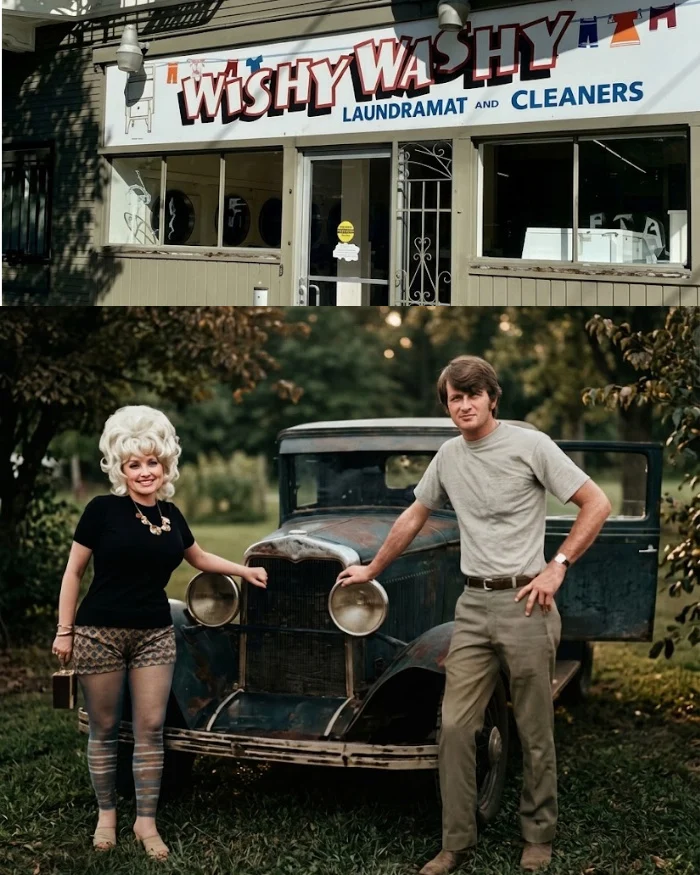
Eighteen-year-old Dolly Parton arrived in Nashville on May 31 1964 with paper bags for luggage and a fierce promise to keep romance out of the way.
She had stepped off a bus from Sevier County the morning after high school graduation and carried mountain songs she hoped would become a career on Music Row. Her first need was practical. She wanted clean clothes for meetings with record executives so she walked to the Wishy Washy Laundromat on 16th Avenue South and dropped her laundry into a coin machine.
Carl Dean was twenty-one and running an asphalt paving business when he drove past in a white pickup truck. He saw a young blonde standing in the hot Tennessee sun and pulled over. He did not ask about songs or agents. He gave her a plain warning that her short clothes would leave her sunburned.
That small act changed the story. Dolly Parton found herself talking to a man who cared nothing about her voice and everything about whether she was comfortable. Dean later said he knew right there that she was the woman he wanted to marry.
He stopped because she looked like she might burn rather than because she might become famous.
Parton invited Dean to visit her at the home of her uncle Bill Owens where she was staying while looking for work. Their early courtship was not built from Nashville nightlife. It was built from simple dinners cooked after long shifts laying asphalt from grocery bags in a work truck and from short rides to a local burger stand when their pockets were nearly empty.
Dean introduced a quiet stability into a city that often measured people by talent rosters demo tapes and business connections. He treated her with an easy courtesy that felt foreign in a town full of ambition. Parton returned to her laundry with her resolve shaken because the only person in town who did not care about her singing made her feel seen as a person.
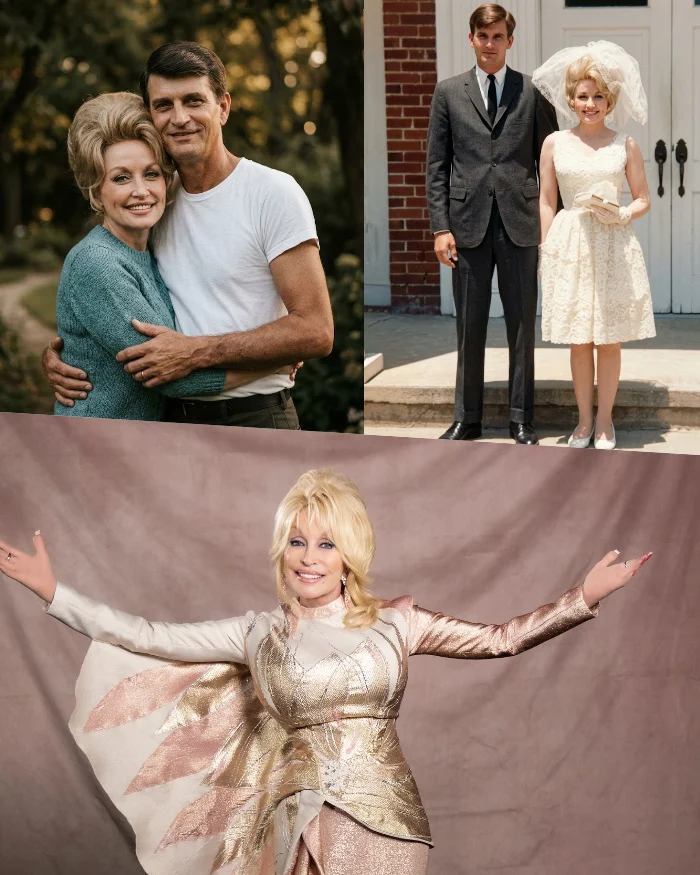
The couple eloped on May 30 1966 inside a small Baptist church in Ringgold Georgia. Dean made his position clear. He supported her talent completely but he wanted no part of the public machinery around it.
Parton honored that boundary across six decades of international tours television specials and stadium concerts. She became one of the most recognizable cultural figures in the world while Dean continued running his commercial asphalt company and tending their farm in Brentwood. He rarely attended red carpets or industry dinners.
Their sixty-year marriage began on a sidewalk outside a laundromat. It lasted because it was anchored in the private world they built during the summer of 1964. Long after Dolly Parton conquered the global music stage her home life remained tied to the quiet young man who stopped his truck to say hello to a stranger folding laundry on a Nashville afternoon.