
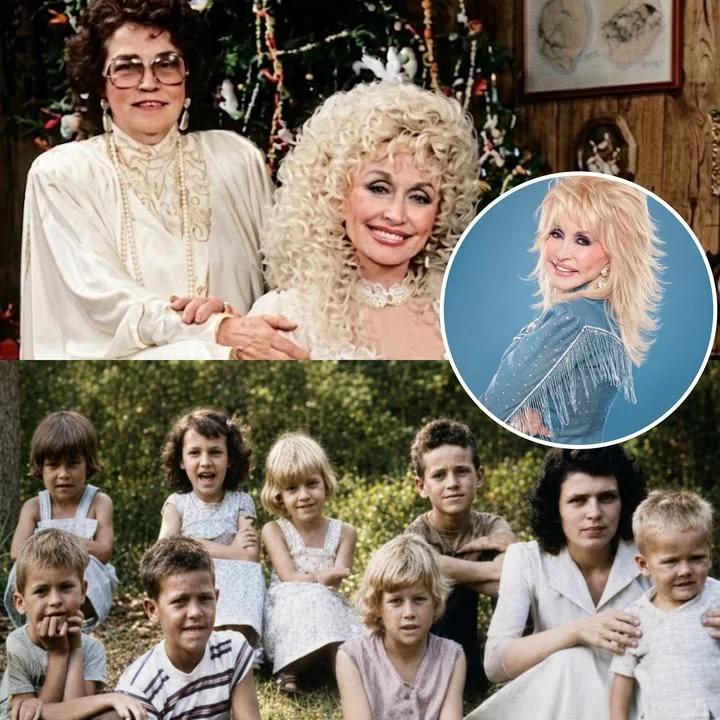

The tiny grave in Sevier County held a baby who lived only four days. For Dolly Parton, that loss became a lifelong call to mother millions.
In July 1955, Avie Lee Parton gave birth to her ninth child, a boy named Larry Gerald Parton. The family lived in a crowded cabin in the Smoky Mountains of East Tennessee. With so many children under one roof, older siblings often helped raise the younger ones. Avie Lee made a tender promise to her nine-year-old daughter Dolly. She said the newest baby would belong entirely to her. Dolly would rock him, care for him, and love him as her own.
Dolly did not wait for his arrival to begin. During her mother’s pregnancy, she sang to the baby and prepared for the maternal role she already felt was hers. The joy ended with cruel speed. Larry lived for exactly four days. Extreme Appalachian poverty left the family without money for a standard funeral. They buried the infant in a simple and quiet service at Caton’s Chapel cemetery in Sevier County.
The loss did not stay silent. It became a song.
The tragedy struck the Parton home with brutal force. Dolly watched her normally resilient mother fall into a severe and long depression. For a nine-year-old girl who had been told the child was hers, grief carried a confusing weight. She later admitted that she felt crushed and struggled to understand a loss she somehow thought she had caused.
With the expected cries of a newborn replaced by silence, Dolly searched for a way to process the sorrow around her. Music became her refuge. She learned early how to translate private pain into song, using her voice to navigate a mourning household she could not fix.
Larry’s four brief days shaped how Dolly understood loss, family, and the fragile beauty of motherhood. Decades later, medical complications prevented her and her husband from having children of their own. The maternal instinct she first felt for Larry still needed a place to go.
She made a quiet decision. If she could not raise a child in her own home, she would care for children everywhere. That promise took physical form in 1995 when she founded the Imagination Library. Her father’s inability to read was a major inspiration, yet the program also answered the motherly role Dolly had prepared for since she was nine years old.
By mailing free, age-appropriate books to children from birth until their fifth birthday, she turned a local Tennessee effort into a global educational network. The quiet grief of a small graveyard became a mission that now supports millions of families around the world.
She did not let her earliest experience with loss remain a permanent silence. Instead, she carried her baby brother’s memory into countless bedtime stories for children across the globe.