
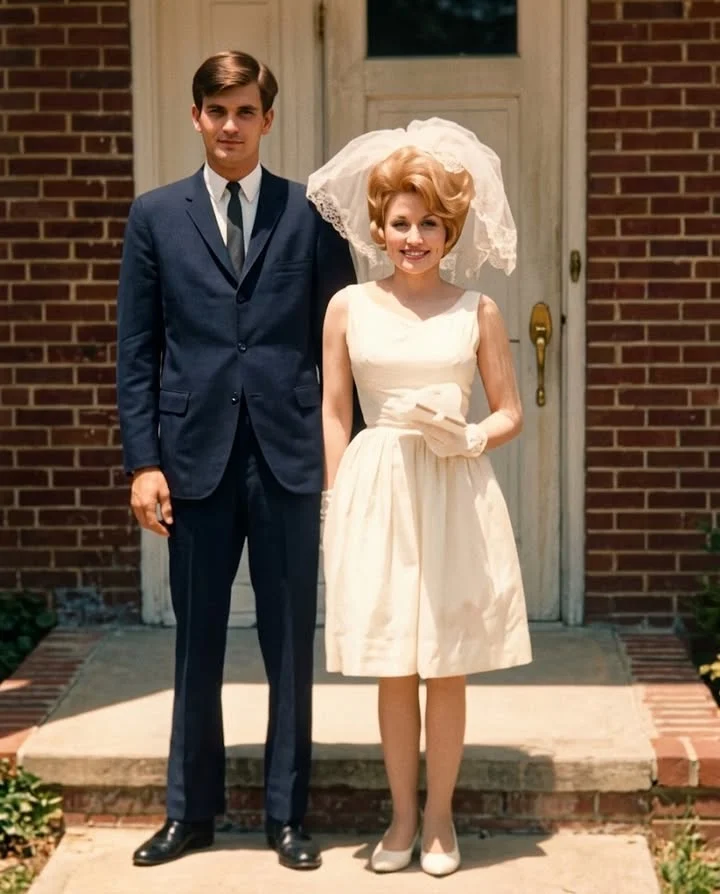
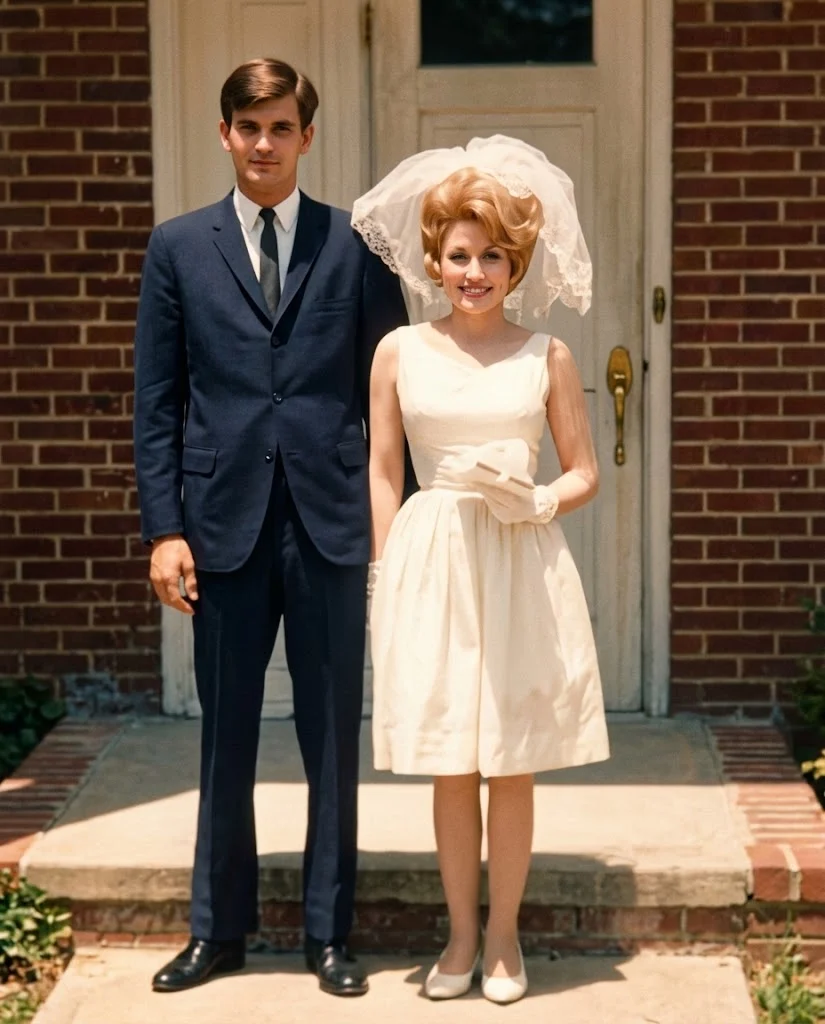
One night in 1967 Carl Dean squeezed into a formal tuxedo and walked into a glittering Nashville ballroom. He hated cameras and small talk. But Dolly Parton was about to receive her first major songwriting award, and he wanted to be there.
The song was Put It Off Until Tomorrow. Dolly was just twenty-one years old. The BMI ceremony in Nashville marked the moment country music started to recognize her as a serious songwriter.
Carl had met Dolly three years earlier on her first day in Nashville. She was standing outside the Wishy Washy Laundromat, far from the spotlight and full of dreams. He was a quiet man who ran a paving business and wanted nothing to do with fame. He went to the awards show that night to support her. He sat through the applause and the flashing cameras and the crowded room full of executives. Then he went home and drew a line.
Inside their home Carl told Dolly he loved her and wanted her to have every dream she had ever chased. Then he told her the truth about the night. He could not live inside that world.
I love you and I want you to have everything you have ever dreamed of. But I will never step into that world again.
Dolly did not argue. Instead she made a choice that would shape the rest of her life. She accepted his boundary and built their marriage on two separate worlds.
Dolly took the stage. She wrapped herself in rhinestones and conquered stadiums across the globe. Carl stayed home at Willow Lake Farm in Brentwood, Tennessee. He ran his own asphalt paving business, cut the grass, bought auto parts, and lived a completely ordinary life.
His absence from her public life was never a lack of devotion. It was a quiet sacrifice. By staying invisible he gave Dolly the freedom to belong to the world without carrying guilt for dragging him into a spotlight he despised.
Away from the cameras Dolly still wanted to be just his wife. They climbed into their camper and took long road trips across the country. She wore dark wigs and plain clothes so they could stop at diners and drive-thrus without anyone recognizing her. In those small ordinary moments they were simply Dolly and Carl.
In an industry where marriages are often used for publicity Dolly became the fierce guardian of Carl’s privacy. She walked every red carpet alone. She faced every interview without him. When people asked where her husband was she smiled and gave an answer that left no room for questions.
Carl never loved the larger-than-life star on television. He loved the girl he met outside the laundromat. While she sang to millions he built a quiet home where she could rest. That quiet contrast became the anchor that kept them together for nearly six decades.