
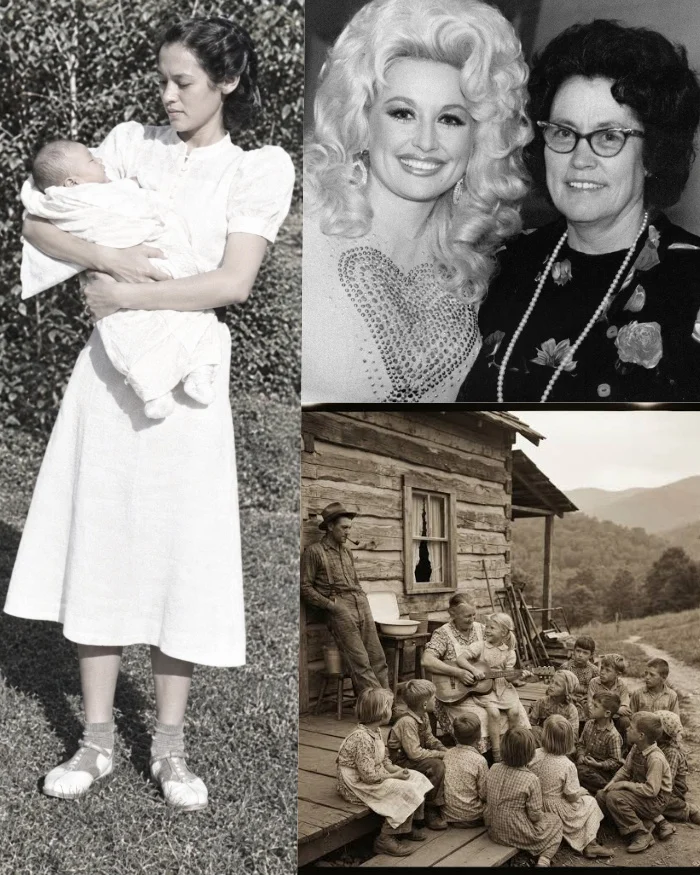
A box of donated rags became a winter coat, a shield, and the first stitch in one of the most beloved stories in country music. Avie Lee Parton stitched that coat in a Smoky Mountain cabin where cold seeped through gaps in the walls and poverty pressed harder than the mountain winters.
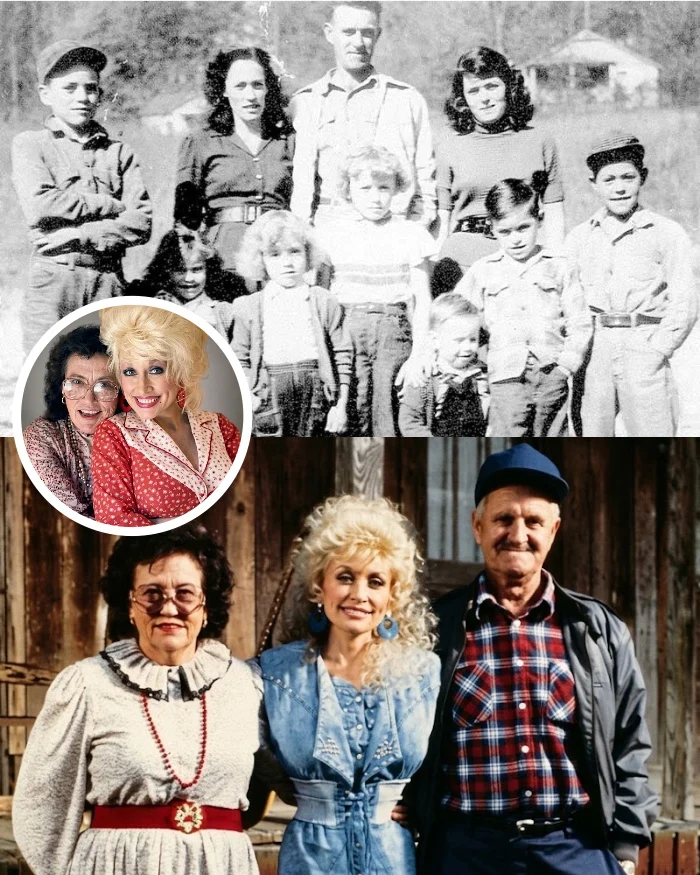
By age thirty-five she had given birth to twelve children. She had married Robert Lee Parton at fifteen and lived on Locust Ridge in Sevierville, Tennessee, in a small cabin without electricity or running water. Continuous childbirth and relentless household labor wore down her body, while limited medical care made every illness more frightening.
Her strength came from music and faith. In the local church she became an anchor for her family and neighbors. It was there she led six-year-old Dolly to the front of the congregation and let her sing for the first time.
The cabin held no real instruments. Avie Lee built rhythm makers from household objects and filled the one-room home with ancient Appalachian folklore. When the children were sick, crying, or hungry, she had little medicine and no extra food. She sang instead.
Her melodies carried generations-old English and Scottish ballads, including “Barbara Allen” and “Mary of the Wild Moor.” Those tragic, story-driven songs taught young Dolly how to shape a beginning, a wound, and a turn in a single line.
“Her voice held both sorrow and endurance, drifting through the gaps in the wooden walls to shield them from the cold reality of their lives.”
That voice also carried a lesson about dignity. When a box of donated rags came into the house, Avie Lee knew Dolly needed warmth for the freezing walk to school. She pieced mismatched scraps into a coat and told the biblical story of Joseph as she worked. She stitched pride into the seams so her daughter could enter the classroom with her head held high.
Dolly carried that handmade armor into the schoolyard and endured cruel laughter with the courage her mother had sewn into every patch. Years later that memory became “Coat of Many Colors,” one of the most recognized stories in American music.
Avie Lee left no fortune. She left a mother’s voice, mountain ballads, and the belief that a person can survive hardship with grace. Those scraps and songs became the quiet foundation of a globally recognized songwriting empire.