
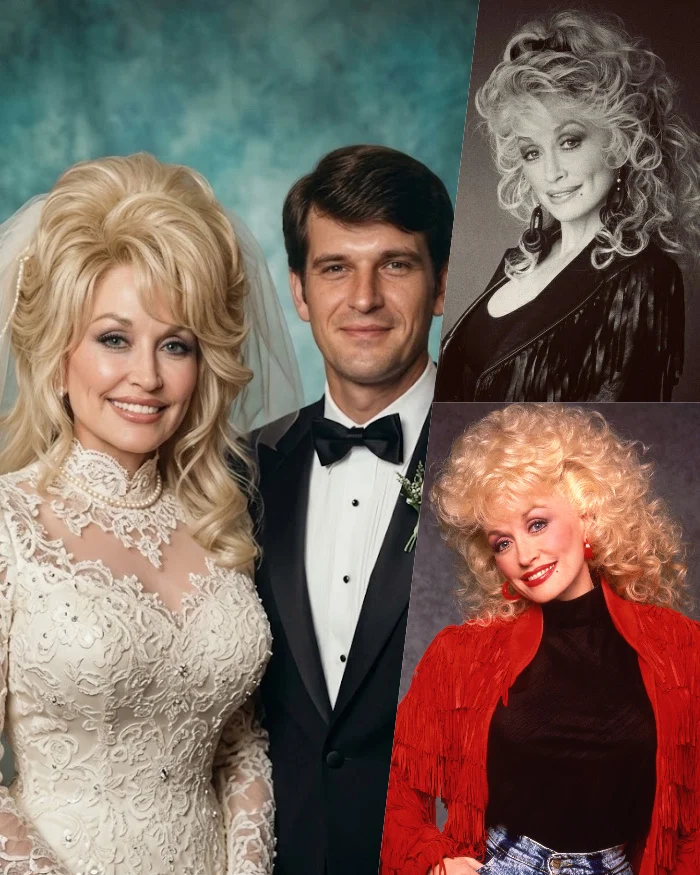
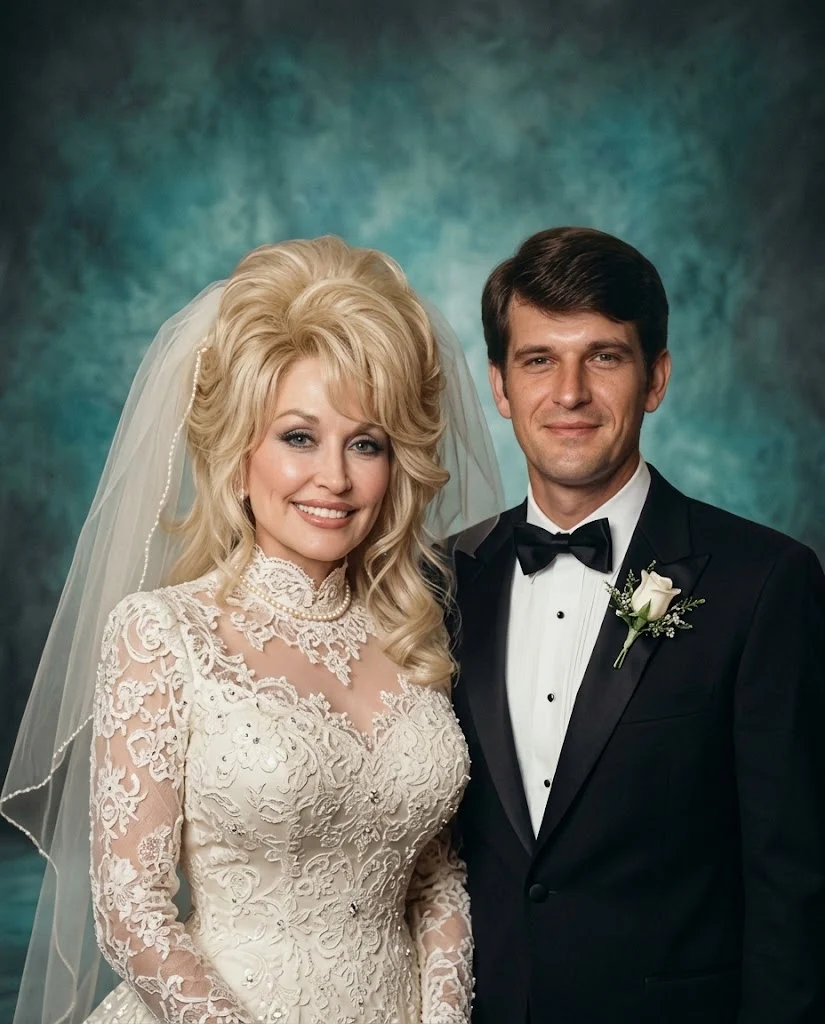
Five people stood in a small Georgia chapel on May 30, 1966, and Dolly Parton carried no expensive bouquet, no press entourage, and no trace of the glittering empire she would later build. She wore a simple white lace dress she bought herself and held a small Bible lovingly decorated by her mother, Avie Lee. That quiet ceremony became the shield around a marriage that would last more than half a century and outlive thousands of louder celebrity romances.
Monument Records had warned Dolly that marriage could damage her rising career and asked her to wait at least a year. The young singer had already left poverty in the Smoky Mountains after high school to chase music in Nashville, so the threat of losing her record deal carried terrible weight. Still, she refused to choose between her dream and the gentle man she had met outside a Wishy Washy laundromat on her first day in town. She and Carl Dean crossed the state line to Ringgold so Nashville papers would not discover a wedding license.
The Baptist church held only five people, including the preacher and his wife. There was no crowd, no photographers, and no spectacle. For a woman later famous for rhinestones, towering wigs, and enormous stage productions, her most important day needed absolutely nothing flashy. It needed privacy.
That chapel set a boundary that protected Carl from the public eye and gave their union a private foundation. As Dolly moved from the Grand Ole Opry to arenas around the world, Carl made a quieter sacrifice. He attended only one BMI industry dinner early in her career.
I love you and I want you to have everything you dreamed of, but I never want to go to another industry event.
He could have felt left behind, yet that moment became part of their strength. Carl gave Dolly the freedom to conquer the world without dragging a reluctant husband into the spotlight. While she dominated the Billboard charts and starred in Hollywood films, he stayed in Tennessee, ran his asphalt paving business, worked on their farm, and offered a steady anchor.
Thousands of famous marriages have fractured under scrutiny, jealousy, and lost privacy. Dolly and Carl survived because they understood the need for separate worlds. The sequins belonged to the public, and the quiet mornings on the farm belonged to them. He never needed a red carpet to prove devotion, and she never asked him to become loud.
The label executives misread the cost of her choice. She gave the world everything under the brightest lights imaginable, then kept one sacred corner in shadow, protecting the man who loved her before she ever wore a rhinestone. That private vow outlasted every industry record she set.