
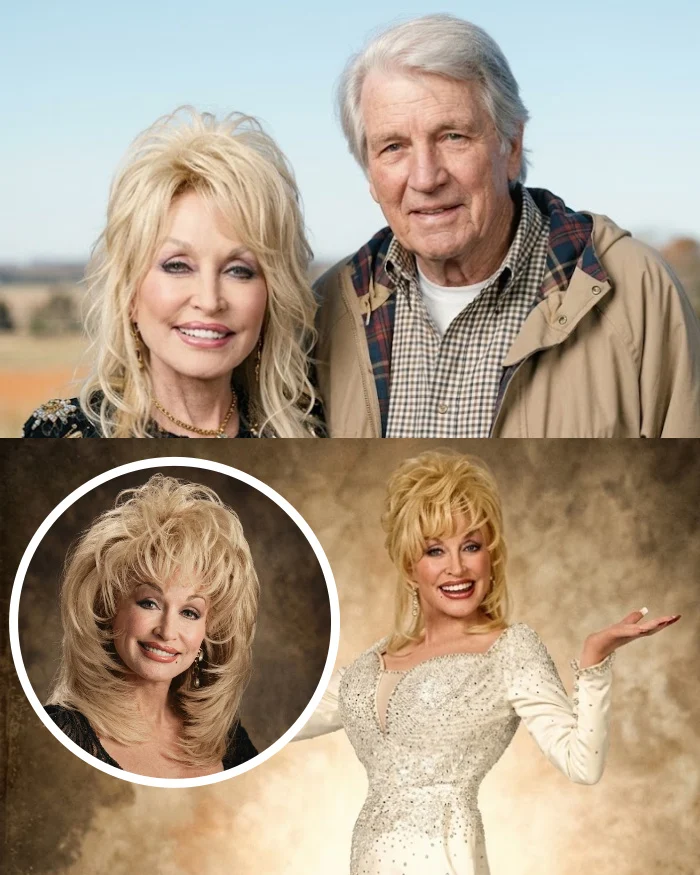
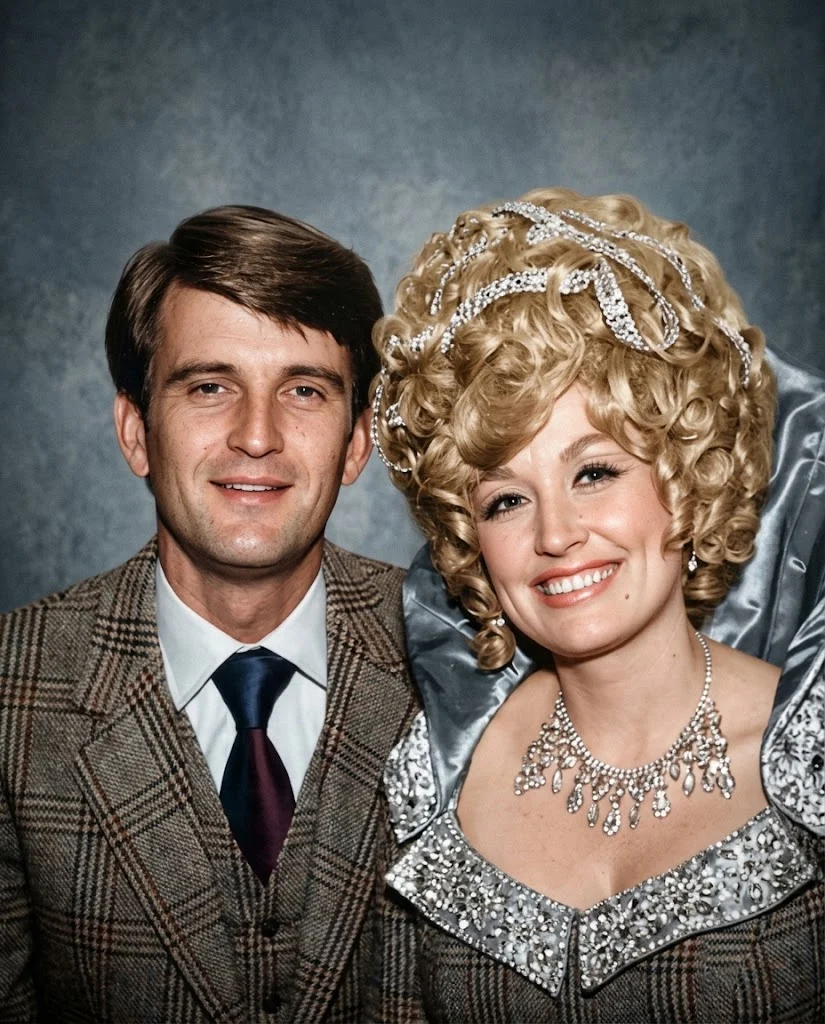
A tiny white bouquet and an empty Georgia church changed everything for Dolly Parton. The moment was not grand. It was not polished. It was not made for cameras. It was the quiet beginning of a marriage that would last fifty years.
In spring 1966, twenty-year-old Dolly stood close to the edge of massive country stardom. She had signed her first major recording deal with Monument Records in Nashville. Her label executive Fred Foster gave her a cold warning. He believed marriage could destroy a young female artist’s rising career.
That warning collided with a real love story. Dolly had met Carl Dean two years earlier outside a local laundromat. He was a quiet asphalt paving contractor. As Music Row pulled her farther away, the distance became a breaking point.
Carl did not stage a movie romance. He did not kneel. He did not bring a diamond ring. He looked at her with steady honesty and gave a blunt practical choice. They either needed to move closer together or they needed to marry.
That plain request set a secret plan in motion. On May 30 1966, Memorial Day, Dolly and Carl got into a car with Dolly’s mother Avie Lee. They drove across the state line to Ringgold Georgia, a town known for same-day marriage licenses.
Inside a small Baptist church, Pastor Don Duvall married them in an empty room. Dolly wore a simple knee-length white dress her mother had bought. She carried a small bouquet of white flowers. They did not write elaborate vows. They spoke the traditional church promises and pledged their lives in quiet certainty.
The ceremony lasted only a few minutes. It gave Dolly something more lasting than applause. In a business built on glitter and fragile promises, Carl’s raw practicality became her steady anchor. He asked for a partner, not a superstar.
They either needed to move closer together or they needed to marry.
Almost immediately after the wedding, Carl drew a firm boundary. He attended one music industry dinner and felt suffocated by the chaos. He told Dolly he loved her, but he would never step onto a red carpet again.
He kept that promise for more than fifty years. While Dolly built a dazzling empire under blinding stage lights and towering wigs and heavy rhinestone suits, Carl stayed in the shadows by design. He ran his paving business in Brentwood Tennessee and let chart records and film roles pass without changing his life.
His distance was never coldness. It was protection. By staying away from the machinery of fame, Carl gave Dolly a normal home and a grounded refuge after the tour buses stopped. He was the only person who did not want anything from her success.
Millions cheered for a country legend. Yet the deepest victory belonged to the girl who rode across the Georgia state line with a quiet man and a simple promise. That plain proposal became the foundation of a lifelong bond.