
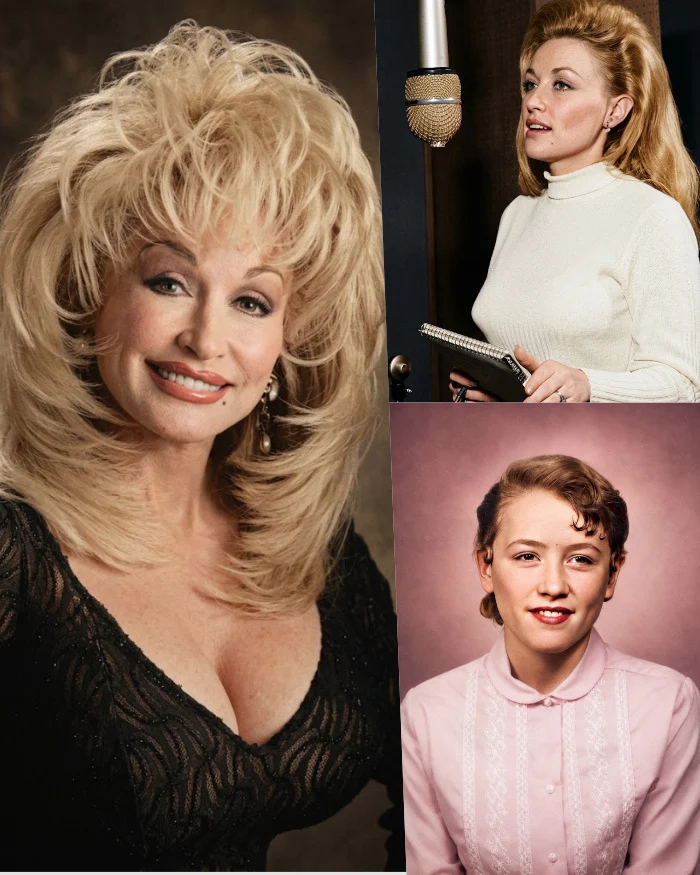
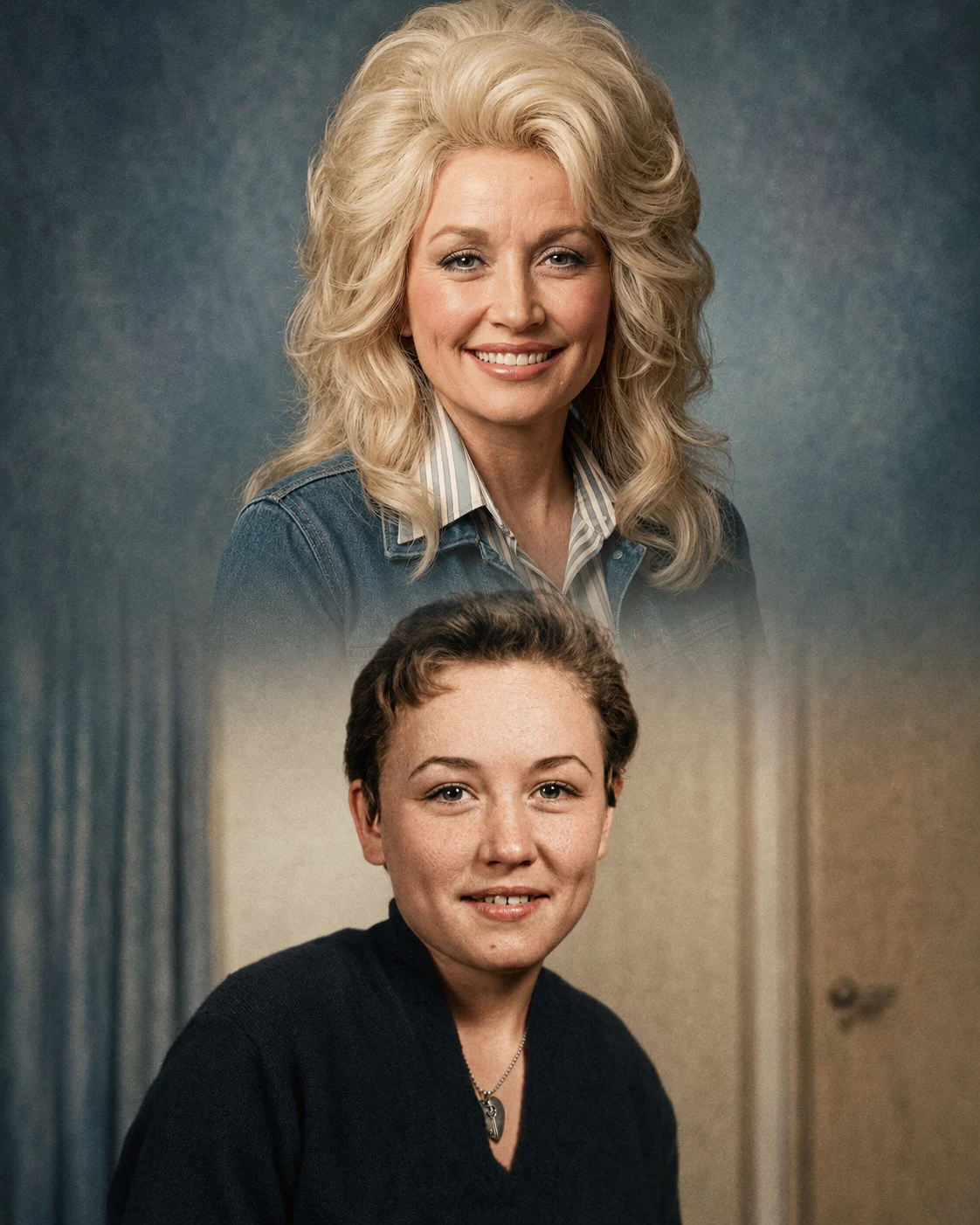
Before Dolly Parton reached middle school, a small girl in an Appalachian cabin became the reason her family could survive another winter.
The one-room wooden home in Locust Ridge, Sevier County, Tennessee, held fourteen people.
There was no electricity, no running water, and no money for instruments.
Her first audience was farm animals on a dirt porch, and her first microphone was a tin can wedged into floorboards.
Her uncle, Bill Owens, heard a piercing clarity in her voice and believed it belonged outside their isolated mountains.
He drove her over rugged roads to Knoxville so she could meet Cas Walker, a supermarket mogul who hosted a massive radio and television variety show.
Walker demanded professionalism from every performer and gave the ten-year-old a permanent paid spot on the Cas Walker Farm and Home Hour.
That job placed Dolly before professional broadcast microphones, bright studio equipment, and thousands of East Tennessee listeners.
Her daily contrast was extreme.
She worked under hot television lights by day, then returned each night to a cramped cabin where every meal and every decision depended on survival.
She did not spend her early wages on childhood luxuries.
She placed them directly into the calloused hands of her father, Robert Lee Parton, a sharecropper carrying the burden of feeding twelve children on steep mountain slopes.
The money eased the brutal pressure of keeping the family warm and fed through harsh Appalachian winters.
Singing was no longer a game she played in the yard. It was a vital survival tool for the people she loved most.
That early exposure to live broadcasting forged the independent business mind she later used to navigate Music Row.
Bill Owens knew local television was only the first step, and he leveraged her regional momentum toward a physical record.
In 1959 he arranged a grueling bus trip to Lake Charles, Louisiana.
Inside Goldband Records, a modest concrete block building far from polished Nashville studios, thirteen-year-old Dolly recorded her first single, Puppy Love.
That session provided proof that she was a legitimate recording artist, not just a regional television novelty.
Five years later, the exact day after her high school graduation, she packed a single suitcase and moved permanently to Nashville.
She would eventually secure total control over one of the most powerful publishing catalogs in the industry and negotiate contracts that changed the economics of her home county forever.
Her unmatched business acumen did not begin in a corporate boardroom.
It began with a little girl who learned that a voice could do far more than entertain a crowd.
It could help keep a family alive.