
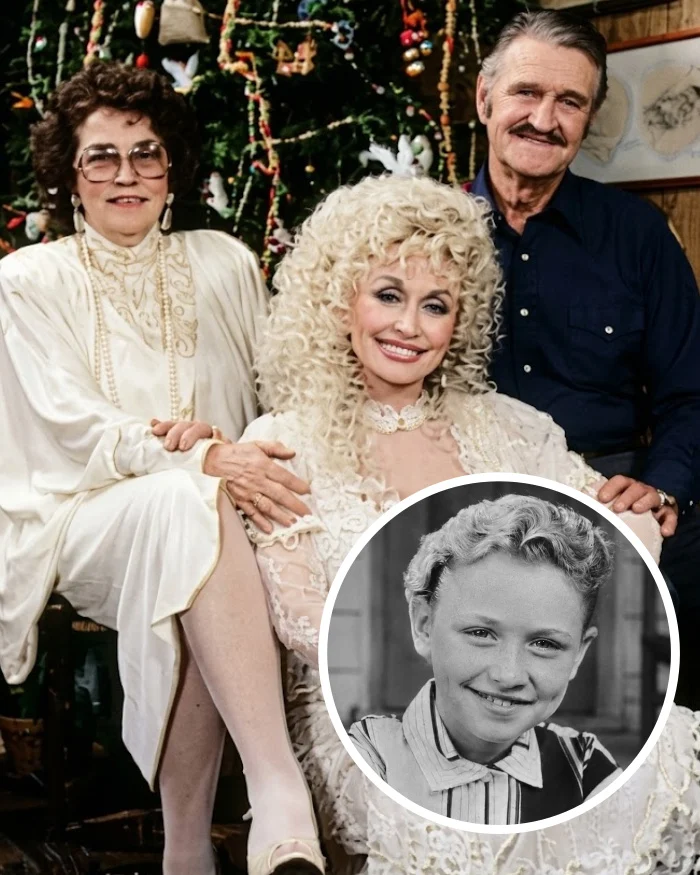
Imagine a girl stepping off a bus in Nashville with only a paper grocery bag and a voice shaped by Appalachian winters. That girl became Dolly Parton, and the tiny cabin she left behind became one of the most powerful symbols in country music history.
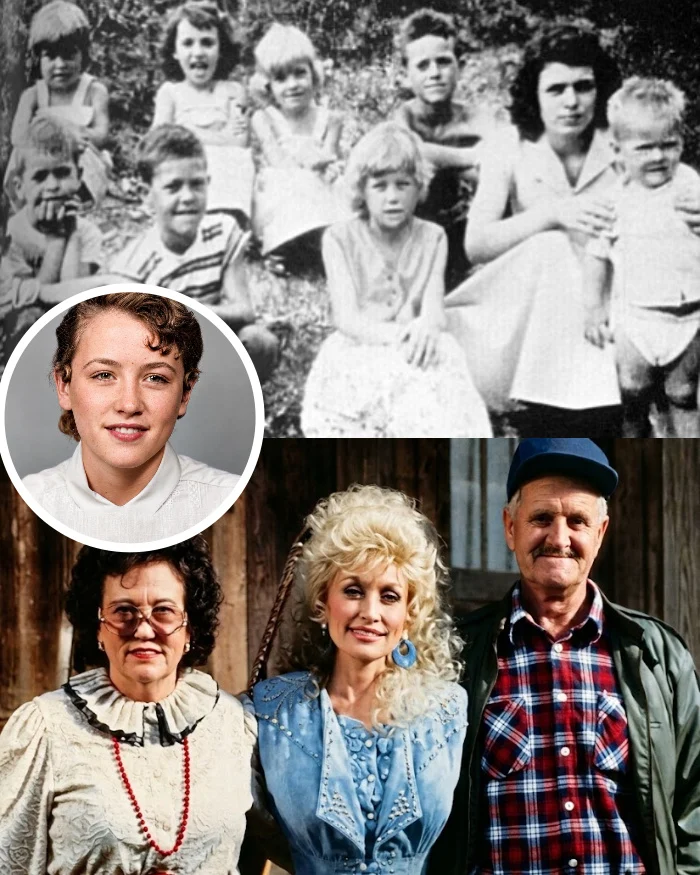
Before the rhinestones and theme parks, Dolly’s world was a single cramped room in Locust Ridge, Tennessee. She was the fourth of twelve children born to Robert Lee and Avie Lee Parton near the Little Pigeon River. The family had no running water, no electricity, and no indoor plumbing. Fourteen people lived in that tight space, and catalog pages lined the walls to block the mountain drafts.
Her father paid the doctor who delivered her with a sack of cornmeal. That detail still carries the weight of a childhood built on scarcity and dignity.
Yet the small room did not shrink her spirit. The Parton family survived through shared stories, church hymns, and the warmth of bodies huddled together against winter. The surrounding hills became Dolly’s first stage. She played on a makeshift instrument made from a broken mandolin and two heavy bass strings while dreaming of crowds beyond the tree line.
By her teenage years, she was already singing on local television and radio programs in Knoxville. Her ambition outgrew the mountains.
The morning after her high school graduation in 1964, she packed her few clothes into a paper grocery bag and boarded a bus to Nashville. She left Sevier County with a single unwavering goal, to earn a living through country music.
Arriving with almost nothing, she turned survival instincts into a sharp business mind. She established her own publishing company early in her career with her uncle Bill Owens. She understood that owning her songwriting was essential to protecting her future.
When Elvis Presley wanted to record one of her signature ballads, his managers asked for half of her publishing rights. She walked away from the deal.
That refusal helped anchor a multi-million-dollar empire decades later. Even after global superstardom, Dolly refused to erase her beginnings. When she opened Dollywood in Pigeon Forge, she spent her own money to build an exact full-scale replica of the rough wooden cabin where she grew up.
Her brother Bobby handled the construction, matching the original home down to the tin roof and modest porch. Inside, visitors can see authentic family heirlooms, including the pie safe her mother used to feed the large family.
For Dolly, the cabin is not a symbol of hardship. It is a deliberate honor to a mother who raised twelve children and a father who kept a roof over their heads. It reminds millions of fans that the biggest dreams can begin in the smallest rooms.
The girl who left home with a grocery bag eventually bought the mountain, but she made sure the world would remember exactly where her journey began.