
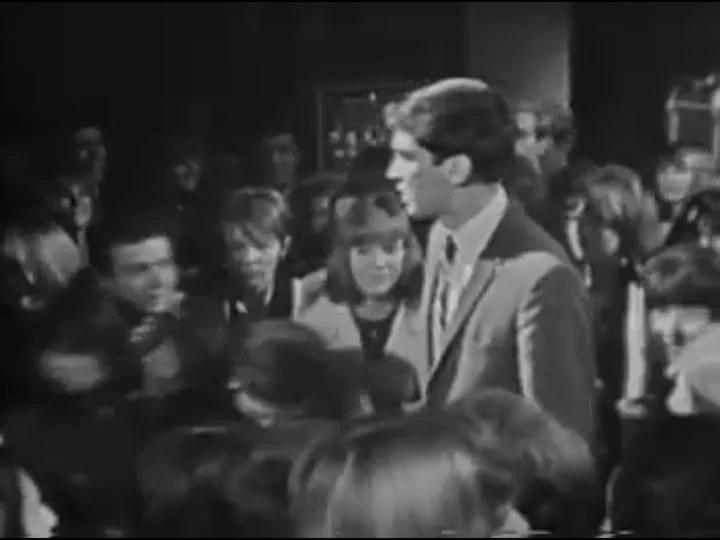
The moment arrives just after the piano fades. Gene Pitney’s voice cracks with a tremor of raw ache, then swells into a declaration that shakes the room. He promises to be strong, but you can hear the effort it takes. In that instant, a heartbreak becomes an anthem. Decades later, that moment still stops listeners cold. “I’m Gonna Be Strong” is not merely a song from 1964. It is a masterclass in emotional surrender, wrapped in a magnificent orchestral arrangement that refuses to age.
What makes this recording endure is its unflinching honesty. The vocal performance carries the weight of someone who chooses dignity over collapse. Every note feels earned. Every string swell feels inevitable. This is why the song still finds its way into new generations of playlists. It speaks to a universal truth about heartbreak and resolve. You can be shattered and still stand tall.
The track serves as the centerpiece of Pitney’s 1964 album of the same name. That collection revealed a performer who understood the power of vulnerability. Alongside other gems like “It Hurts to Be in Love” and “That Girl Belongs to Yesterday,” the album demonstrated a rare versatility. Pitney moved effortlessly between pop, rock, and country touches without losing his identity.
By this point in his career, Pitney had already made an indelible mark as a songwriter. He penned “He’s a Rebel” for The Crystals and “Hello Mary Lou” for Ricky Nelson. Yet his own recordings showcased a more intimate side. He did not just sing the lyrics. He inhabited them. That gift set him apart from most male vocalists of the era. His interpretation of this song remains the pinnacle of that skill.
“I’m gonna be strong” becomes more than a line. It turns into a lifeline.
The arrangement begins with deliberate restraint. A lone piano intertwines with Pitney’s tender, almost hesitant delivery. The sparse opening invites you closer, making space for the ache. Then the strings enter, gently at first, before rising with a dramatic pull that mirrors the growing resolve in the voice. The piano continues its intimate dialogue, while the guitars weave subtle textures underneath. The percussion stays shy, used only to punctuate the most powerful peaks. That careful layering turns the song into a slow emotional ascent.
Lyrically, the journey is simple yet profound. A person faces the end of a romance and vows to maintain composure despite the pain. Pitney portrays that internal battle perfectly. He begins soft and searching, as if the walls are closing in. By the final chorus, his voice reaches a soaring, almost defiant peak. The progression feels like theater, but it never feels forced. The balance between fragility and power is what gives the song its timeless pull.
For anyone who treasures this kind of dramatic ballad, a few other classics sit naturally alongside it. Roy Orbison’s “Crying” pairs unguarded emotion with a voice that defies gravity. The Righteous Brothers’ “Unchained Melody” delivers sweeping orchestral beauty and aching sincerity. Dusty Springfield’s “You Don’t Have to Say You Love Me” captures the same lush arrangement and devastating vocal passion. Brenda Lee’s “I’m Sorry” offers a simpler sound that lets raw feeling take center stage. And Connie Francis’s “Where the Boys Are” provides a warm, orchestral pop glow that echoes Pitney’s style.
The song survives because it never reaches for cheap tricks. Every instrument, every dynamic shift, every vocal lift feels purposeful. In an era of disposable tunes, this one chose to build a cathedral of sound and feeling. That is why new listeners continue to discover it, and why longtime fans return to it like an old friend.
So let the piano tempt you. Let the strings lift you. Let Gene Pitney remind you that strength and fragility can live inside the same heartbeat. Press play and journey through a classic that still knows exactly how to move you.