
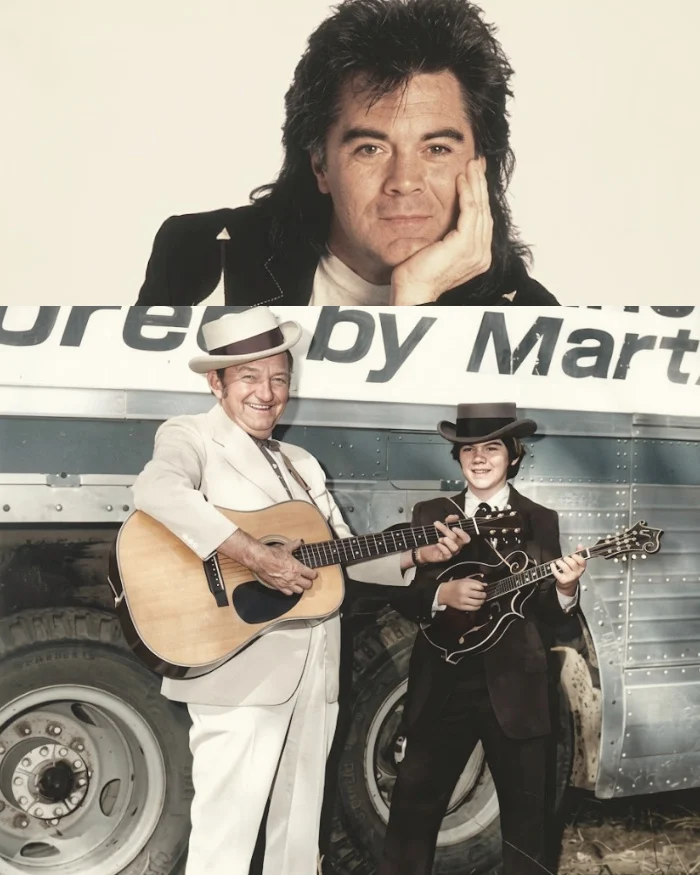
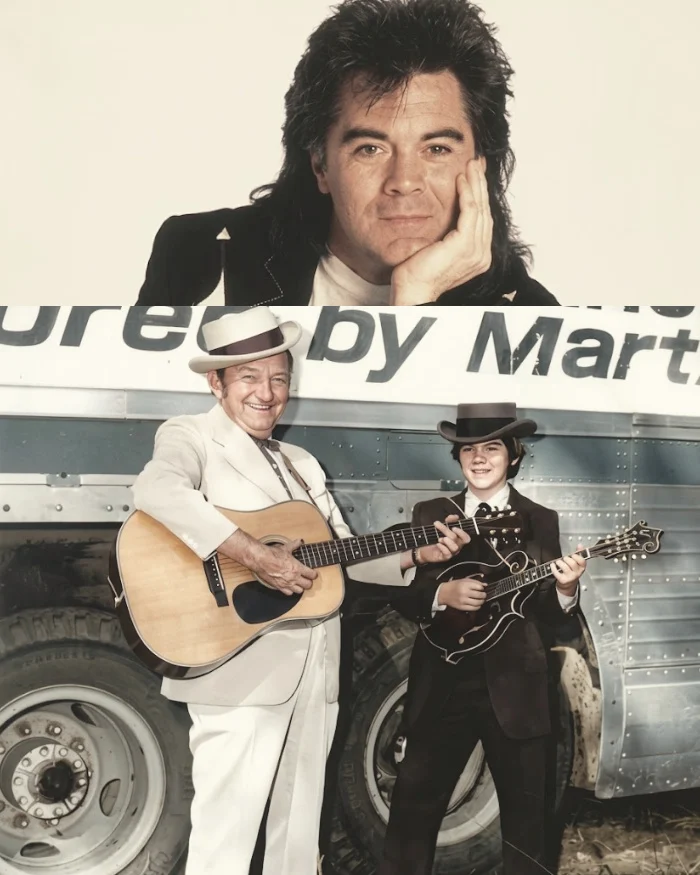
He did not ask for a souvenir. Standing in the narrow aisle of a tour bus, a thirteen year old boy opened his mandolin case, played like a seasoned professional, and was hired on the spot by a bluegrass legend.
In 1972, Marty Stuart was kicked out of his ninth grade history class in Philadelphia, Mississippi for hiding a country music magazine behind his textbook and arguing with his teacher about it. He was sent home from middle school, but for Stuart that sudden expulsion was not a punishment. It was an open door.
Instead of going home to face the consequences of his rebellion or accepting the discipline and returning to the classroom, the teenager packed up his mandolin and headed straight to Nashville. He was entirely consumed by the music he had been reading about and studying in the margins of his schoolwork, willing to trade a traditional education for the desperate chance to find the world he felt he truly belonged to and a way into the industry.
His fearless detour led him to secure an introduction to the tour bus of Lester Flatt, one of the founding architects of bluegrass music. Stepping onto the motorcoach, the small boy did not act like a starstruck fan looking for a souvenir. With quiet boldness, he pulled out his mandolin and delivered an impromptu audition right there in the narrow aisle.
Flatt watched in absolute disbelief as the child small hands flew across the strings with the precision, maturity, and soul of a seasoned professional and the rhythmic timing of a veteran session player. The legendary frontman, who had spent decades shaping the genre alongside Earl Scruggs, immediately recognized that the thirteen year old standing in front of him was not just a kid looking for a thrill. He was the living and breathing future of the genre, and Flatt offered the middle schooler a permanent job in his backing band, the Nashville Grass.
Joining the group required absolute immersion into a grueling adult environment. Stuart left his family in Mississippi and moved into Flatt home in Hendersonville, Tennessee. Flatt and his wife Gladys essentially took on the roles of surrogate parents, ensuring the teenager had a stable environment while navigating a relentless national touring schedule.
The arrangement thrust the teenager directly onto the highest stages of the genre. Before he was old enough to hold a drivers license, Stuart was performing under the lights of the Grand Ole Opry. He spent his high school years playing rhythm and lead mandolin on live television broadcasts, traveling from rural outdoor festivals to massive auditorium stages in a customized motorcoach.
The education Stuart received on the road far exceeded musical technique. Flatt taught the boy how to survive the exhausting machinery of the entertainment business, how to pace a live show, how to treat an audience with respect, and how to maintain authority over a microphone.
Flatt also instilled a fierce respect for presentation. The teenager learned the necessity of dressing impeccably for the stage, adopting the sharp suits and polished aesthetic that defined the older generation of country stars. Stuart absorbed the discipline of his mentor, matching the strict work ethic of the veteran musicians standing beside him.
The apprenticeship lasted for seven years, operating as a masterclass in traditional American music. It only ended when it faced an unavoidable physical reality. By the late 1970s, Flatt health began to rapidly decline due to severe circulatory issues, and frequent hospitalizations forced the Nashville Grass to scale back their touring schedule.
Despite the uncertainty, Stuart refused to abandon the man who had launched his career. He stayed with the band, adapting to the slowing pace and supporting Flatt through his final performances, and remained a dedicated member until Flatt was permanently unable to take the stage. When Flatt passed away in May 1979 at the age of 64, the band officially dissolved. At twenty years old, Stuart suddenly found himself without a job and without the man who had guided his entire adolescence.
He would go on to join Johnny Cash touring band the following year, carrying the operational knowledge he had learned from his first boss into his twenties. He eventually built a massive solo catalog and established himself as the preeminent archivist of country music physical history.
The foundation of that massive legacy was built by a veteran frontman who watched a defiant middle schooler open a mandolin case in the aisle of a motorcoach, recognized a peer, and gave him a seat on the bus.
The local school system had tried to discipline a distracted student, but that brief moment of rejection gave Marty Stuart the exact push he needed to step onto a tour bus and never look back. His legacy was not constructed in a recording studio, it began on that bus.