
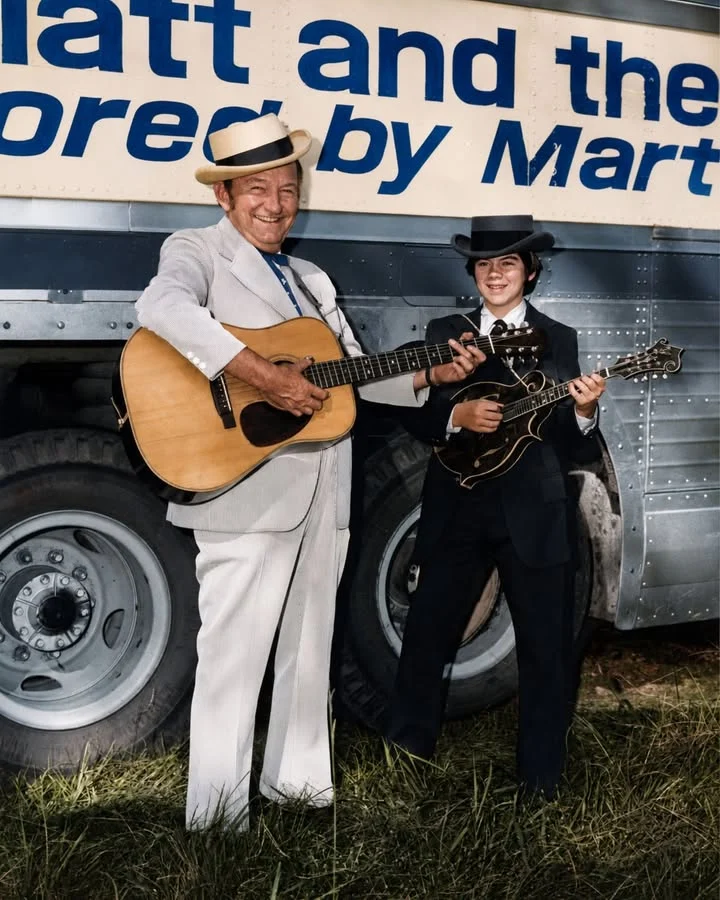
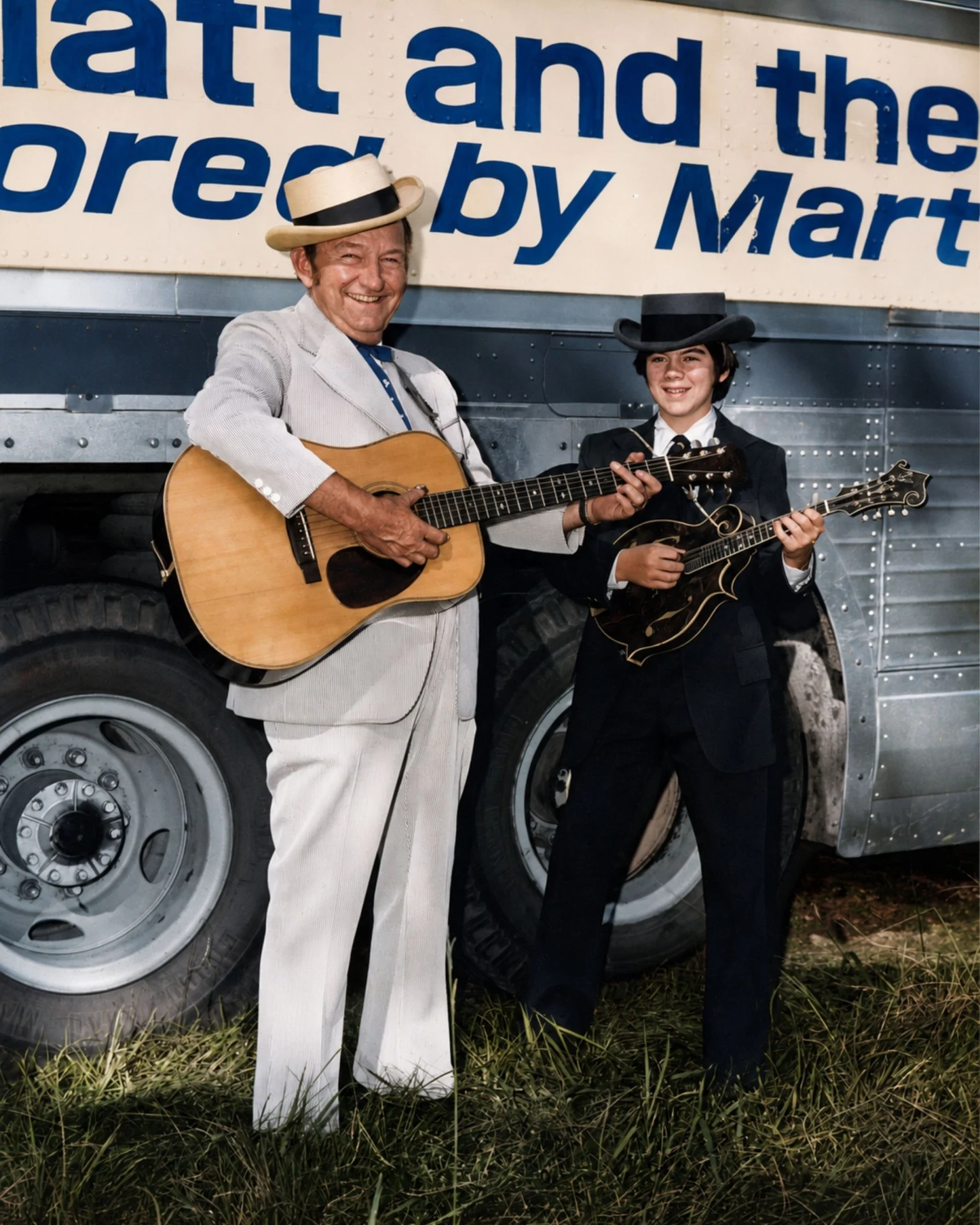
In 2020 he was elected to the Country Music Hall of Fame, nearly five decades after a thirteen year old boy stepped off a Greyhound bus in Nashville and within days earned a permanent job with Lester Flatt.
By the end of the weekend Flatt wanted Stuart in the Nashville Grass permanently.
On August 3, 1972 Marty Stuart stepped off a bus in downtown Nashville from Mississippi. He was thirteen years old.
Stuart had already learned guitar and mandolin and played with the Sullivan Family, but Nashville was still something he knew mostly from records and Grand Ole Opry broadcasts. Early that morning he walked to the Ryman Auditorium before the city had fully come alive.
Roland White And The Tour Bus To Delaware
Bluegrass musician Roland White soon picked him up in a 1965 Chevrolet Impala. The next day White took Stuart to Lester Flatt’s tour bus in Hendersonville.
They headed to a bluegrass festival in Delaware where the teenager was given a chance to play with Flatt’s band. Flatt heard enough.
After arrangements were made with his parents Stuart joined the road at an age when most musicians were still learning songs in bedrooms and school gyms. A week later he made his first appearance on the Grand Ole Opry.
An Education Beside The Builders Of Bluegrass
Stuart stayed with Flatt through most of the 1970s. The education happened night after night with long bus rides, festival stages, dressing rooms, radio appearances and hours beside musicians who had helped build bluegrass and country before he was born.
When Flatt’s health declined and the band ended Stuart moved on. He worked with Doc Watson and other musicians, then joined Johnny Cash’s band in 1980.
From Respected Sideman To Country Star
Only later did he build a solo career of his own. “Crying, Waiting, Hoping” and “Hillbilly Rock” and “Tempted” and his recordings with Travis Tritt helped turn Stuart from respected sideman into a country star.
In 1992 he became a member of the Grand Ole Opry. In 2020 he was elected to the Country Music Hall of Fame.
But those early years with Flatt left another mark. Stuart began saving the instruments, photographs, stage clothes and personal objects that passed through the country world around him. What started as a young musician holding onto pieces of his heroes eventually grew into one of the most important private collections of country music history.
The road job Lester Flatt gave him taught Stuart how to play the music. It also taught him how quickly the people and objects that made it could disappear, and he spent a lifetime making sure they would not be forgotten.