
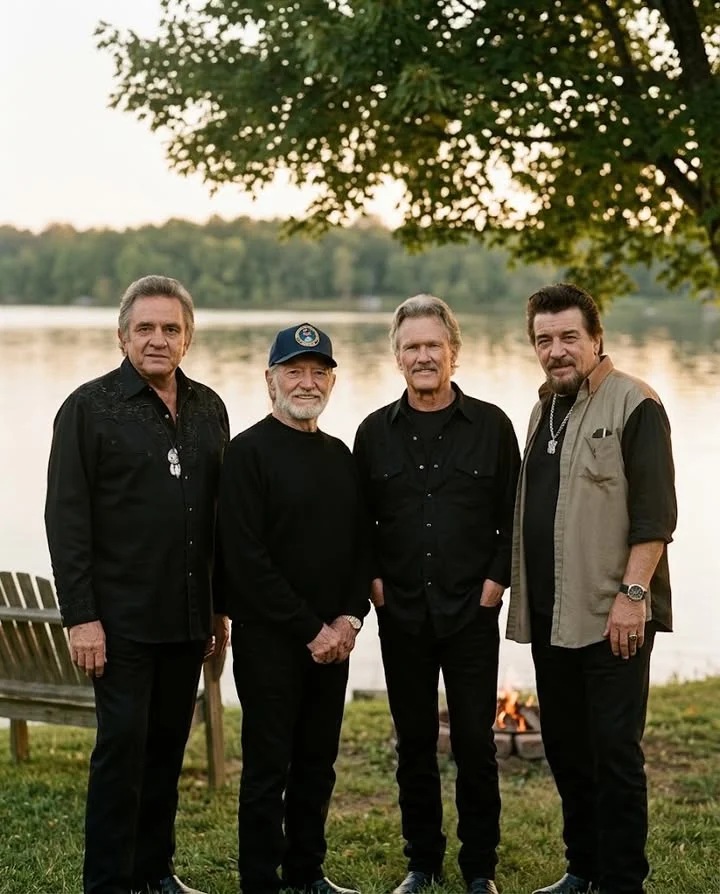
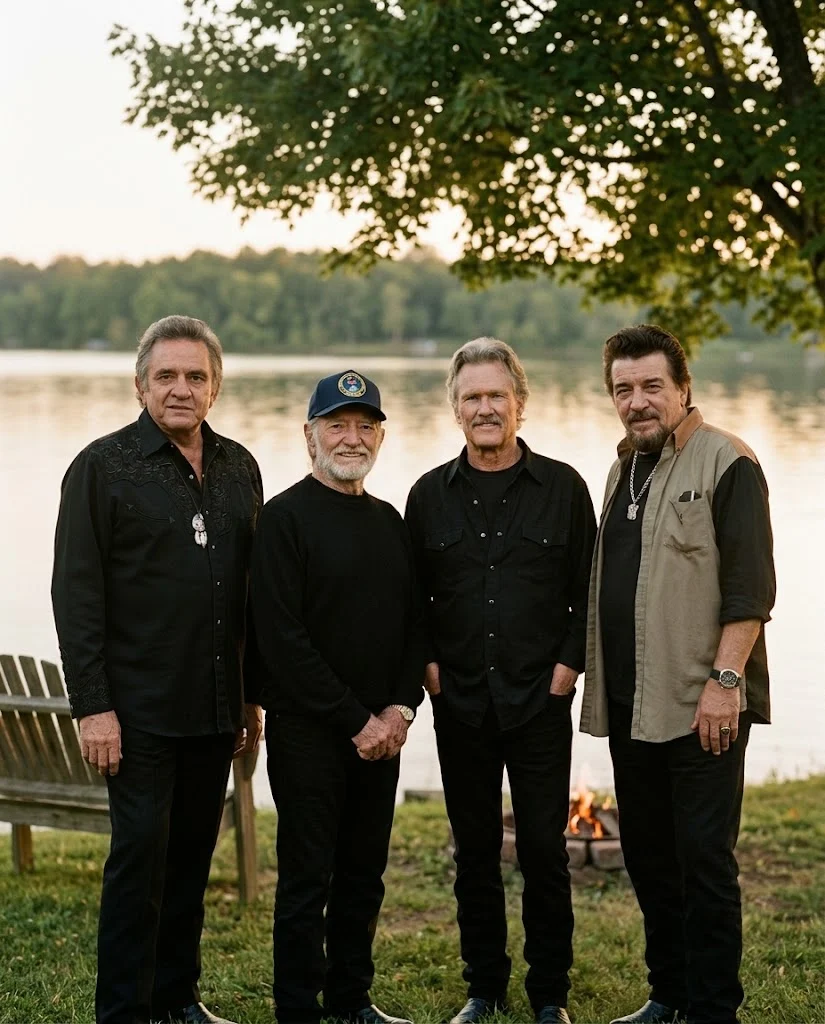
Four aging outlaws stood shoulder to shoulder under the lights and sang about a fading hero while facing their own passing youth.
When Johnny Cash, Waylon Jennings, Willie Nelson, and Kris Kristofferson recorded “Desperados Waiting for a Train” in 1985, the song felt less like a country single and more like a confession.
It became the second single from their album Highwayman and rose to number 15 on the Billboard Hot Country Singles chart.
The group had already shaken country music with their debut hit, but this track turned its gaze toward the harsh reality of growing older.
It tells the story of a young boy looking up to an aging Texas oilfield worker, a revered figure who could not outrun time.
The original writer, Guy Clark, first penned the song in 1975 from memories of Monahans, Texas.
His hero was a real man named Jack Prigg, a one-eyed retired oil well driller who lived at a hotel run by Clark’s grandmother.
Prigg became a towering father figure to the boy, and the two bonded while older men drank beer and played domino games such as Moon and Forty-Two.
Clark captured the roughneck dignity of a man with a wild spirit trapped in a failing body.
By the time The Highwaymen recorded the song, the four legends were in their fifties and far past their days of youthful rebellion.
The rough, weary edges in their voices were not studio tricks or vocal acting.
They were the real scars of hard living, chronic illness, and endless nights on the highway.
Taking turns on the verses, Cash, Jennings, Nelson, and Kristofferson transformed Clark’s childhood memory into an autobiographical reflection on their own fading youth.
They were no longer only singing about an old Texas worker.
They were singing about themselves.
To me he’s one of the heroes of this country So why’s he all dressed up like them old men Drinkin’ beer and playin’ Moon and Forty-two Just like a desperado waitin’ for a train
Throughout the 1990s, the group often closed global tours with the track.
They stood like old soldiers quietly accepting the twilight, trading lines as the lights held them together.
The song remains a beautiful testament to the dignity of aging and the brotherhood of lone wolves.
It allowed four icons to embrace the passage of time before the world and find strength in the very years that had worn them down.