
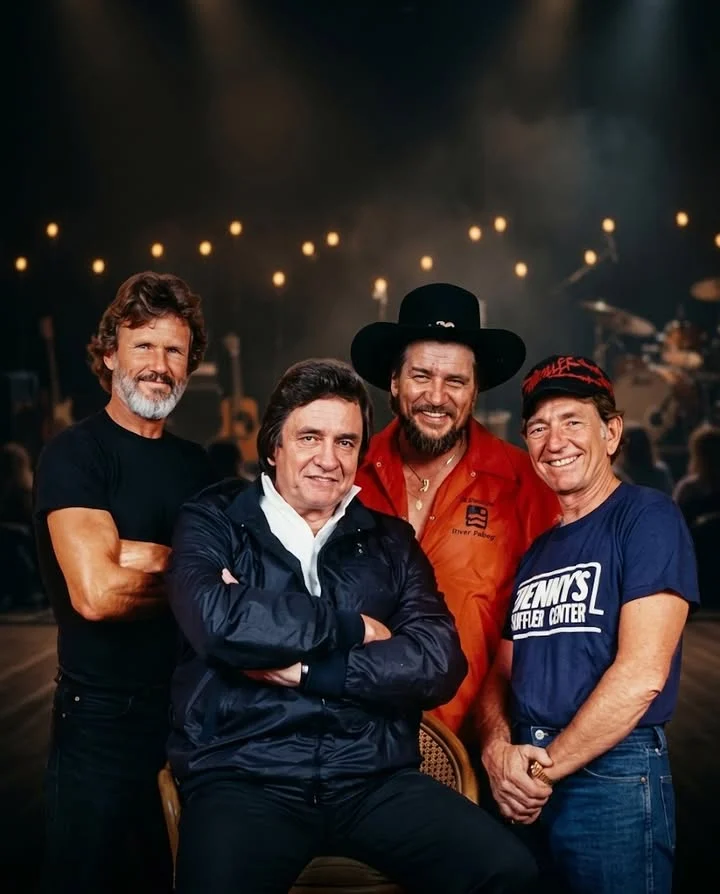
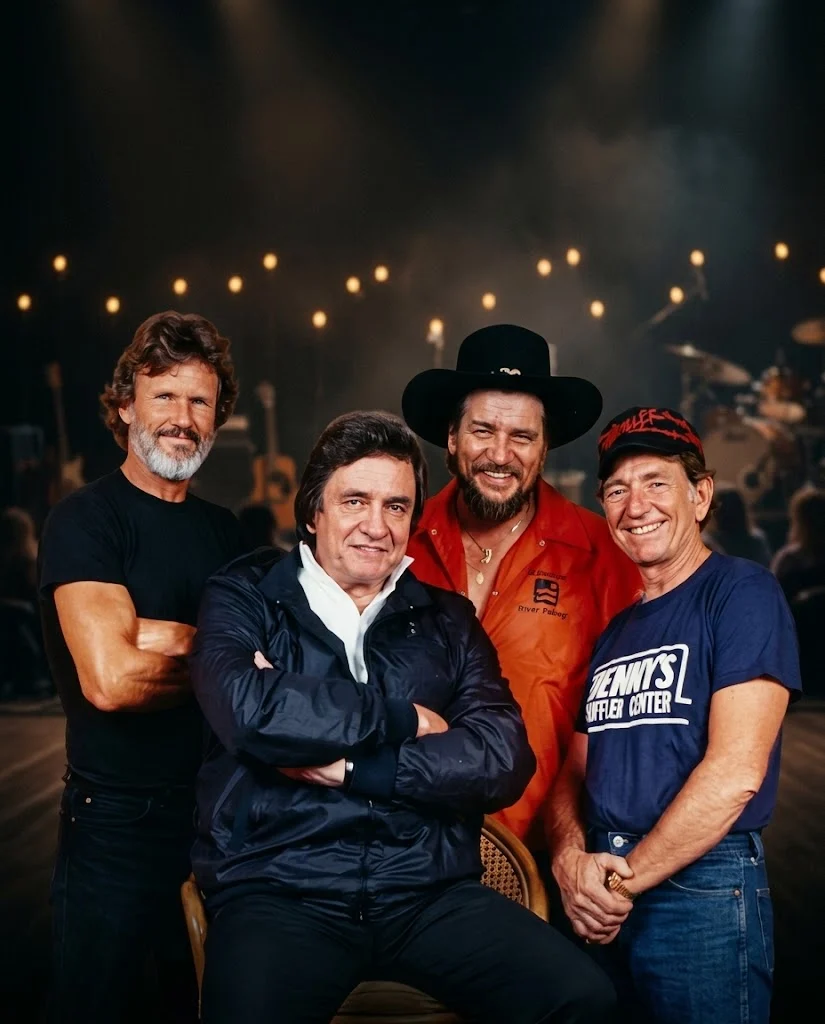
Four men stood shoulder to shoulder around a single microphone and in that quiet circle the loudest egos in country music fell silent. That image became the heartbeat of the Highwaymen a supergroup formed in 1985 by Johnny Cash, Willie Nelson, Waylon Jennings and Kris Kristofferson. Across a ten-year run and three studio albums they turned a Jimmy Webb song called Highwayman into a Billboard chart topper and won a Grammy in 1986.
They were already pillars of the outlaw movement and each man carried visible scars from industry fights, broken marriages and personal demons. By the mid 1980s Cash was facing a changing business that would soon drop him from his longtime label. Jennings was fighting for hard won sobriety. Nelson and Kristofferson were balancing enormous fame with country radio’s shifting tides. They had battled Nashville and won but the victories had cost them. When they performed together there were no separate spotlights. They stood shoulder to shoulder around one center microphone like a brotherhood of survivors sharing a campfire after a long war.
The foundation for that brotherhood was laid far from Tennessee. In 1984 the four men were in Montreux Switzerland filming a Johnny Cash Christmas television special. During downtime in a hotel they swapped songs and stories. Cash brought a haunting reincarnation themed ballad written by Jimmy Webb. The song Highwayman had been recorded years earlier by Glen Campbell but had languished without much label push. Campbell admired the architecture of the writing and played it for Cash and urged him to cut it. In Switzerland Cash played the track for Nelson Jennings and Kristofferson. Its four distinct verses told of a soul reincarnated across different lifetimes. The math was perfect for four voices and the decision to record it together came almost instantly.
Back in the United States the Nashville studio sessions were free of the clashes one might expect from four massive superstars. Veteran producer Chips Moman anchored the sessions in deep mutual respect. A vital piece fell into place when young Marty Stuart who was then playing guitar in Cash’s backing band added the signature driving acoustic riff that opens the track. That simple relentless progression gave the song its rolling momentum.
Four of the largest egos and most recognizable voices in American music willingly stepped back so the others could shine.
On stage they chose one center microphone and no separate spotlights. There were no bitter billing disputes and no demands for extra stage time. Cash brought steady gravity. Nelson brought effortless phrasing. Jennings brought gritty defiance. Kristofferson brought ragged poetry. Together those gifts merged into a single cohesive force. Waylon later recognized the weight of it and compared their union to the Mount Rushmore of country music.
The casting of the verses was perfect because each man’s assigned role mirrored his public persona and lived experience. Nelson took the opening verse as the highwayman a road worn traveler always moving to the next town. Kristofferson embodied the sailor and matched his own adventurous literary spirit. Jennings took the third verse as the dam builder who meets a tragic end and delivered the lines with trademark outlaw grit and stubborn independence.
Cash delivered the closing verse as the starship captain. When his booming authoritative baritone entered the track and sang about flying a starship across the Universe divide it carried the weight of a man who had seen deep darkness and lived to tell about it. It was perfect musical casting. A conceptual song became a living breathing testament to their collective endurance.
They were the last of a golden era. The song gave them a name and a No 1 hit but it gave four weary legends something more. It gave them a place to stand together.
The fiercest outlaws were at their best when they laid down their individual armor and stood as one.
How that signature song reached those specific four men and how those Nashville sessions captured it remains the deeper chapter of their legacy. The Highwaymen were not just a summit of stars. They were a rare proof that some voices are meant to echo alongside each other.