
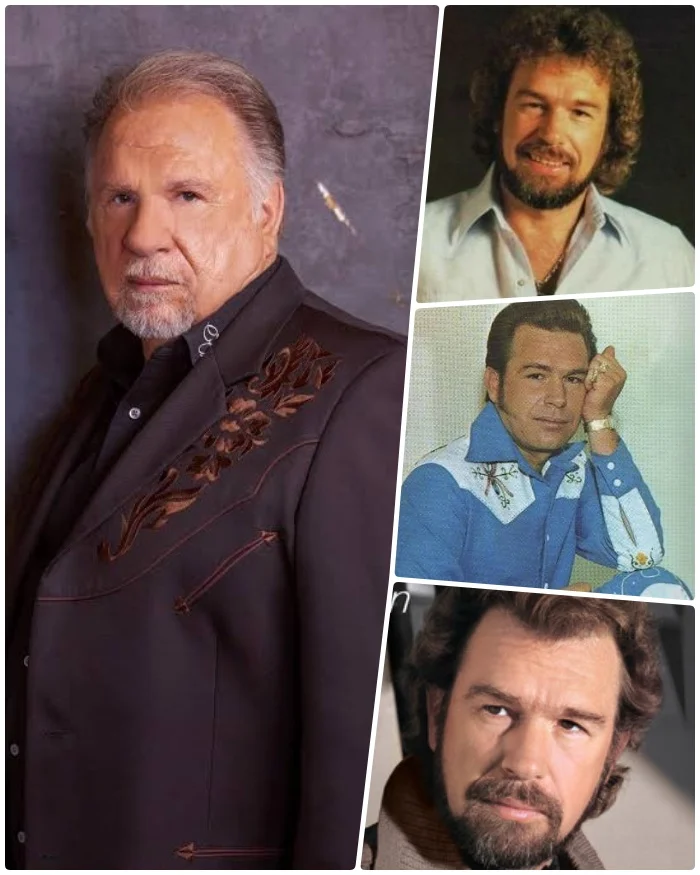
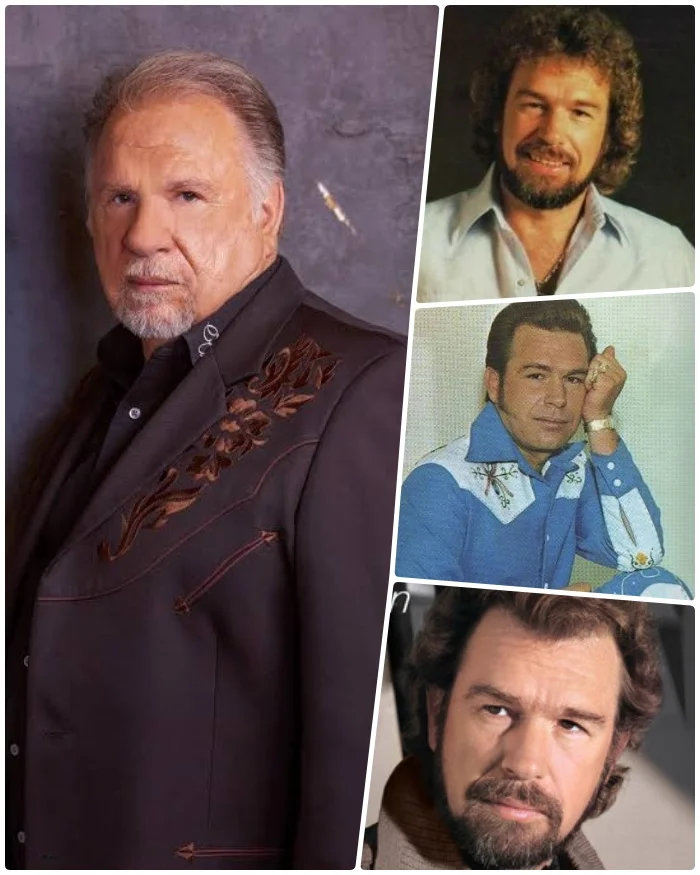
In the summer of 1975 a voice that had spent twelve years breathing paint fumes in Houston auto body shops suddenly filled country radios across America and climbed to number three on the Billboard country chart.
The singer behind that breakthrough was thirty-one-year-old Gene Watson and for most listeners he seemed to arrive out of nowhere yet his road to that moment had started more than three decades earlier in a crowded vehicle with no fixed address.
Born in Palestine, Texas, in October 1943 Watson grew up as one of seven children in a family of nine that owned no permanent home during the 1940s and early 1950s.
His father pulled the passenger seats out of an old school bus and built narrow bunks from scrap lumber so his wife and seven children could follow sawmill work and cotton harvests across Texas, Oklahoma, and Arkansas.
The thin uninsulated metal shell trapped stifling summer heat and bitter winter cold and whenever the bus parked near a farm the children worked beside their parents in the fields.
Watson dragged heavy canvas sacks down the rows while sharp cotton bolls cut his hands and because the family moved with the harvest seasons he changed schools so often that he grew up self-conscious about living without a regular street address.
At night the hardship softened a little when his father sat by a kerosene lamp and picked blues on an acoustic guitar while his mother sang gospel hymns and in those quiet roadside moments the boy absorbed his first lessons in phrasing and pitch.
After the family finally settled in Paris, Texas, Watson left high school in the ninth grade to help pay the household bills and in 1963 at nineteen years old he moved south to Houston in search of steadier wages.
There he spent his days sanding fenders, knocking out dents, and spraying lacquer in local automotive repair shops and for more than a decade auto body repair remained his daytime trade.
He eventually opened his own garage on the north side of Houston and worked under shop lights all week while building a second life after dark in clubs like the Dynasty Club where he sang standards by Lefty Frizzell, Merle Haggard, and Ray Price.
His vocal range and control soon caught the attention of local independent producers and during the late 1960s and early 1970s he recorded regional singles for small Texas labels including Tonka, Wide World, and Stoneway.
A 1969 single called ‘Love in the Hot Afternoon’ written by brothers Kent Westberry and Vinnie Dae drew strong airplay around Houston but the small label lacked the distribution network to push it across the nation.
By 1974 Russ Reeder and Roy Stone had carried Watson’s recordings to Capitol Records in Nashville and instead of rushing him into a brand new studio session Capitol bought the existing master of ‘Love in the Hot Afternoon’ which Watson had already cut at Clement Studios in Nashville.
Capitol released that recording to country radio in early 1975 and that summer it turned the cautious Houston mechanic into a national recording artist even though he at first hesitated to give up the security of his body shop because he remembered how quickly money had vanished during his childhood on the road.
Capitol followed the breakthrough with a string of traditional country hits that stood out in an era dominated by pop country crossovers and songs like ‘Where Love Begins’ ‘Paper Rosie’ and his 1979 signature hit ‘Farewell Party’ made his high clear tenor and long final notes a fixture on American jukeboxes.
After moving to MCA Records he earned his first Billboard number one single in February 1982 with ‘Fourteen Carat Mind’ and followed it with chart favorites such as ‘Speak Softly (You’re Talking to My Heart)’ and ‘Got No Reason Now for Goin’ Home’.
Across the 1970s and 1980s he placed more than forty singles inside the country top forty while fellow singers began calling him ‘The Singer’s Singer’.
The voice that carried him out of Houston’s auto repair bays still holds the plainspoken weight he first heard by kerosene light inside his father’s converted school bus.
More than six decades after leaving the cotton fields Watson continues to tour and step onto the stage of the Grand Ole Opry where he was inducted as a member in 2020 and the grit and emotion in his singing still trace straight back to those nights listening to his father’s guitar.