
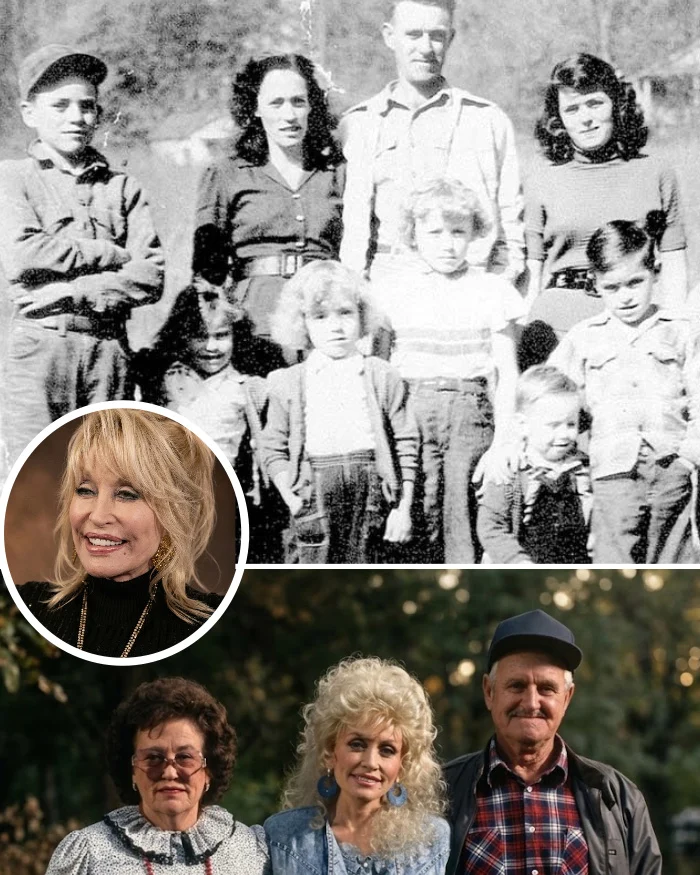
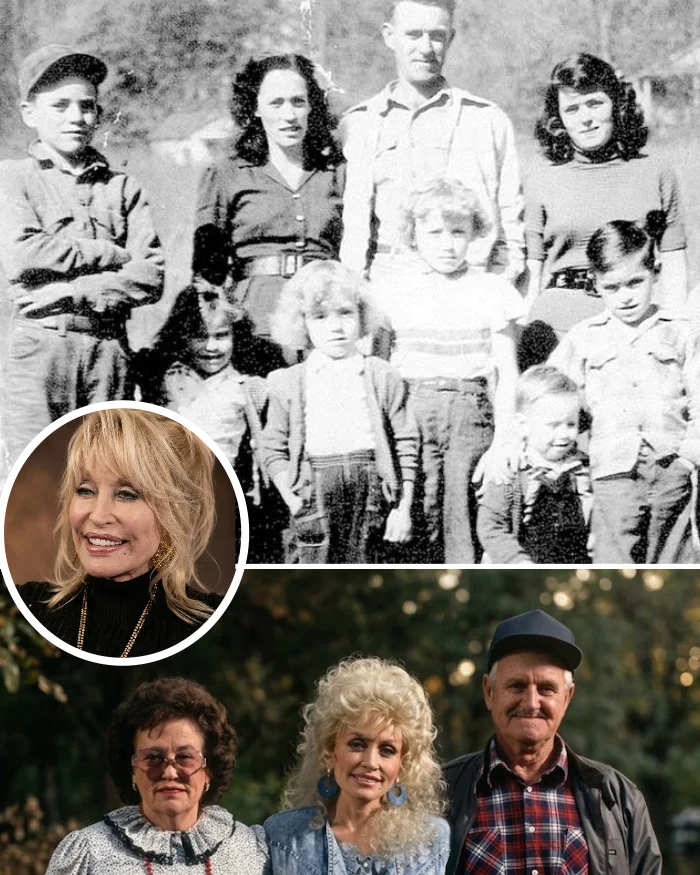
The first major check Dolly Parton ever earned did not buy rhinestones or a Hollywood mansion. It bought a farm in Sevierville, Tennessee, and she handed the keys to her parents Robert Lee and Avie Lee. For a family that once paid the doctor with a sack of cornmeal, that farm meant running water, central heating, and a roof that would not collapse in an Appalachian storm.
Dolly was the fourth of twelve children born into a one-room cabin deep in the Great Smoky Mountains. Her father Robert Lee worked land he did not own until his hands were worn to calluses. Her mother Avie Lee stretched meager rations to feed fourteen mouths. The morning after her high school graduation in 1964, Dolly boarded a bus to Nashville with her belongings in a paper bag and her original songs in her head.
By 1967 she had joined The Porter Wagoner Show, earning sixty thousand dollars a year. It was an unimaginable fortune for a girl from East Tennessee. Yet her first major investment was not for herself. She bought a working farm and gave it to her parents.
For Robert Lee a blind farmer who had spent his life tending someone else’s land the farm meant security. For Avie Lee it meant a bright kitchen with running water. The children no longer had to huddle together under patched blankets to survive the freezing winters. They finally felt the quiet warmth of central heating.
Fame changed her address but her money bought dignity for the people who raised her.
That farm was only the foundation of a much larger promise. Two decades later in 1986 Dolly partnered to open Dollywood in nearby Pigeon Forge. The theme park quickly became the largest employer in Sevier County transforming a quiet mountain community into a thriving tourist destination. It created thousands of steady jobs and ensured that future generations of East Tennessee families would have opportunities her own parents never did.
Through global tours millions of records sold and international accolades her true compass never shifted. She wrote songs about her upbringing most notably the story of her mother stitching rags into a coat of many colors. That song taught listeners worldwide that true wealth was not defined by a bank account. But behind the scenes she was actively using her actual wealth to rewrite the financial reality of her hometown.
The family farm was the first proof of who she really was. The theme park was the institutional realization of it. She never tried to erase the poverty of her childhood from her public image. Instead she wore her history with fierce pride proving that a person could conquer the world without abandoning home.
The glitz and rhinestones eventually became her uniform but her foundation remained purely Appalachian. Her greatest legacy is not just the voice she gave to the mountains. It is the fact that when she finally had the power to build an empire she built it right in the same soil that raised her.