
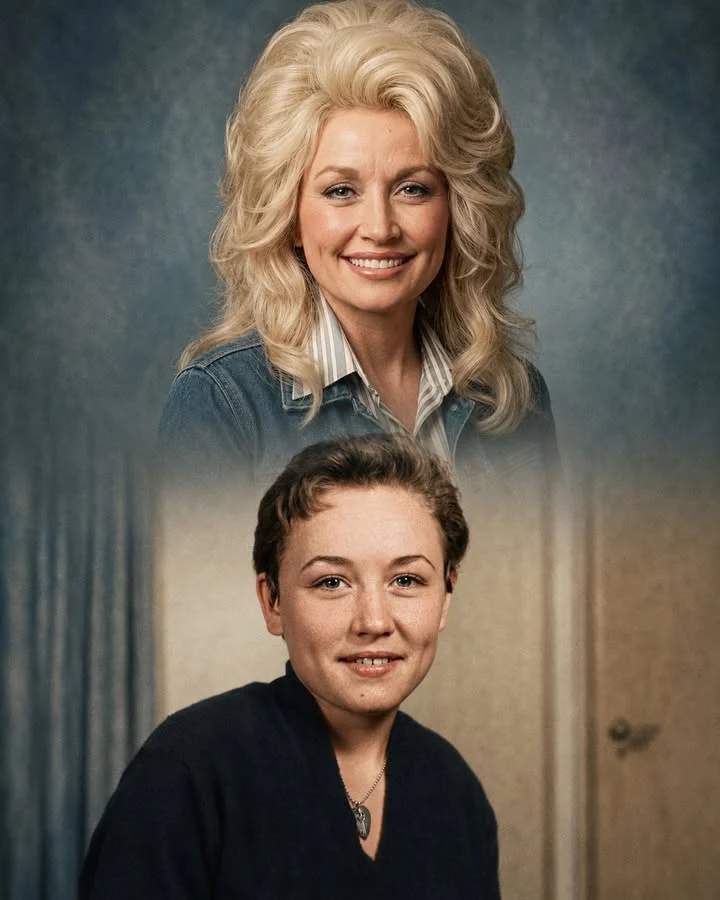
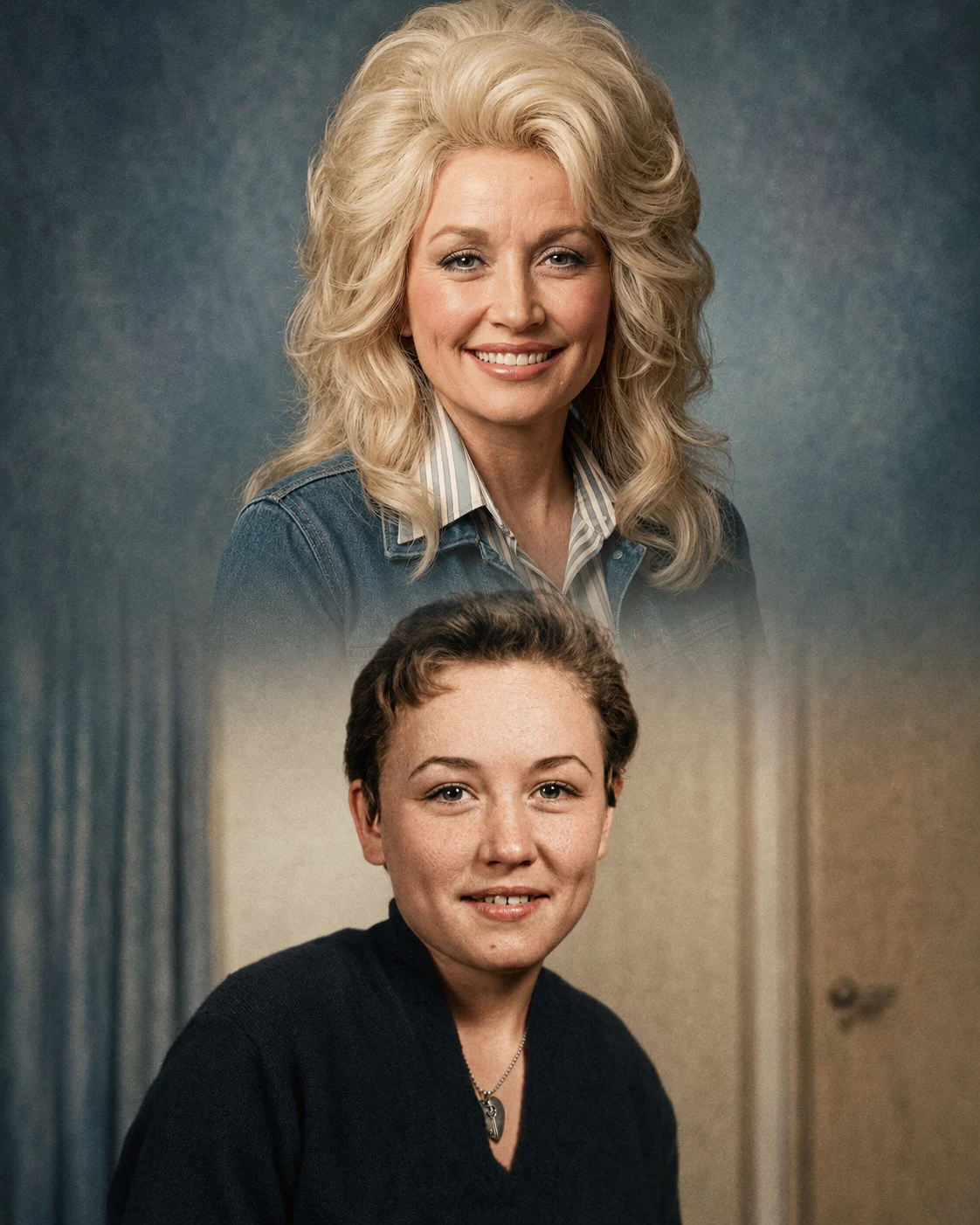
Long before the rhinestones and towering hair became cultural landmarks, a ten-year-old girl in the Great Smoky Mountains discovered that her voice could do more than entertain farm animals. It could keep her family alive.
Dolly Parton grew up in a cramped one-room wooden cabin in Sevier County, Tennessee, sharing space with eleven siblings. There was no electricity, no indoor plumbing, and no money for store-bought instruments. Her first microphone was a tin can wedged into a crack in the floorboards, and her earliest audience consisted of wandering farm animals on a dirt porch.
But her uncle Bill Owens recognized a piercing vocal clarity that belonged far beyond their isolated valley. He became determined to get her voice heard, driving the rugged mountain roads to Knoxville repeatedly until he secured an audition with Cas Walker, a supermarket mogul who hosted a popular radio and television variety show.
Walker, a fierce businessman demanding professionalism, gave the ten-year-old a permanent paying spot on the Cas Walker Farm and Home Hour. The job placed her directly in front of professional studio equipment and thousands of East Tennessee listeners.
The contrast in her daily life was extreme. During the day she worked under bright television lights, projecting the image of a rising star. Every evening she returned to a dark unheated cabin where survival dictated every family decision.
The wages she earned did not go toward childhood luxuries. Instead she placed that early money directly into the calloused hands of her father Robert Lee Parton, a sharecropper struggling to feed twelve children on steep mountain slopes. The steady income from her television appearances provided a crucial financial lifeline, easing the brutal pressure of keeping the family warm and fed through harsh Appalachian winters.
Singing was no longer a game played for farm animals. It had become a vital tangible survival tool for the people she loved most.
That early exposure to the strict demands of live broadcasting forged the fiercely independent business mind she would later use to navigate Nashville. But Uncle Bill knew local television was only the first step. He leveraged her regional momentum to push for a physical record.
In 1959 he arranged a grueling bus trip to Lake Charles Louisiana. Inside a modest concrete block building far from Nashville’s polished studios, a thirteen-year-old Parton walked into Goldband Records and recorded her first single Puppy Love.
That independent Louisiana session provided the physical proof she needed to show industry executives she was a legitimate recording artist. Five years later, the day after her high school graduation, she packed a single suitcase and moved to Nashville permanently.
She would eventually secure total control over one of the most powerful publishing catalogs in the industry, negotiating massive contracts that changed the economics of her home county forever. But that unmatched business acumen was not learned in a corporate boardroom. It was forged by a little girl who realized early on that a voice could literally help keep a family alive.