
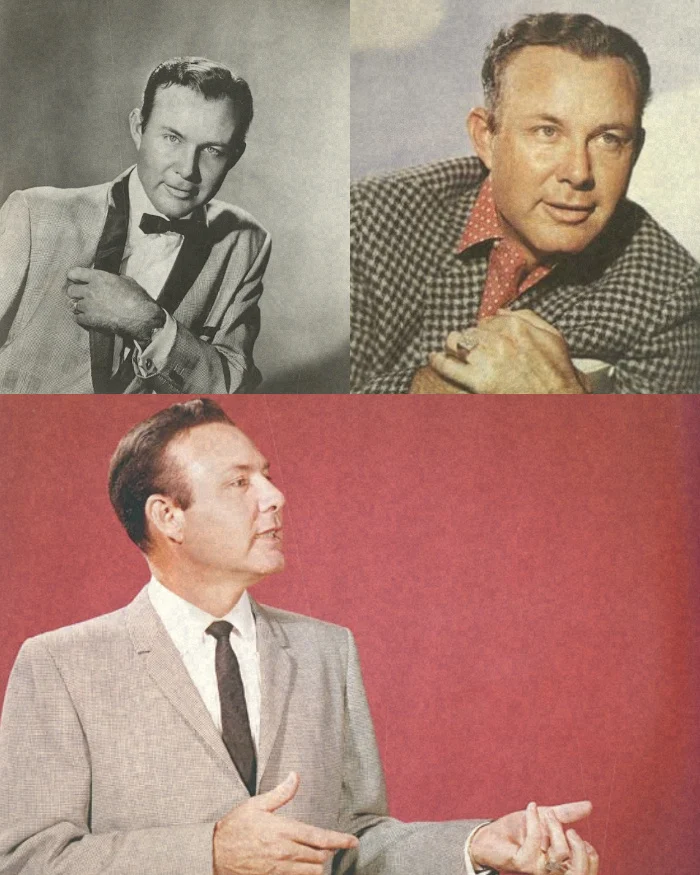
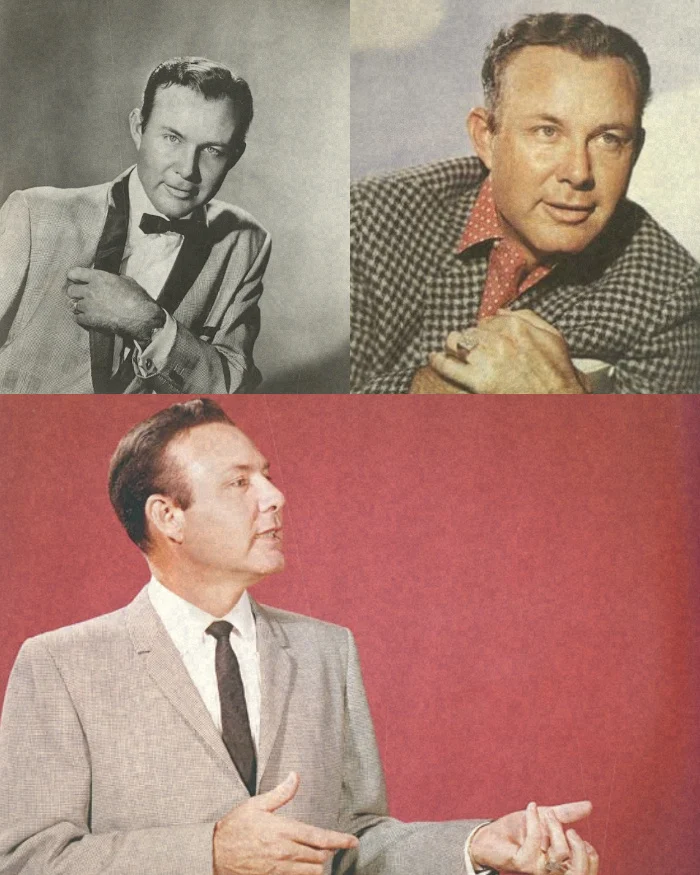
A basket of pears bought a broken guitar and changed a family that had learned how heavy silence could be.
Long before the world knew the smooth baritone of Gentleman Jim Reeves, a boy from Panola County was turning loss into music.
He was born in June 1924 in Galloway, a farming community in East Texas. His father, Thomas Martin Reeves, died from exhaustion while working on a county road crew when Jim was only ten months old. His mother, Mary Adams Reeves, then faced the hard task of feeding nine young children on dry farm soil during years of severe rural hardship.
Childhood in Panola County meant long hours under the Texas sun, cotton fields, bent backs, and pennies for flour and basic dry goods. The dinner table held pans of dry cornbread, and the chair at the head stayed empty. Jim grew up without a personal memory of his father’s voice, relying on faded family photographs and stories his mother shared after long days in the fields.
Solace arrived when Jim was five years old. A passing oil field worker or itinerant laborer carried a battered acoustic guitar with missing strings. Jim traded a basket of fresh pears for the discarded instrument. He carried it behind the house, sat beneath a tree, and taught himself to pluck the few remaining strings, filling the quiet acres with low and soothing notes.
He learned music by trading pears for a broken guitar and singing into the silence of East Texas.
That worn guitar became his refuge from heat and poverty. Long before radio towers broadcast his velvet voice across the nation, Jim Reeves found his sound in the Panola dirt, using broken guitar strings to bring warmth to a home that had lost so much so early.
By age nine, he practiced whenever chores allowed, and he eventually played on a live broadcast over Shreveport’s KRMD radio. Yet the path out of Panola County did not lead immediately to Nashville. His physical gifts pointed first toward sports.
As a student at Carthage High School, Reeves developed a powerful right arm that drew interest from professional baseball scouts. He enrolled at the University of Texas in Austin on an athletic scholarship, studied speech and drama, and pitched for the Longhorns. In 1944, the St. Louis Cardinals signed him to a minor league contract. For three seasons, he pitched in the Class D Texas League, throwing for the Lynchburg Cardinals and Henderson Oilers.
That athletic dream ended abruptly in 1947. During a routine game, Reeves snapped a nerve and muscle in his pitching shoulder, tearing the joint so severely that he could no longer deliver a baseball over home plate. With his sports career finished in his early twenties, he returned to East Texas with no clear prospects.
Reeves turned back to his voice. He took an entry-level job at KGRI, a small radio station in Henderson, working as an announcer and disc jockey while moonlighting in local honky-tonks. The work demanded long hours behind a microphone, where he developed the steady and intimate baritone delivery that became his signature.
His breakthrough came in November 1952 at the Louisiana Hayride in Shreveport. The stage carried his voice beyond small-town radio and began the climb that made him a beloved figure across the country.
The boy who once learned silence in the red dirt of Texas became a singer whose warmth could fill a room, a nation, and a lifetime.