
When George Jones woke after thirteen days in a hospital coma, the slow ride down a Texas highway no longer looked like a joke. His wife Nancy had stood by his bed. The crash on Highway 96 in Franklin, Tennessee, had nearly taken his life. He suffered a lacerated liver and a punctured lung. He later said the urge to drink was gone, replaced by a profound realization of what he had almost lost.
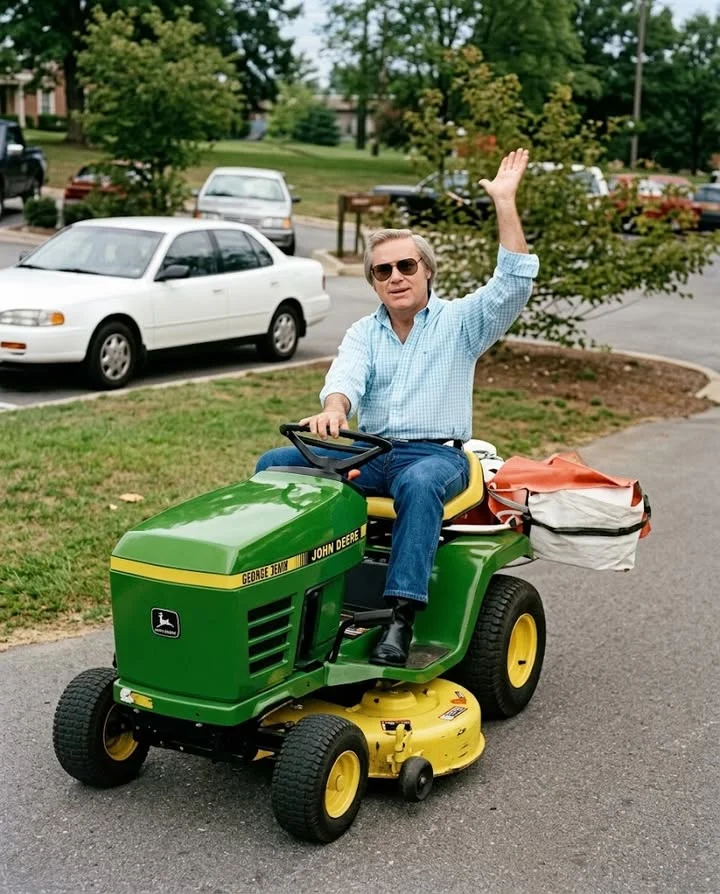
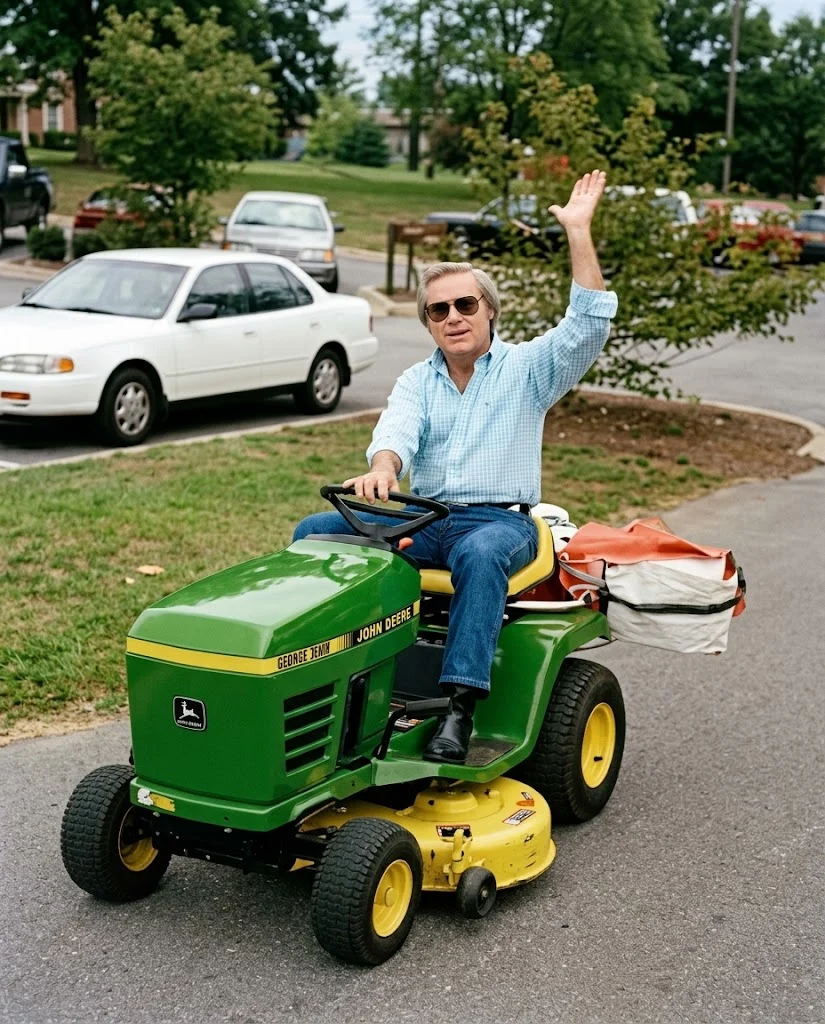
That March 6, 1999, awakening became the line between the legend and the man. The legend had been forged years earlier in Beaumont, Texas. Highway 96 there held the scene Nashville still tells for laughs. His wife Shirley had hidden the car keys in a desperate attempt to stop him from buying alcohol. George Jones found the one key she missed. He climbed onto a ten-horsepower rotary mower and headed toward the nearest liquor store.
He traveled eight miles at about ten miles per hour along the shoulder. Streetlights and flashing headlights illuminated him. It was not a sudden crash. It was a painfully slow ride toward rock bottom. During the darkest years of the “No Show Jones” era, the singer missed dozens of scheduled concerts. He burned through fortunes. He alienated promoters and friends who tried to save him. The industry watched its greatest asset become its most unpredictable liability.
“The man who sang country music’s most heartbreaking songs was living them.”
Waylon Jennings often said that every country singer who wanted to sound perfect would try to sound like George Jones. Jones could make a packed auditorium stand still with emotional depth, yet he spent his private hours running. He made a similar lawnmower escape more than once across different marriages.
The turning point did not come on a mower. It came in the hospital, then in the hard work that followed. Jones rebuilt his life through absolute surrender. He gave his personal management and daily routine to Nancy’s care. He severed ties with the enablers from his past. He committed to his faith. He began showing up for every single concert on his schedule.
“He did not just get sober. He reclaimed his dignity.”
Years earlier, during his long road to getting clean, he chose to own his history. He put a riding lawnmower in the 1996 music video for “Honky Tonk Song.” He rode it through the frame wearing sunglasses and a wry smile. By turning his lowest moment into a public joke, he stripped the shame away. He was learning how to stop hiding from the man he used to be.
He spent the last chapter proving to the country music industry and to his own family that he was more than his mistakes. He stopped running and finally stood his ground.
That slow drive down the Beaumont highway remains a reminder of the relentless and humiliating grip of addiction. But the way he finished his life, sober, present, and deeply loved, makes his redemption that much more powerful.
He was always the greatest voice in the genre. In the end, George Jones finally became a man who could carry the weight of his own songs.